
Dexamethasone intravitreal implant,
does it really help with Clinically meaningful visual recovery of at least 15 letters in macular edema due to retinal vein occlusion?
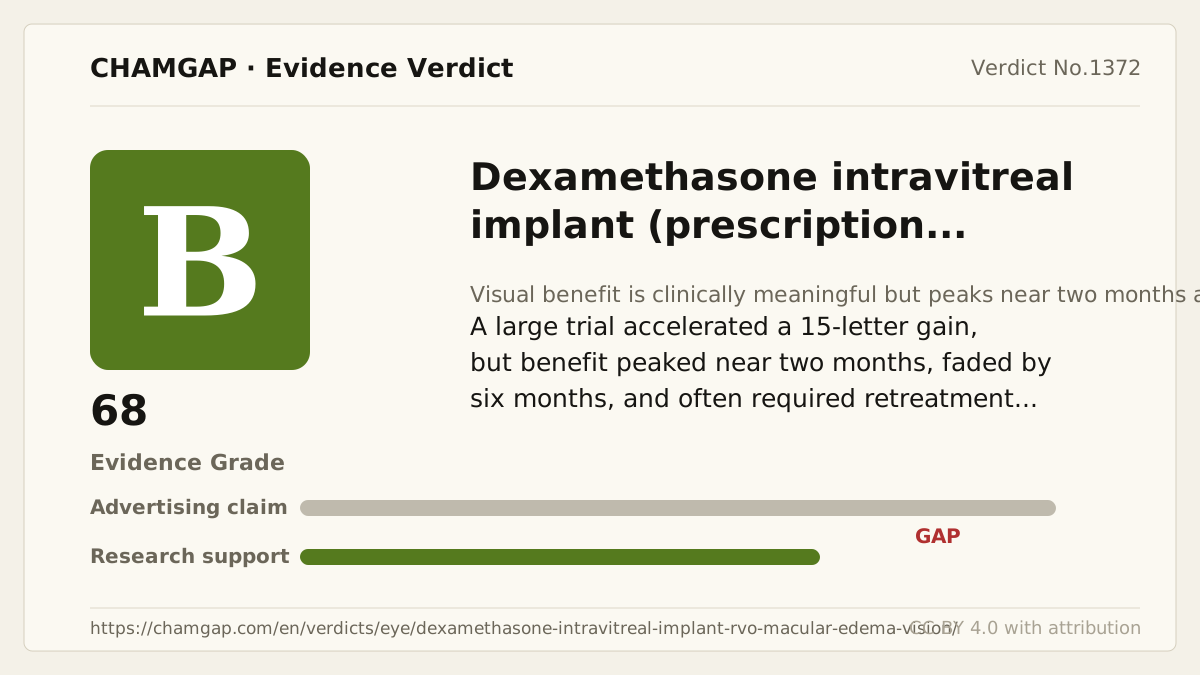
research showsThe dexamethasone intravitreal implant is rated B because a large randomized trial found faster achievement of at least a 15-letter gain in best-corrected visual acuity versus sham in macular edema due to retinal vein occlusion. Among 1,267 GENEVA participants, benefit after one implant peaked near day 60 and the between-group difference was gone by day 180, making the effect temporary. Retinal thickness also improves, but recurrence may require another implant, and intraocular-pressure elevation and cataract are greater concerns than with anti-VEGF therapy. A direct visual outcome is meaningful, but limited durability and safety cap the grade below A.
ads claimMarketing may imply that one implant restores vision throughout six months. Average benefit is largest near two months and then declines, so sustained control may require reassessment and repeat treatment.
Useful facts when choosing a product
- Ozurdex is a biodegradable implant that slowly releases dexamethasone 0.7 mg and is inserted into the vitreous by an ophthalmologist.
- GENEVA evaluated macular edema caused by branch or central retinal vein occlusion, and a 15-letter ETDRS gain is commonly treated as clinically meaningful.
- Intraocular pressure and lens status require follow-up because pressure elevation, need for glaucoma medication, and cataract progression can occur.
- Intravitreal procedures carry rare but serious risks including endophthalmitis, retinal detachment, and vitreous hemorrhage; sudden pain, redness, or visual loss requires urgent care.
Chamgap Semantic Classification Code
Candidate index · review held
M.dexamethasone-intravitreal-implant.MULTI.clinically-meaningful-visual-recovery-of-at-least-15-letters-in-macular-edema-due-to-retinal-vein-occlusion.assess.MULTIMedicinal interventions > Dexamethasone intravitreal implant > Multiple: primary unresolved > Clinically meaningful visual recovery of at least 15 letters in macular edema due to retinal vein occlusion > Association or change assessment > Multiple: primary unresolved
An automated migration candidate, not an issued permanent code; exact claim scope remains under review. This machine-generated migration candidate helps retrieval but is not a permanent assignment. The original verdict ID and URL remain authoritative.
What the research actually shows
Haller and the GENEVA investigators compared one implant with sham in 1,267 participants and confirmed faster achievement of a 15-letter gain. Visual and anatomic effects peaked near day 60 and weakened by day 180. In the 12-month extension, eligible patients improved again after retreatment, but among those receiving two 0.7-mg implants, an intraocular-pressure rise of at least 10 mmHg occurred in 12.6% after the first and 15.4% after the second treatment. Comparative synthesis also found more pressure elevation with dexamethasone than with anti-VEGF therapy.
Why this is classified as B (68)
A large sham-controlled randomized trial accelerated clinically meaningful 15-letter visual gains and reduced macular edema. Benefit peaked near day 60, disappeared versus sham by day 180, and may require retreatment, while pressure elevation and cataract remain important; this gives B with 68 points.
Counterpoint. Even where anti-VEGF is commonly preferred, steroid responsiveness, injection burden, lens status, and glaucoma risk may make the implant appropriate for selected patients under retinal-specialist care.
Rejudgment record. New verdict — Credited a direct gain of at least 15 letters in a large sham-controlled randomized trial, while incorporating the day-60 peak and loss of separation by day 180, retreatment, intraocular-pressure elevation, cataract, and comparative burden versus anti-VEGF therapy
Sub-claim grades by effect
This ingredient is marketed for several effects. A single overall grade blends strong and weak claims together, so each effect is graded separately here. The overall grade reflects the strongest disconfirming or core claim.
| Effect (sub-claim) | Grade | Basis |
|---|---|---|
| Faster achievement of at least a 15-letter visual gain in RVO macular edema | B | A large sham-controlled trial confirmed the effect, but separation after one implant was gone by day 180. |
| Reduced central retinal thickness in RVO macular edema | B | Anatomic improvement is clear but is a surrogate relative to vision and wanes over time. |
| Continuous visual recovery throughout six months after one implant | D | Benefit peaked near day 60 and declined until there was no difference from sham at day 180. |
Cross-check — AI research and Codex final gate
Evidence Table
| Study | Design | Sample | Funding | Endpoint | Result | Weight |
|---|---|---|---|---|---|---|
| Haller JA et al.; OZURDEX GENEVA Study Group. 2010 | Pooled analysis of two identical multicenter randomized masked sham-controlled trials | 1,267 eyes with RVO macular edema | Allergan | Time to and incidence of at least a 15-letter best-corrected visual-acuity gain | Dexamethasone produced faster 15-letter gains and higher response rates from days 30 to 90, but no difference remained at day 180. | Key direct visual-outcome evidence |
| Haller JA et al.; Ozurdex GENEVA Study Group. 2011 | Twelve-month GENEVA extension and retreatment study | Original GENEVA participants; 341 eyes received two 0.7-mg implants | Allergan | Vision, retinal thickness, intraocular pressure, and cataract after retreatment | Benefit recurred after retreatment; pressure rose by at least 10 mmHg in 12.6% after the first and 15.4% after the second implant. | Durability and safety limitation |
| Ming S et al. 2020 | Systematic review and meta-analysis comparing dexamethasone implant with anti-VEGF drugs | Nine comparative RVO studies | Chinese public and institutional research support | Visual acuity, retinal thickness, injection burden, pressure, and cataract | Dexamethasone required fewer injections but carried more intraocular-pressure elevation and cataract than anti-VEGF treatment. | Comparative-effectiveness and safety context |
Receipt — 3 References
All 3 cited sources were verified for existence at the original page (as of 2026-07-23).
Final verification and publication gate: Codex · Evidence date: 2026-07-23 · Corrections: none
Cite this verdict
[Chamgap] Dexamethasone intravitreal implant x at least 15-letter visual recovery in retinal vein occlusion macular edema — Evidence Grade B·68. 3 cited sources checked. Source: https://chamgap.com/en/verdicts/eye/dexamethasone-intravitreal-implant-rvo-macular-edema-vision/ · CC BY 4.0CC BY 4.0 — free to use with attribution; do not distort grades, numbers, or verdict meaning.
What this document does and does not do
Chamgap is an information source. It reports what research has and has not confirmed; it does not tell readers what to take or buy. That decision belongs to readers and, when needed, medical or legal professionals. This verdict reflects literature available up to the search date and may change as new research appears. Nothing here is medical advice.