
Brolucizumab,
does it really help with Improved vision and prevention of vision loss in neovascular age-related macular degeneration?
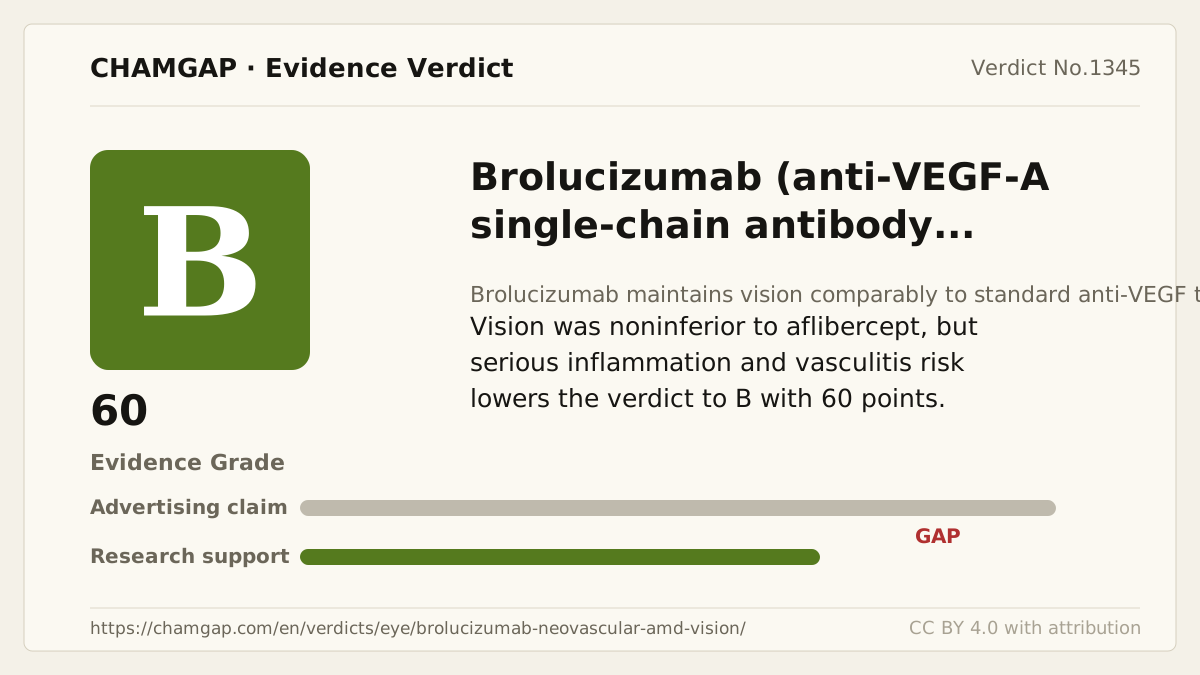
research showsBrolucizumab is rated B at a low 62 points because it improves and maintains vision in neovascular AMD. In approximately 1,825 participants in HAWK and HARRIER, week-48 best-corrected visual-acuity change was noninferior to aflibercept, while retinal-fluid anatomical outcomes favored brolucizumab. Evidence is active-comparator noninferiority rather than independent placebo superiority, and intraocular inflammation, retinal vasculitis, vascular occlusion, and vision-loss risk materially lower the score.
ads claimA drier retina and longer interval do not automatically mean a better or safer injection. Visual efficacy was noninferior to aflibercept, while anatomical benefit must be weighed separately against uncommon but serious inflammation and vascular occlusion.
Useful facts when choosing a product
- Beovu is a prescription anti-VEGF drug administered intravitreally by an ophthalmology professional for neovascular age-related macular degeneration.
- It should not be used with active ocular or periocular infection or active intraocular inflammation.
- Intraocular inflammation, retinal vasculitis, and retinal vascular occlusion can cause vision loss, and risk may be higher after a previous inflammatory reaction.
- Eye pain, redness, photophobia, increased floaters, or any vision change after injection requires immediate ophthalmic assessment for endophthalmitis, retinal detachment, or vasculitis.
Chamgap Semantic Classification Code
Candidate index · review held
M.brolucizumab.intravitreal.vision-and-prevention-of-vision-loss-in-neovascular-age-related-macular-degeneration.prevent.activeMedicinal interventions > Brolucizumab > Intravitreal > vision and prevention of vision loss in neovascular age-related macular degeneration > Occurrence-prevention claim > Active comparator
An automated migration candidate, not an issued permanent code; exact claim scope remains under review. This machine-generated migration candidate helps retrieval but is not a permanent assignment. The original verdict ID and URL remain authoritative.
What the research actually shows
Dugel and colleagues randomized approximately 1,825 treatment-naive patients with neovascular AMD in HAWK and HARRIER to brolucizumab or aflibercept. Week-48 best-corrected visual-acuity gains were 6.6 versus 7.3 letters in HAWK and 7.2 versus 7.7 letters in HARRIER for brolucizumab 6 mg versus aflibercept, meeting noninferiority, and more than half of brolucizumab 6-mg eyes remained on 12-week dosing. Intraretinal and subretinal fluid and central retinal thickness favored brolucizumab. A later independent safety review of 1,817 treated eyes identified drug-related intraocular inflammation, retinal vasculitis, vascular occlusion, and associated visual-acuity loss.
Why this is classified as B (60)
Two large active-controlled phase 3 trials showed noninferior week-48 vision and superior drying outcomes versus aflibercept. Because vision is a direct functional goal, this supports B, but noninferiority and drug-specific intraocular inflammation, retinal vasculitis, occlusion, and vision-loss risk lower the score to 62.
Counterpoint. An ophthalmologist should compare response, injection burden, and individual inflammatory risk with other anti-VEGF options.
Rejudgment record. Cross-check applied — Accepted noninferior week-48 visual efficacy versus aflibercept in HAWK and HARRIER as a direct functional benefit, but applied major deductions for lack of comparative superiority and risks of intraocular inflammation, retinal vasculitis, vascular occlusion, and vision loss
Sub-claim grades by effect
This ingredient is marketed for several effects. A single overall grade blends strong and weak claims together, so each effect is graded separately here. The overall grade reflects the strongest disconfirming or core claim.
| Effect (sub-claim) | Grade | Basis |
|---|---|---|
| Improvement and maintenance of vision through week 48 in neovascular AMD | B | Best-corrected visual-acuity change was noninferior to aflibercept in two large trials. |
| Noninferior prevention of vision loss versus standard anti-VEGF therapy | B | Direct functional efficacy was maintained, but superiority was not established and inflammatory harm limits selection. |
| Maintenance of visual efficacy with longer dosing intervals | B | More than half of 6-mg-treated eyes remained on 12-week dosing through week 48, but this does not apply to every patient. |
Cross-check — AI research and Codex final gate
Evidence Table
| Study | Design | Sample | Funding | Endpoint | Result | Weight |
|---|---|---|---|---|---|---|
| HAWK and HARRIER (Dugel PU et al.). 2020 | Two phase 3 multicenter randomized double-masked aflibercept-controlled noninferiority trials | Approximately 1,825 randomized; 1,817 treated | Novartis | Week-48 best-corrected visual-acuity change and retinal fluid and thickness | Week-48 vision was noninferior to aflibercept, while retinal-fluid and thickness outcomes favored brolucizumab. | Pivotal large active-controlled randomized functional-efficacy evidence |
| Independent Safety Review Committee post hoc review (Monés J et al.). 2021 | Independent post hoc adjudication of ocular inflammatory events in HAWK and HARRIER | 1,817 treated eyes | Independent safety committee supported by Novartis | Intraocular inflammation, retinal vasculitis, vascular occlusion, and visual loss | Drug-related IOI was 4.6%, vasculitis 3.3%, vasculitis with occlusion 2.1%, and moderate or greater visual loss 0.74%. | Major ingredient-specific safety-deduction evidence |
Receipt — 3 References
All 3 cited sources were verified for existence at the original page (as of 2026-07-23).
Final verification and publication gate: Codex · Evidence date: 2026-07-23 · Corrections: none
Cite this verdict
[Chamgap] Brolucizumab x vision improvement and vision-loss prevention in neovascular AMD — Evidence Grade B·60. 3 cited sources checked. Source: https://chamgap.com/en/verdicts/eye/brolucizumab-neovascular-amd-vision/ · CC BY 4.0CC BY 4.0 — free to use with attribution; do not distort grades, numbers, or verdict meaning.
What this document does and does not do
Chamgap is an information source. It reports what research has and has not confirmed; it does not tell readers what to take or buy. That decision belongs to readers and, when needed, medical or legal professionals. This verdict reflects literature available up to the search date and may change as new research appears. Nothing here is medical advice.