
Brimonidine eye drops,
does it really help with Neuroprotection beyond intraocular-pressure lowering that inhibits visual-field progression in normal-tension glaucoma?
research showsBrimonidine receives C with 40 points for neuroprotection in normal-tension glaucoma. In the Low-Pressure Glaucoma Treatment Study, mean treated intraocular pressure was similar but visual-field progression was 9.1% with brimonidine versus 39.2% with timolol, providing a direct clinical signal beyond pressure lowering. Only 101 of 190 randomized participants entered the four-year analysis, attrition was imbalanced at 55% versus 29%, and Cochrane rated certainty from this single trial very low. The signal therefore supports limited C evidence rather than a null D rating, but pressure-independent neuroprotection is not established.
ads claimDefinitive claims that the drops save the optic nerve or prevent field loss even when pressure is normal run ahead of the evidence. Brimonidine can be used to lower pressure, but that action must be distinguished from direct neuroprotection beyond pressure lowering.
Useful facts when choosing a product
- Alphagan-family brimonidine is a prescription alpha-2 adrenergic eye drop that reduces aqueous production and increases outflow to lower intraocular pressure. Dosing follows the concentration and product label.
- In normal-tension glaucoma, treatment still targets individualized pressure reduction, and serial visual-field and optic-nerve structural testing is needed to detect actual progression.
- Allergic conjunctivitis, redness, and ocular discomfort commonly lead to discontinuation; dry mouth, fatigue, drowsiness, and hypotension can occur. Driving and combinations with sedating or blood-pressure-lowering drugs require caution.
- It is contraindicated in infants and children younger than two years because of central nervous system depression, bradycardia, hypotension, and apnea risk. Nasolacrimal occlusion after instillation can reduce systemic absorption.
Chamgap Semantic Classification Code
Candidate index · review held
M.brimonidine-ophthalmic-solution.ophthalmic.neuroprotection-beyond-intraocular-pressure-lowering-that-inhibits-visual-field-progression-in-normal-tension-glaucoma.reduce.activeMedicinal interventions > Brimonidine ophthalmic solution > Ophthalmic > Neuroprotection beyond intraocular-pressure lowering that inhibits visual-field progression in normal-tension glaucoma > Reduction claim > Active comparator
An automated migration candidate, not an issued permanent code; exact claim scope remains under review. This machine-generated migration candidate helps retrieval but is not a permanent assignment. The original verdict ID and URL remain authoritative.
What the research actually shows
Krupin and colleagues randomized patients with low-pressure glaucoma to brimonidine, 99 participants, or timolol, 79 participants, with visual-field testing every four months. In the reported analysis, progression occurred in 9.1% versus 39.2% and mean treated pressure was similar, but discontinuation for drug-related adverse events was 28.3% versus 11.4%. The Cochrane review by Sena and Lindsley noted 12 post-randomization exclusions among 190 randomized adults, 77 failures to complete follow-up, imbalanced attrition of 55% versus 29%, and possible selective reporting, rating four-year visual-field evidence very low certainty. A 68-patient single-center adjunctive study suggested that both brimonidine and timolol might slow field slopes but did not confirm pressure-independent superiority.
Why this is classified as C (40)
The Low-Pressure Glaucoma Treatment Study produced a direct clinical signal of 9.1% versus 39.2% visual-field progression at similar mean treated pressure. Few participants remained analyzable, attrition was imbalanced at 55% versus 29%, Cochrane certainty was very low, and independent confirmation is absent. The direct positive signal supports a reassessment from D to limited C with 40 points but does not establish pressure-independent neuroprotection. Pressure lowering remains separately rated B and safety is unchanged.
Counterpoint. Pressure lowering itself is an established glaucoma treatment target. Brimonidine may be selected for that purpose, but neuroprotection should not be assumed to make it superior to other appropriate pressure-lowering, laser, or surgical strategies.
Rejudgment record. Reassessment (cross-check reflected) — Separated pressure lowering from neuroprotection beyond pressure and accepted the direct 9.1% versus 39.2% field-progression signal at similar treated pressure, while limiting the verdict to the floor of C because the trial was small and singular, attrition was 55% versus 29%, certainty was very low, and independent confirmation is absent
Sub-claim grades by effect
This ingredient is marketed for several effects. A single overall grade blends strong and weak claims together, so each effect is graded separately here. The overall grade reflects the strongest disconfirming or core claim.
| Effect (sub-claim) | Grade | Basis |
|---|---|---|
| Intraocular-pressure lowering in glaucoma | B | Pressure lowering as an alpha-2 agonist eye drop is established by comparative trials and clinical use. |
| Inhibition of visual-field progression in normal-tension glaucoma | C | The 9.1% versus 39.2% direct signal in the Low-Pressure Glaucoma Treatment Study is limited by a single trial and 55% versus 29% imbalanced attrition. |
| Direct neuroprotection independent of intraocular pressure | ? | No confirmatory human evidence excludes pressure effects and bias, so an independent neuroprotective mechanism remains unestablished. |
Cross-check — AI research and Codex final gate
Evidence Table
| Study | Design | Sample | Funding | Endpoint | Result | Weight |
|---|---|---|---|---|---|---|
| Krupin T et al. 2011, LoGTS | Multicenter randomized double-masked active-controlled trial | 99 assigned to brimonidine and 79 to timolol; 101 in the reported analysis | Allergan funding and study-drug support | Four-year visual-field progression and treated intraocular pressure | Field progression was 9.1% versus 39.2%, but adverse-event discontinuation was 28.3% versus 11.4% and overall attrition was markedly imbalanced. | Positive direct endpoint from a single trial at high risk of bias |
| Sena DF and Lindsley K. 2017 | Cochrane systematic review of neuroprotection for glaucoma | One included trial, 190 randomized adults, and 101 in the four-year result | Cochrane Eyes and Vision and public academic support | Visual-field progression distinguished from pressure lowering | Because of 55% versus 29% imbalanced attrition and possible selective reporting, certainty was very low and no conclusion could be drawn. | Core independent risk-of-bias assessment |
| Yokoyama Y et al. 2019 | Single-center randomized active-controlled adjunctive trial | 68 patients with open-angle glaucoma | Academic institution with industry associations reported for some authors | Visual-field mean-deviation slope and intraocular pressure | Both brimonidine and timolol might slow field deterioration, but pressure-independent neuroprotective superiority of brimonidine was not confirmed. | Small nonconfirmatory supporting evidence |
Receipt — 3 References
All 3 cited sources were verified for existence at the original page (as of 2026-07-20).
Final verification and publication gate: Codex · Evidence date: 2026-07-20 · Corrections: none
Cite this verdict
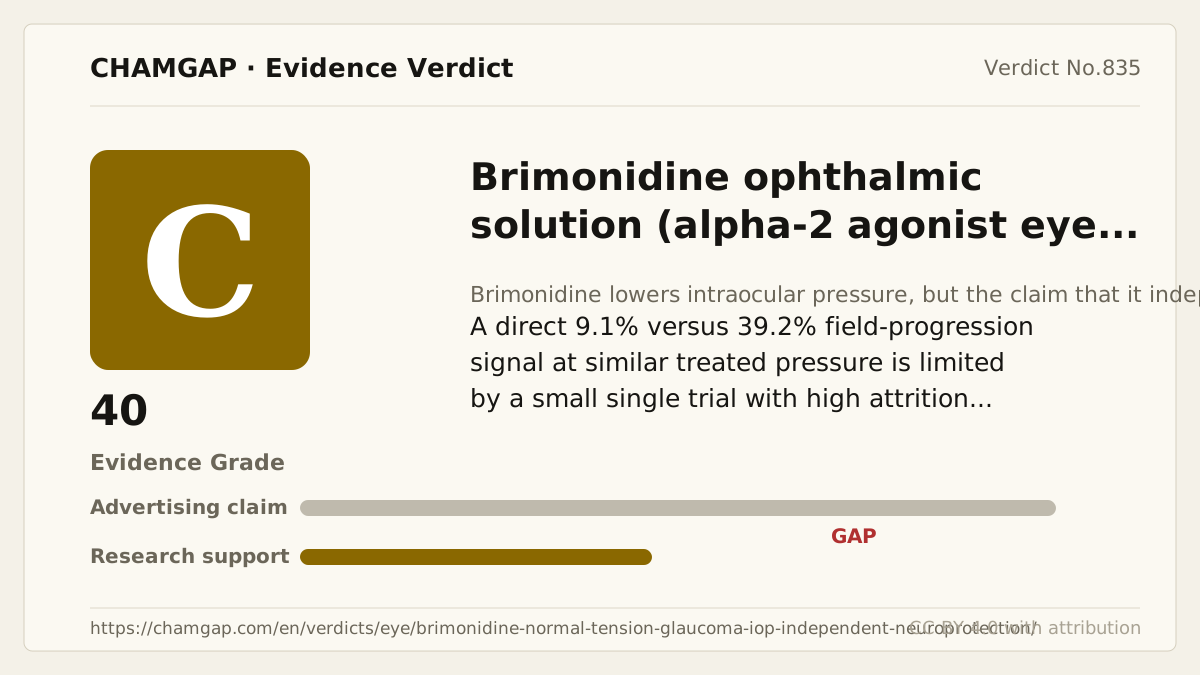
[Chamgap] Brimonidine eye drops x pressure-independent neuroprotection and visual-field preservation in normal-tension glaucoma — Evidence Grade C·40. 3 cited sources checked. Source: https://chamgap.com/en/verdicts/eye/brimonidine-normal-tension-glaucoma-iop-independent-neuroprotection/ · CC BY 4.0CC BY 4.0 — free to use with attribution; do not distort grades, numbers, or verdict meaning.
What this document does and does not do
Chamgap is an information source. It reports what research has and has not confirmed; it does not tell readers what to take or buy. That decision belongs to readers and, when needed, medical or legal professionals. This verdict reflects literature available up to the search date and may change as new research appears. Nothing here is medical advice.