
Blue-light filtering spectacles,
does it really help with Relief of eye strain and dry eye and protection of the retina in digital-screen users?
research showsThe claim that blue-light filtering spectacles reduce digital eye strain and dry eye while protecting the retina is rated F. A 2023 Cochrane review of 17 randomized trials and 619 participants concluded that the lenses may not reduce short-term eye strain compared with ordinary lenses and found no randomized evidence of retinal protection. In a double-masked trial of 120 computer users, neither subjective eye strain nor objective critical flicker-fusion frequency differed after a two-hour task. A 2025 crossover trial in 26 participants likewise found no improvement in dry-eye symptoms or tear-film measures. The American Academy of Ophthalmology states that scientific evidence does not show computer-screen light damaging the eyes and does not recommend special eyewear for computer use.
ads claimMarketing portrays blue light from screens as if it were ultraviolet radiation causing cumulative retinal damage and claims that a lens coating simultaneously prevents fatigue, dryness, and macular disease. Digital eye strain is more closely related to prolonged near focusing, reduced blinking, screen distance and brightness, dry environments, and uncorrected refractive error.
Useful facts when choosing a product
- The filtered wavelength range and percentage of blue-light attenuation differ markedly among lenses. Clear coated lenses and yellow or amber tinted lenses can also differ in visual appearance and color perception.
- A blue-light filter does not replace an appropriate optical prescription or correction for working distance. Recurrent symptoms call for assessment of refractive error, accommodation, binocular vision, and dry eye.
- Wear is generally safe, but a strong tint can alter color discrimination and vision under dim illumination. Lens characteristics should be considered for driving and color-critical work.
- These spectacles do not automatically replace ultraviolet-protective sunglasses or industrial protective eyewear. Ultraviolet and impact-protection labeling must be checked separately.
Chamgap Semantic Classification Code
Candidate index · review held
P.blue-light-filtering-spectacles.UNK.eye-strain-and-dry-eye-and-protection-of-the-retina-in-digital-screen-users.relieve.placeboProcedures, devices and tests > Blue-light filtering spectacles > Unknown > eye strain and dry eye and protection of the retina in digital-screen users > Symptom-relief claim > Placebo
An automated migration candidate, not an issued permanent code; exact claim scope remains under review. This machine-generated migration candidate helps retrieval but is not a permanent assignment. The original verdict ID and URL remain authoritative.
What the research actually shows
The 2023 Cochrane review included 17 randomized trials with 619 participants; individual trials enrolled five to 156 people and lasted from less than one day to five weeks. It found no clinically meaningful benefit for short-term computer eye strain or visual acuity, and no randomized trial measured macular health. The 2021 study double-masked 120 symptomatic computer users to clear or blue-blocking lenses during a two-hour task and found null symptom and objective results. In 2025, 26 healthy young adults completed randomized 120-minute tablet-reading sessions using blue-filtering, antireflective, and uncoated lenses; dry-eye symptoms, tear-meniscus height, and noninvasive and fluorescein tear-breakup time did not differ.
Why this is classified as F (10)
A Cochrane review of 17 randomized trials, a null double-masked trial in 120 users, and a null dry-eye crossover trial in 26 users converge, while the American Academy of Ophthalmology explicitly rejects screen-damage claims and special computer eyewear. Repeated refutation plus authoritative nonrecommendation gives F with 10 points.
Counterpoint. Frequent blinking, breaks, appropriate screen distance and height, glare and brightness control, humidity, and accurate optical correction address screen discomfort more directly. Persistent pain, redness, or reduced vision warrants an eye examination.
Rejudgment record. Cross-check applied — Applied F because a Cochrane review of 17 randomized trials found no short-term eye-strain benefit and no randomized macular-protection evidence, separate double-masked eye-strain and randomized dry-eye crossover trials were null, and the American Academy of Ophthalmology explicitly rejects screen-damage claims and special computer eyewear
Sub-claim grades by effect
This ingredient is marketed for several effects. A single overall grade blends strong and weak claims together, so each effect is graded separately here. The overall grade reflects the strongest disconfirming or core claim.
| Effect (sub-claim) | Grade | Basis |
|---|---|---|
| Relief of eye strain in digital-screen users | F | Cochrane evidence and a 120-person double-masked trial found no symptomatic or objective benefit over clear lenses. |
| Relief of dry eye in digital-screen users | D | A single small randomized crossover trial in 2025 found no benefit for dry-eye questionnaires or multiple tear-film measures, but no direct authoritative rebuttal was identified. |
| Protection of the retina or macula from screen blue light | F | Cochrane found no randomized macular-health evidence, and the American Academy of Ophthalmology rejects screen-damage claims and the need for special eyewear. |
Cross-check — AI research and Codex final gate
Evidence Table
| Study | Design | Sample | Funding | Endpoint | Result | Weight |
|---|---|---|---|---|---|---|
| Singh S et al. 2023 Cochrane review | Cochrane systematic review of randomized trials | 17 randomized trials and 619 participants | Academic synthesis by Cochrane Eyes and Vision | Eye strain, visual performance, sleep, macular health, and adverse events | The lenses may not reduce short-term computer-related eye strain versus nonfiltering lenses, and no randomized evidence evaluated macular health. | Key authoritative synthesis |
| Singh S et al. 2021 | Double-masked randomized clear-lens placebo-controlled trial | 120 symptomatic computer users | Australian university academic research; no industry funding reported | Eye-strain symptom score and critical flicker-fusion frequency after a two-hour task | Blue-blocking and clear lenses did not differ in symptoms (p=0.394) or the objective measure (p=0.304). | Direct null replication |
| Watcharapalakorn A et al. 2025 | Randomized crossover comparative trial | 26 healthy young adults | University academic research; no industry sponsorship reported | Dry-eye symptoms, tear-meniscus height, and tear-breakup time after 120 minutes of screen use | Dry-eye symptoms and signs did not differ significantly among blue-filtering, antireflective, and uncoated lenses. | Direct null evidence for dry eye |
| American Academy of Ophthalmology EyeWiki guidance | Professional ophthalmology guidance | Not applicable | American Academy of Ophthalmology | Screen blue-light eye damage and special-eyewear recommendation | States that scientific evidence does not show computer-screen light damaging the eyes and that special eyewear is not recommended for computer use. | Authoritative nonrecommendation supporting F |
Receipt — 4 References
All 4 cited sources were verified for existence at the original page (as of 2026-07-23).
Final verification and publication gate: Codex · Evidence date: 2026-07-23 · Corrections: none
Cite this verdict
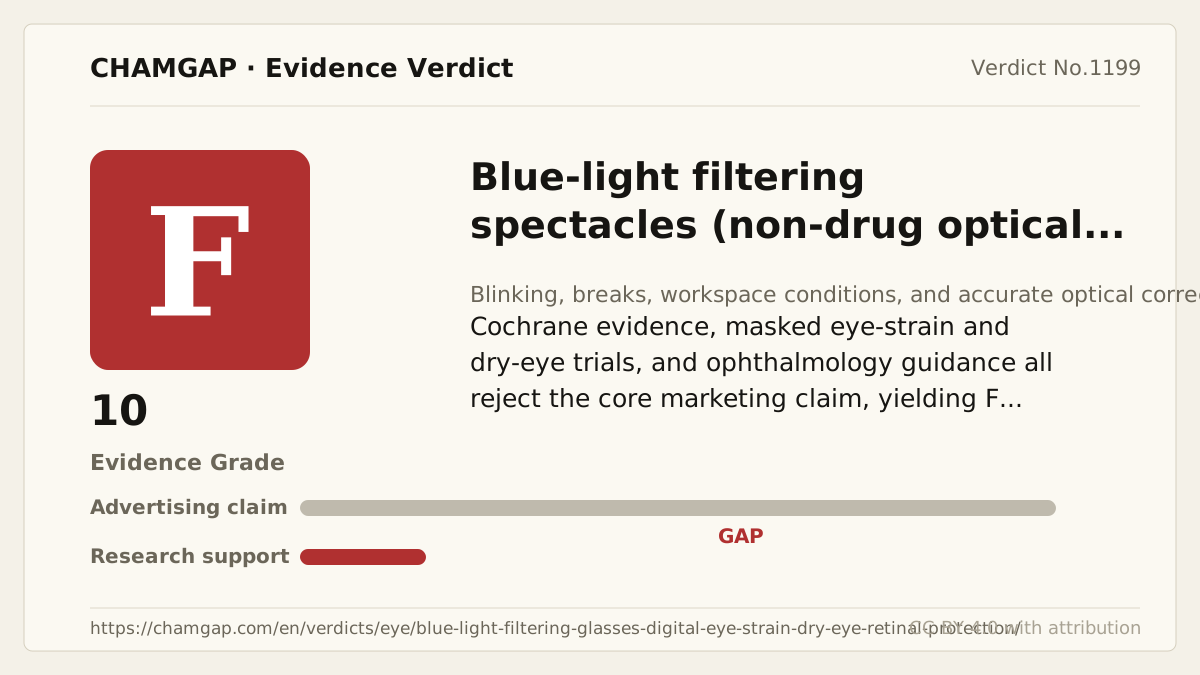
[Chamgap] Blue-light filtering spectacles x relieving digital eye strain and dry eye and protecting the retina — Evidence Grade F·10. 4 cited sources checked. Source: https://chamgap.com/en/verdicts/eye/blue-light-filtering-glasses-digital-eye-strain-dry-eye-retinal-protection/ · CC BY 4.0CC BY 4.0 — free to use with attribution; do not distort grades, numbers, or verdict meaning.
What this document does and does not do
Chamgap is an information source. It reports what research has and has not confirmed; it does not tell readers what to take or buy. That decision belongs to readers and, when needed, medical or legal professionals. This verdict reflects literature available up to the search date and may change as new research appears. Nothing here is medical advice.