
Bimatoprost,
does it really help with Lowering of intraocular pressure in open-angle glaucoma and ocular hypertension?
research showsBimatoprost is rated B because it produces sustained intraocular-pressure lowering in open-angle glaucoma and ocular hypertension. In two identically designed, multicenter, double-masked one-year trials totaling 1,198 participants, once-daily 0.03% bimatoprost lowered pressure at 10 AM at month 12 by 7.6 mmHg from baseline, versus 5.3 mmHg with timolol, and an extension supported persistence through four years. Pressure is an objective outcome directly matching this claim, but it remains a surrogate for visual-field loss and blindness, so the evidence does not merit A. Conjunctival hyperemia, iris and eyelid pigmentation, eyelash growth, and prostaglandin-associated periorbitopathy are kept separate under safety.
ads claimPromotion may expand strong pressure lowering into a guarantee that glaucoma progression will stop or blindness will be prevented. The direct evidence establishes lower measured pressure during prescribed treatment; visual-field testing, optic-nerve assessment, and individualized target adjustment remain necessary.
Useful facts when choosing a product
- Bimatoprost ophthalmic solution is a prescription treatment for lowering pressure in open-angle glaucoma or ocular hypertension and is commonly instilled once each evening; more frequent dosing can reduce its effect, so the prescribed schedule should be followed.
- When a preserved formulation is used with contact lenses, the product-specific instructions for lens removal and reinsertion should be followed, and separate eye drops should be spaced apart.
- Conjunctival hyperemia, ocular irritation, increased iris and eyelid-skin pigmentation, and increased eyelash length, thickness, or number can occur, and iris color change may be permanent.
- Long-term use can cause prostaglandin-associated periorbitopathy, including deepening of the upper-eyelid sulcus and orbital-fat atrophy that can resemble enophthalmos, so visible periocular change should be reported during follow-up.
Chamgap Semantic Classification Code
Candidate index · review held
M.bimatoprost.ophthalmic.of-intraocular-pressure-in-open-angle-glaucoma-and-ocular-hypertension.reduce.activeMedicinal interventions > Bimatoprost > Ophthalmic > of intraocular pressure in open-angle glaucoma and ocular hypertension > Reduction claim > Active comparator
An automated migration candidate, not an issued permanent code; exact claim scope remains under review. This machine-generated migration candidate helps retrieval but is not a permanent assignment. The original verdict ID and URL remain authoritative.
What the research actually shows
Higginbotham 2002 combined two identical one-year double-masked trials that assigned 1,198 people with glaucoma or ocular hypertension to bimatoprost 0.03% once daily, bimatoprost twice daily, or timolol 0.5% twice daily. The most effective once-daily regimen reduced pressure by 30% at 10 AM at month 12 and produced a target pressure of 17 mmHg or less in 58% versus 37% with timolol. A four-year extension in 152 selected completers strengthened evidence of persistence but is vulnerable to survivor attrition. These data directly establish pressure lowering, not visual-field or blindness outcomes, supporting 78 points: slightly above timolol at 75 and clearly above the C-rated tafluprost visual-field claim.
Why this is classified as B (78)
Across two identically designed double-masked one-year trials totaling 1,198 participants, once-daily bimatoprost reduced pressure by 7.6 mmHg at month 12 compared with 5.3 mmHg for timolol, and longer follow-up supported persistence. The claim directly concerns an objective pressure endpoint, but not hard clinical outcomes such as preserved visual fields or prevention of blindness. Corpus parity with timolol at B75 therefore supports B with 78 points. Local pigmentation, eyelash, and periocular changes are independent safety issues.
Counterpoint. Response and target pressure vary between patients, and missed or incorrect dosing reduces real-world effectiveness. Treatment success should not be inferred from a pressure value without regular pressure, visual-field, and optic-nerve follow-up.
Rejudgment record. New verdict — Recognized consistent objective pressure lowering in two identically designed large one-year double-masked active-controlled trials and a four-year extension, while applying the limitation that pressure is not the hard outcome of visual-field loss or blindness and maintaining corpus parity with timolol at B75 and the C-rated tafluprost visual-field claim
Sub-claim grades by effect
This ingredient is marketed for several effects. A single overall grade blends strong and weak claims together, so each effect is graded separately here. The overall grade reflects the strongest disconfirming or core claim.
| Effect (sub-claim) | Grade | Basis |
|---|---|---|
| Lowering of intraocular pressure in open-angle glaucoma | B | Large one-year double-masked active-controlled trials established strong and sustained objective pressure reduction. |
| Lowering of intraocular pressure in ocular hypertension | B | Repeated measurements showed greater pressure reduction and more frequent target-pressure achievement than timolol. |
| Slowing of visual-field loss specifically with bimatoprost monotherapy | C | Pressure lowering strongly supports plausibility, but the absence of a large bimatoprost-specific visual-field outcomes trial limits product-specific directness. |
Cross-check — AI research and Codex final gate
Evidence Table
| Study | Design | Sample | Funding | Endpoint | Result | Weight |
|---|---|---|---|---|---|---|
| Higginbotham EJ et al. 2002 | Two identically designed multicenter randomized double-masked active-controlled one-year trials | 1,198 patients with glaucoma or ocular hypertension | Product-development trials with Allergan-affiliated authors | Intraocular pressure at three daytime time points and target-pressure achievement | At 10 AM at month 12, pressure fell 7.6 mmHg from baseline with once-daily bimatoprost versus 5.3 mmHg with timolol, and 58% versus 37% reached 17 mmHg or less. | Key large direct pressure randomized evidence |
| Williams RD et al. 2008 | Four-year extension of a multicenter double-masked randomized active-controlled trial | 152 participants entering the extension after completing three years | Bimatoprost Study Group product-development extension; funding not stated in the PubMed abstract | Pressure lowering and long-term tolerability through month 48 | Pressure lowering with bimatoprost persisted through four years, although the extension selected trial completers. | Persistence support with survivor-selection limitations |
| Jayaprakasam A and Ghazi-Nouri S. 2010 | Case report of periorbital fat atrophy associated with prostaglandin analogues | Two unilateral-treatment cases | Funding not stated in the PubMed abstract | Periorbital fat change on clinical examination and MRI and course after withdrawal | Periorbital fat atrophy was observed in eyes receiving bimatoprost or travoprost, with possible reversibility after withdrawal. | Rare long-term periocular safety signal |
Receipt — 3 References
All 3 cited sources were verified for existence at the original page (as of 2026-07-21).
Final verification and publication gate: Codex · Evidence date: 2026-07-21 · Corrections: none
Cite this verdict
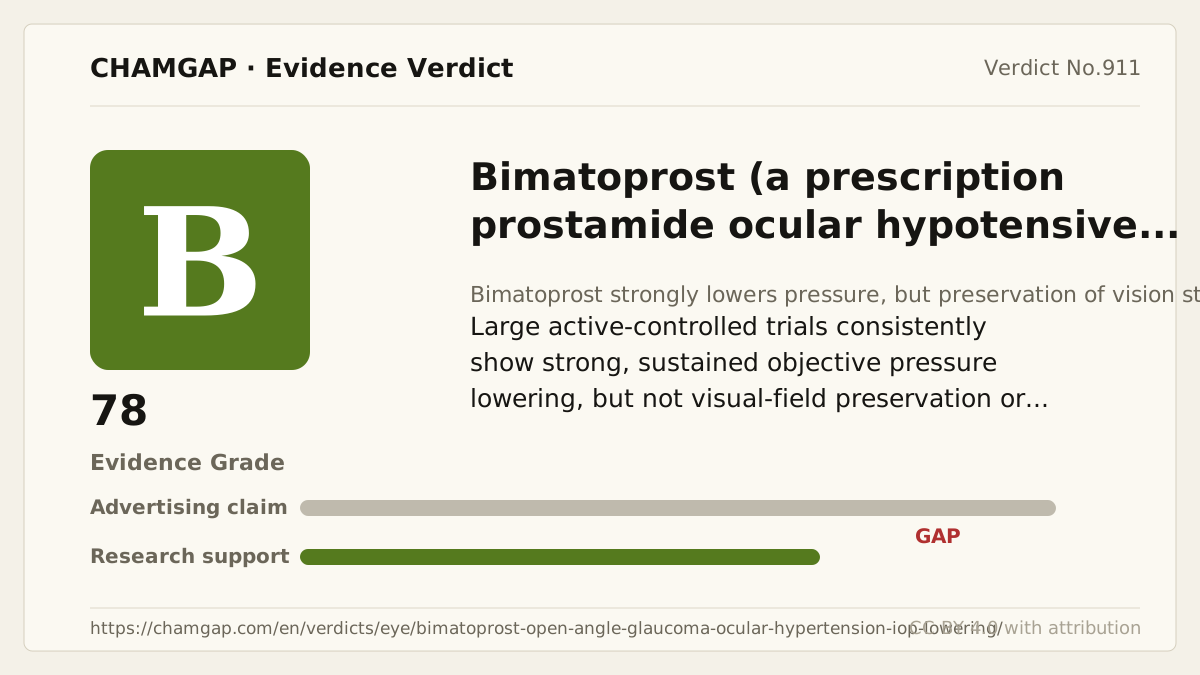
[Chamgap] Bimatoprost x lowering of intraocular pressure in open-angle glaucoma and ocular hypertension — Evidence Grade B·78. 3 cited sources checked. Source: https://chamgap.com/en/verdicts/eye/bimatoprost-open-angle-glaucoma-ocular-hypertension-iop-lowering/ · CC BY 4.0CC BY 4.0 — free to use with attribution; do not distort grades, numbers, or verdict meaning.
What this document does and does not do
Chamgap is an information source. It reports what research has and has not confirmed; it does not tell readers what to take or buy. That decision belongs to readers and, when needed, medical or legal professionals. This verdict reflects literature available up to the search date and may change as new research appears. Nothing here is medical advice.