
Acyclovir,
does it really help with Prevention of recurrent ocular HSV and stromal keratitis in adults with recent ocular herpes simplex disease?
research showsOral acyclovir is rated B for preventing recurrent ocular HSV and stromal keratitis in immunocompetent adults with recent ocular herpes simplex disease. The NIH-supported HEDS trial randomized 703 participants to acyclovir 400 mg twice daily or placebo for 12 months of treatment and six months of observation. During treatment, any ocular HSV recurrence was 19% versus 32%. Among 337 participants with prior stromal keratitis, stromal recurrence was 14% versus 28%, and no rebound occurred during six months after stopping treatment. A 2025 systematic review of four trials and 1,017 participants confirmed the direction, with ocular-recurrence RR 0.56 for prolonged antivirals and RR 0.59 for acyclovir versus placebo. Recurrence is a patient-important clinical outcome, but molecule-specific evidence depends heavily on one landmark trial and data on visual outcomes and benefit beyond 12 months are limited, supporting B with 78 points rather than A. Crystal-related kidney injury in renal impairment or dehydration and rare neurotoxicity remain separate safety issues.
ads claimPrevention does not mean that acyclovir eradicates latent HSV or completely blocks recurrence. Nineteen percent still had ocular recurrence during 12 months of treatment, and acute epithelial or stromal keratitis treatment differs from suppressive prophylaxis. Self-diagnosing every painful or red eye as HSV and using leftover medicine can delay corneal diagnosis and needed topical or anti-inflammatory treatment.
Useful facts when choosing a product
- The HEDS suppressive regimen began after active ocular HSV had resolved and used oral acyclovir 400 mg twice daily for 12 months, with the largest absolute benefit in people with prior stromal keratitis.
- Acyclovir suppresses viral replication but does not eliminate latent HSV, so recurrence can occur during treatment and long-term protection after stopping is not guaranteed.
- The medicine is cleared mainly by the kidneys, so renal impairment, older age, and dehydration require dose adjustment and hydration, with monitoring for crystal-related acute kidney injury and rare neurotoxicity such as confusion or tremor.
- New eye pain, light sensitivity, redness, or reduced vision can signal recurrence or another corneal emergency and requires prompt ophthalmic assessment regardless of prophylaxis.
Chamgap Semantic Classification Code
Candidate index · review held
M.acyclovir-or-aciclovir.oral.recurrent-ocular-hsv-and-stromal-keratitis-with-recent-ocular-herpes-simplex-disease.prevent.placeboMedicinal interventions > Acyclovir or aciclovir > Oral > recurrent ocular HSV and stromal keratitis with recent ocular herpes simplex disease > Occurrence-prevention claim > Placebo
An automated migration candidate, not an issued permanent code; exact claim scope remains under review. This machine-generated migration candidate helps retrieval but is not a permanent assignment. The original verdict ID and URL remain authoritative.
What the research actually shows
The HEDS prevention trial enrolled 703 immunocompetent participants whose active ocular HSV had resolved but who had experienced disease within the prior year, assigning them to acyclovir 400 mg twice daily or placebo. Ocular and nonocular recurrences declined during 12 months, with the largest absolute benefit among participants with prior stromal keratitis. There was no rebound during six months after stopping, but that does not prove continued prevention after treatment ends. A 2025 systematic review combined four trials and 1,017 participants and rated evidence for ocular and stromal recurrence reduction as high certainty, but found no visual-acuity data and imprecise safety evidence. Corneal-transplant recipients and immunocompromised patients are separate evidence populations.
Why this is classified as B (78)
The publicly funded 703-person HEDS trial directly reduced ocular HSV recurrence from 32% to 19% and stromal recurrence among those with prior stromal keratitis from 28% to 14%. A 2025 synthesis of four trials and 1,017 participants confirmed ocular-recurrence RR 0.56 and acyclovir-versus-placebo RR 0.59. Recurrence is patient important and exceeds a C ceiling, but molecule-specific evidence remains concentrated in one trial and data on vision and benefit beyond 12 months are absent, giving B with 78 points. Kidney and neurologic toxicity remain separate from efficacy.
Counterpoint. Duration depends on the number of prior stromal episodes, immune status, kidney function, recurrence risk, and other ophthalmic treatment. The 12-month HEDS regimen should not be extended indefinitely without review or substituted for treatment of new active symptoms.
Rejudgment record. New verdict — Applied high B because the NIH-supported 703-person HEDS trial directly reduced 12-month ocular HSV recurrence from 32% to 19% and stromal recurrence among those with prior stromal keratitis from 28% to 14%, with consistency in a 2025 synthesis of four trials and 1,017 participants, while keeping the result below A because molecule-specific evidence is concentrated in one landmark trial and visual outcomes and benefit beyond 12 months are unavailable
Sub-claim grades by effect
This ingredient is marketed for several effects. A single overall grade blends strong and weak claims together, so each effect is graded separately here. The overall grade reflects the strongest disconfirming or core claim.
| Effect (sub-claim) | Grade | Basis |
|---|---|---|
| Prevention of any ocular HSV recurrence over 12 months | B | Cumulative recurrence was 19% versus 32% in HEDS, and the modern systematic-review RR for acyclovir versus placebo was 0.59. |
| Prevention of recurrent stromal keratitis in people with prior stromal disease | B | Recurrence was 14% versus 28% in HEDS, with the largest absolute benefit among people with prior stromal keratitis. |
| Prevention of recurrent epithelial keratitis | B | A HEDS secondary analysis found a rate ratio of 0.62 (95% CI 0.39 to 0.97) for recurrent epithelial keratitis. |
Cross-check — AI research and Codex final gate
Evidence Table
| Study | Design | Sample | Funding | Endpoint | Result | Weight |
|---|---|---|---|---|---|---|
| Wilhelmus KR et al.; HEDS. 1998 | Multicenter randomized double-masked placebo-controlled prevention trial | 703 immunocompetent adults; 357 acyclovir and 346 placebo | Public research grants from the United States National Eye Institute within NIH | Any ocular and nonocular HSV recurrence during 12 months, stromal recurrence among those with prior stromal keratitis, and rebound during six months after stopping | Any ocular recurrence was 19% versus 32%; stromal recurrence among 337 with prior stromal keratitis was 14% versus 28%; no rebound occurred during six months after stopping. | Pivotal publicly funded direct clinical-recurrence randomized trial |
| Ruiz Sifre L et al. 2025 | Systematic review of prolonged oral or topical antiviral prevention trials | Four trials and 1,017 participants | Funding was not reported in the PubMed abstract; one author was affiliated with the vaccine and biotechnology company HIPRA | Ocular and nonocular HSV recurrence, stromal-keratitis recurrence, visual acuity, and adverse effects | Ocular recurrence had RR 0.56 with prolonged antivirals, acyclovir versus placebo had RR 0.59, and stromal recurrence had RR 0.55; no visual-acuity data were found. | Current consistency synthesis with a limited number of trials |
Receipt — 2 References
All 2 cited sources were verified for existence at the original page (as of 2026-07-23).
Final verification and publication gate: Codex · Evidence date: 2026-07-23 · Corrections: none
Cite this verdict
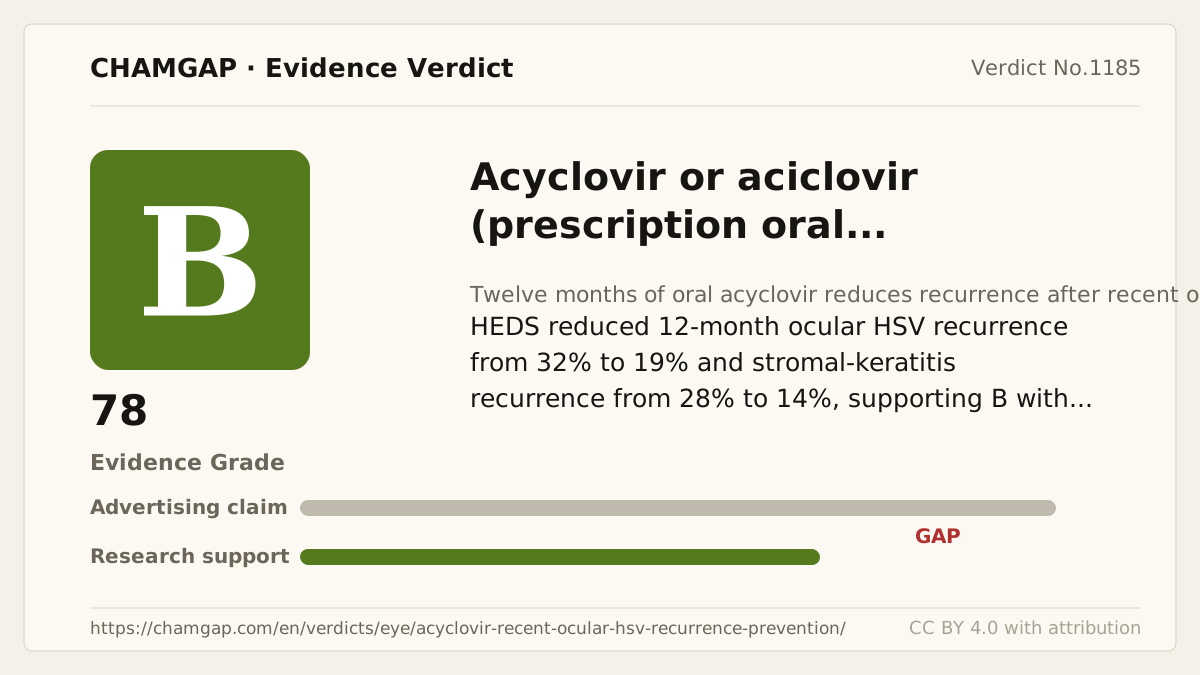
[Chamgap] Acyclovir x prevention of recurrent ocular HSV and stromal keratitis after recent ocular herpes simplex disease — Evidence Grade B·78. 2 cited sources checked. Source: https://chamgap.com/en/verdicts/eye/acyclovir-recent-ocular-hsv-recurrence-prevention/ · CC BY 4.0CC BY 4.0 — free to use with attribution; do not distort grades, numbers, or verdict meaning.
What this document does and does not do
Chamgap is an information source. It reports what research has and has not confirmed; it does not tell readers what to take or buy. That decision belongs to readers and, when needed, medical or legal professionals. This verdict reflects literature available up to the search date and may change as new research appears. Nothing here is medical advice.