
Preoperative intravenous ferric carboxymaltose,
does it really help with Reduction in transfusion or death and in transfusion episodes through 30 days after surgery?
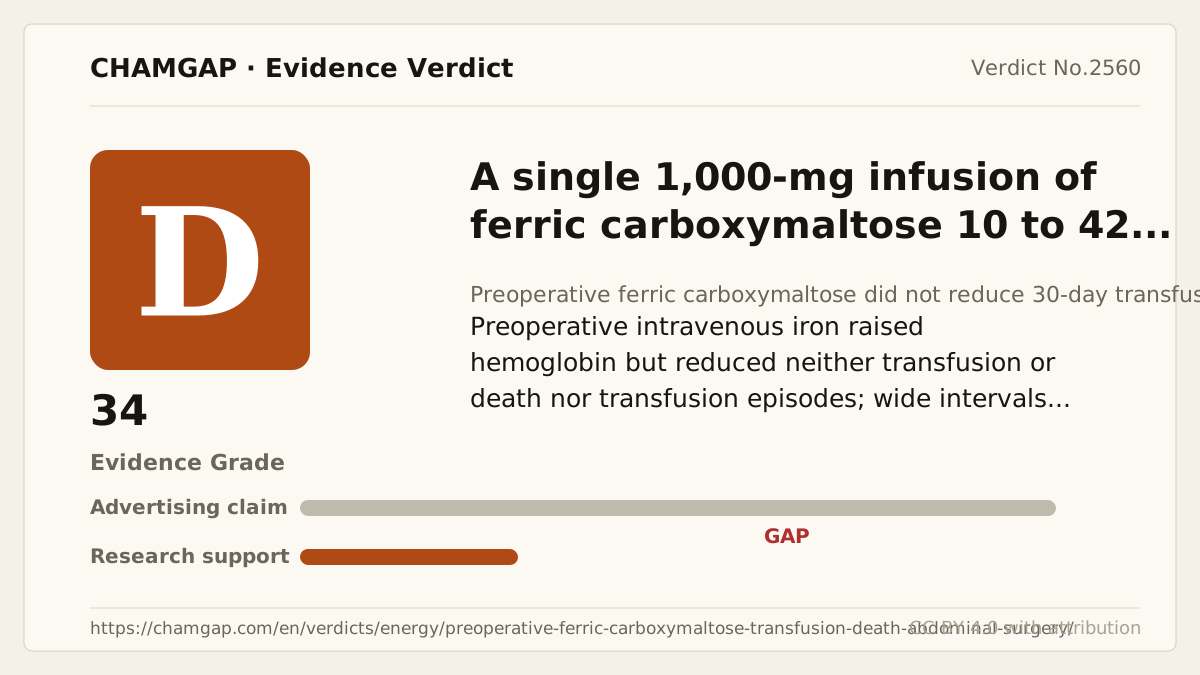
research showsThe grade is D. PREVENTT randomized 487 patients and included 237 per arm in the coprimary analyses. Transfusion or death occurred in 69/237 (29%) versus 67/237 (28%), RR 1.03 (95% CI 0.78 to 1.37), P=0.84. Transfusion episodes were 105 versus 111, rate ratio 0.98 (0.68 to 1.43). Both coprimary endpoints were null, but one trial with wide intervals is not repeated refutation, giving D, not F, with 34 points.
ads claimIron genuinely increased preoperative hemoglobin, but that laboratory change did not translate into fewer 30-day transfusions or deaths.
Useful facts when choosing a product
- The trial used one 1,000-mg ferric carboxymaltose infusion in 100 mL saline.
- Treatment was given 10 to 42 days before planned surgery.
- Coprimary endpoints were transfusion or death and number of transfusion episodes.
Chamgap Semantic Classification Code
Candidate index · review held
P.single-1.intravenous.transfusion-or-death-and-in-transfusion-episodes-through-after-surgery.reduce.placeboProcedures, devices and tests > single 1 > Intravenous > transfusion or death and in transfusion episodes through after surgery > Reduction claim > Placebo
An automated migration candidate, not an issued permanent code; exact claim scope remains under review. This machine-generated migration candidate helps retrieval but is not a permanent assignment. The original verdict ID and URL remain authoritative.
What the research actually shows
At 46 UK hospitals, pharmacy-controlled centralized web randomization, saline placebo, light-protection bags, and black tubing maintained masking of patients, clinical staff, and researchers. The coprimary intention-to-treat analysis included 474/487 (97%), 237 per arm; consent withdrawal was four per arm. The two registered coprimary endpoints matched the paper. Funding came from the NIHR Health Technology Assessment programme. Verdict 1264 is B with 68 points for intravenous iron in dialysis patients, while verdict 2557 concerns cooler dialysate; their populations, interventions, and endpoints differ.
Why this is classified as D (34)
Both coprimary endpoints were null in a publicly funded double-blind hard-outcome RCT, but there was no independent repeated refutation and intervals did not exclude benefit, giving D with 34 points.
Counterpoint. D does not deny correction of iron deficiency or hemoglobin elevation; it applies to reducing 30-day transfusion or death before major abdominal surgery.
Rejudgment record. Cross-check applied — We cross-checked the PREVENTT paper and ISRCTN record for coprimary endpoints, centralized allocation, double masking, ITT denominators, event counts, intervals, and NIHR funding.
| Endpoint | H | Hard endpoint - actual events such as death |
| Replication | R1 | Single confirmatory trial |
| Independence | I2 | Decisive evidence is publicly or non-profit funded |
| Effect size | E0 | Null |
| Precision | C0 | The confidence interval leaves room for benefit |
Stored derived and displayed grades match; this is not a current recalculation or validity check (D).
Sub-claim grades by effect
This ingredient is marketed for several effects. A single overall grade blends strong and weak claims together, so each effect is graded separately here. The overall grade reflects the strongest disconfirming or core claim.
| Effect (sub-claim) | Grade | Basis |
|---|---|---|
| Reduced transfusion or death through 30 days | D | RR was 1.03 (95% CI 0.78 to 1.37). |
| Fewer transfusion episodes through 30 days | D | Rate ratio was 0.98 (95% CI 0.68 to 1.43). |
Cross-check — AI research and Codex final gate
Evidence Table
| Study | Design | Sample | Funding | Endpoint | Result | Weight |
|---|---|---|---|---|---|---|
| Richards T, Baikady RR, Clevenger B, Butcher A et al., 2020 PREVENTT | Double-blind placebo-controlled randomized trial at 46 hospitals | 487 randomized (244 iron/243 placebo); 474 in coprimary analyses (237/237) | UK NIHR Health Technology Assessment programme | Coprimary 30-day transfusion or death and number of transfusion episodes | 69/237 (29%) versus 67/237 (28%), RR 1.03 (95% CI 0.78 to 1.37), P=0.84; 105 versus 111 episodes, rate ratio 0.98 (0.68 to 1.43) | Pivotal publicly funded large hard-outcome RCT |
Receipt — 1 References
All 1 cited sources were verified for existence at the original page (as of 2026-08-14).
Final verification and publication gate: Codex · Evidence date: 2026-08-14 · Corrections: none
Cite this verdict
[Chamgap] Preoperative intravenous ferric carboxymaltose x fewer transfusions or deaths — Evidence Grade D·34. 1 cited sources checked. Source: https://chamgap.com/en/verdicts/energy/preoperative-ferric-carboxymaltose-transfusion-death-abdominal-surgery/ · CC BY 4.0CC BY 4.0 — free to use with attribution; do not distort grades, numbers, or verdict meaning.
What this document does and does not do
Chamgap is an information source. It reports what research has and has not confirmed; it does not tell readers what to take or buy. That decision belongs to readers and, when needed, medical or legal professionals. This verdict reflects literature available up to the search date and may change as new research appears. Nothing here is medical advice.