
Levothyroxine,
does it really help with Normalization of thyroid-stimulating hormone and free T4 with improvement of deficiency-related fatigue and cold intolerance in overt primary hypothyroidism?
research showsLevothyroxine is rated A because it replaces deficient T4 in overt primary hypothyroidism, normalizes thyroid-stimulating hormone and free T4, and improves deficiency-related fatigue and cold intolerance. In a randomized trial of newly diagnosed patients, a full replacement starting dose achieved euthyroidism faster than a low-dose titration strategy, while symptoms and quality of life improved over time in both groups. In a prospective follow-up of 194 patients, every measured symptom, including lack of energy and cold intolerance, decreased significantly after euthyroidism was reached. Fatigue and cold sensitivity are nonspecific and can persist after an appropriate thyroid-stimulating hormone level is achieved. This verdict applies only to replacement of confirmed overt deficiency with low free T4 and high thyroid-stimulating hormone and must not be extended to fatigue in euthyroid people or an asymptomatic borderline thyroid-stimulating hormone value.
ads claimPromotion can frame levothyroxine as an energy hormone that treats fatigue, weight, or feeling cold in euthyroid people, or imply that higher doses produce more vitality. Its demonstrated role is normalization of confirmed hormone deficiency. Persistent fatigue after adequate treatment calls for evaluation of anemia, sleep disorders, depression, autoimmune comorbidity, and other causes.
Useful facts when choosing a product
- Levothyroxine should be taken under the same conditions each day, with a consistent interval from food according to the prescription and product label, to reduce absorption variability.
- Iron, calcium, certain antacids, and bile-acid sequestrants can reduce absorption, so timing and interactions should be reviewed with a clinician.
- A new thyroid-stimulating hormone steady state takes several weeks after a dose change, so laboratory-guided titration is usually delayed accordingly and requires special adjustment in pregnancy, older age, or heart disease.
- Excess dosing can cause palpitations, tremor, insomnia, and atrial fibrillation, while long-term thyroid-stimulating hormone suppression can increase bone loss.
Chamgap Semantic Classification Code
Candidate index · review held
M.levothyroxine-sodium.UNK.normalization-of-thyroid-stimulating-hormone-and-free-t4-with-improvement-of-deficiency-related-fatigue-and-cold-intolerance-in-overt-primary-hypothyroidism.improve.MULTIMedicinal interventions > Levothyroxine sodium > Unknown > Normalization of thyroid-stimulating hormone and free T4 with improvement of deficiency-related fatigue and cold intolerance in overt primary hypothyroidism > Improvement claim > Multiple: primary unresolved
An automated migration candidate, not an issued permanent code; exact claim scope remains under review. This machine-generated migration candidate helps retrieval but is not a permanent assignment. The original verdict ID and URL remain authoritative.
What the research actually shows
Roos randomized 50 newly diagnosed patients with overt primary hypothyroidism and no cardiac disease under double masking to a full 1.6-microgram-per-kilogram starting dose or 25-microgram titration. Euthyroidism at four weeks occurred in 13 versus one participant and at 24 weeks in 21 versus 20, while symptoms and quality of life improved at comparable rates. Singh followed 194 newly diagnosed primary-hypothyroidism patients before treatment and after euthyroidism; every measured symptom, including lack of energy and cold intolerance, decreased significantly. A 2020 meta-analysis by Chen synthesized 25 trials with 1,735 participants and confirmed that levothyroxine increased free T4 and decreased thyroid-stimulating hormone versus placebo. The American Thyroid Association guideline defines goals as symptom resolution, normalization of thyroid-stimulating hormone, and avoidance of overtreatment and retains levothyroxine monotherapy as standard care.
Why this is classified as A (86)
In confirmed overt deficiency with high thyroid-stimulating hormone and low free T4, levothyroxine replaces the causal T4 deficit. A randomized dosing trial and trial meta-analysis strongly support normalization of thyroid-stimulating hormone and free T4. Evidence for improvement in fatigue and cold intolerance relies more on non-placebo prospective follow-up and does not explain all residual fatigue after a normal thyroid-stimulating hormone level. The direct and standard nature of replacement supports A with 86 points. Atrial fibrillation and bone loss from overtreatment are separate safety issues.
Counterpoint. Some patients continue to experience fatigue or cognitive and mood symptoms after reaching an appropriate thyroid-stimulating hormone level. The appropriate response is to check adherence, absorption, test timing, and other conditions rather than independently suppressing thyroid-stimulating hormone below the reference range.
Rejudgment record. Cross-check revision — Applied A to replacement of confirmed overt primary deficiency because levothyroxine directly replaces causal T4 and randomized dosing evidence, prospective follow-up, and meta-analysis consistently support biochemical normalization and improvement of deficiency symptoms
Sub-claim grades by effect
This ingredient is marketed for several effects. A single overall grade blends strong and weak claims together, so each effect is graded separately here. The overall grade reflects the strongest disconfirming or core claim.
| Effect (sub-claim) | Grade | Basis |
|---|---|---|
| Normalization of thyroid-stimulating hormone in overt primary hypothyroidism | A | The direct biochemical effect of causal hormone replacement is consistent in randomized evidence and meta-analysis. |
| Normalization of free T4 in overt primary hypothyroidism | A | Normalization within weeks was observed in the full-replacement trial, and placebo-controlled synthesis confirmed increased free T4. |
| Improvement of fatigue and cold intolerance caused by overt deficiency | A | Lack of energy and cold intolerance fell significantly in newly treated patients, but this does not make every residual fatigue symptom thyroid-mediated. |
Cross-check — AI research and Codex final gate
Evidence Table
| Study | Design | Sample | Funding | Endpoint | Result | Weight |
|---|---|---|---|---|---|---|
| Roos A et al. 2005 | Prospective randomized double-blind starting-dose trial | 50 randomized newly diagnosed patients with overt primary hypothyroidism and no cardiac disease | Academic clinical study using compounded liquid formulations | Time to normalization of thyroid-stimulating hormone and free T4, symptoms, signs, and quality of life | Full replacement accelerated euthyroidism, and symptoms and quality of life improved over time in both groups. | Direct randomized evidence in overt deficiency |
| Singh R et al. 2017 | Prospective case-control follow-up study | 194 newly diagnosed primary-hypothyroidism patients and 259 controls | Academic institutional study reporting no conflicts of interest | Thyroid symptom scores including lack of energy and cold intolerance before treatment and after euthyroidism | All measured symptom prevalences fell significantly, and mean post-treatment symptom scores were similar to or lower than controls. | Supporting direct symptom-improvement evidence |
| Chen Y and Tai H-Y. 2020 | Systematic review and meta-analysis of randomized levothyroxine trials | 25 trials and 1,735 patients with hypothyroidism | No external commercial funding reported | Biochemical measures including thyroid-stimulating hormone and free T4 and clinical measures | Levothyroxine increased free T4 and decreased thyroid-stimulating hormone versus placebo. | Synthesis of biochemical normalization evidence |
| Jonklaas J et al.; ATA Task Force. 2014 | Evidence review and clinical guideline for thyroid-hormone replacement | Comprehensive review of evidence for levothyroxine and alternative preparations | American Thyroid Association | Normal thyroid-stimulating hormone, symptom resolution, avoidance of overtreatment, and comparison with alternatives | Retained levothyroxine as standard care and found no consistently strong superiority of alternative preparations. | Scope and standard-of-care confirmation |
Receipt — 4 References
All 4 cited sources were verified for existence at the original page (as of 2026-07-21).
Final verification and publication gate: Codex · Evidence date: 2026-07-21 · Corrections: none
Cite this verdict
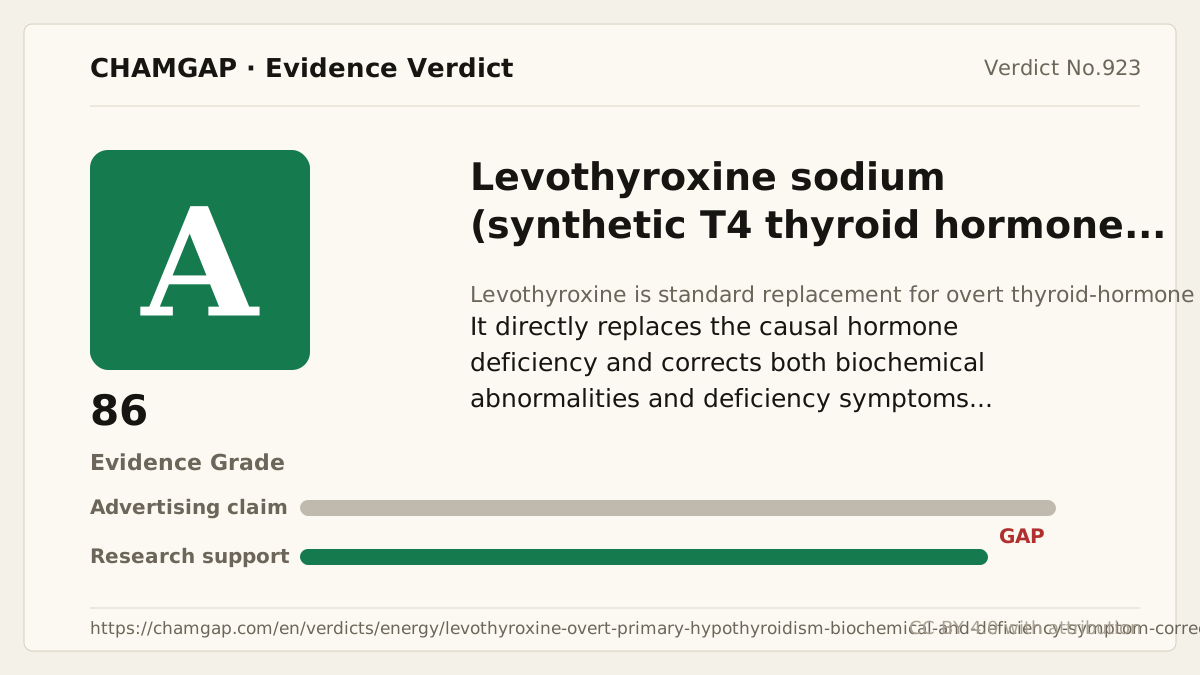
[Chamgap] Levothyroxine x biochemical and deficiency-symptom correction in overt primary hypothyroidism — Evidence Grade A·86. 4 cited sources checked. Source: https://chamgap.com/en/verdicts/energy/levothyroxine-overt-primary-hypothyroidism-biochemical-and-deficiency-symptom-correction/ · CC BY 4.0CC BY 4.0 — free to use with attribution; do not distort grades, numbers, or verdict meaning.
What this document does and does not do
Chamgap is an information source. It reports what research has and has not confirmed; it does not tell readers what to take or buy. That decision belongs to readers and, when needed, medical or legal professionals. This verdict reflects literature available up to the search date and may change as new research appears. Nothing here is medical advice.