
Magnesium malate,
does it really help with Reduced fatigue and pain in fibromyalgia and increased cellular ATP?
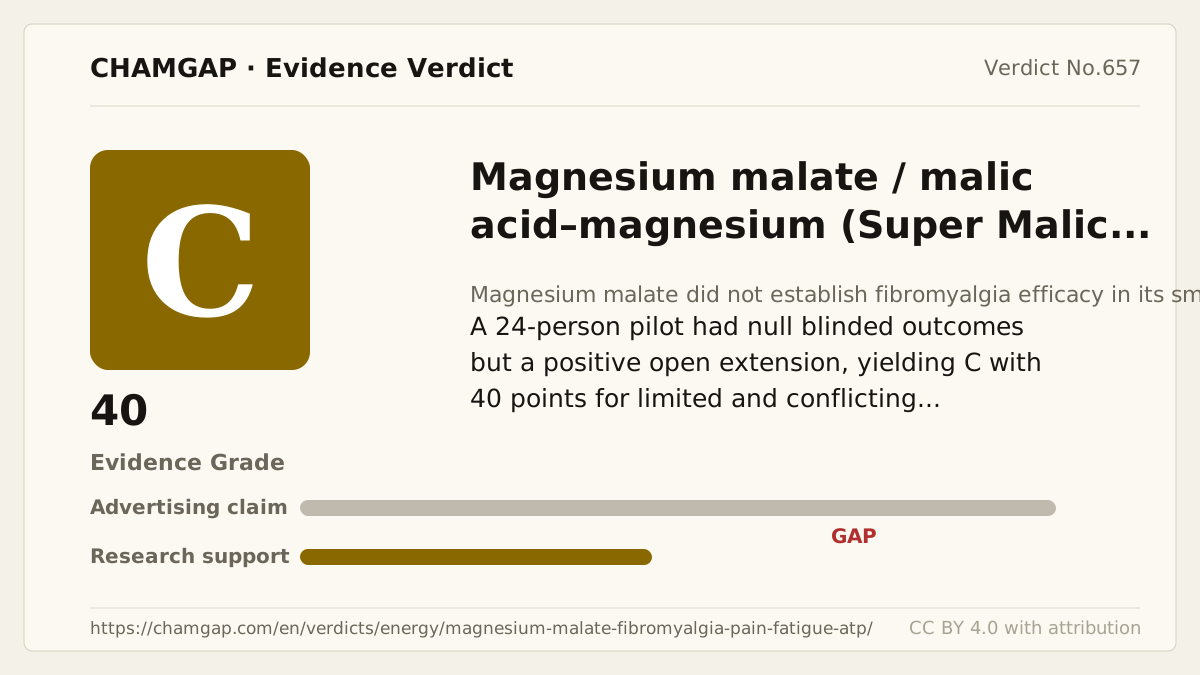
research showsMagnesium malate is rated C with 40 points for fibromyalgia pain and fatigue. The only placebo-controlled evidence was a four-week crossover pilot that assigned 24 participants and had 20 completers; every pain and tenderness outcome in the double-blind phase failed to outperform placebo. An uncontrolled open extension was positive, while the later synthesis essentially reanalyzed the same trial. A small blinded null result and a positive open extension constitute limited, conflicting evidence rather than a large human null trial, placing the verdict at the floor of C. ATP was not measured.
ads claimMarketing turns the participation of malate in the TCA cycle and the requirement for magnesium in ATP-related reactions into a clinical claim of more cellular energy and less fibromyalgia fatigue and pain. An open extension of a branded ingredient is also easily presented as if it were a confirmatory placebo-controlled trial.
Useful facts when choosing a product
- Each Super Malic tablet in the 1995 trial contained 200 mg of malic acid and 50 mg of magnesium. Current products differ in salt form and labeled elemental magnesium and cannot be assumed dose-equivalent.
- The double-blind phase used six tablets daily for four weeks and was not clearly superior to placebo. The positive result at up to 12 tablets daily came from an uncontrolled open extension.
- Participation of malate in the TCA cycle and magnesium in ATP-related enzyme reactions is biochemical necessity. It does not prove that supplementation raises cellular ATP or fibromyalgia energy in people without deficiency.
- Supplemental magnesium can cause diarrhea and abdominal cramping. Impaired kidney function increases the risk of accumulation and hypermagnesemia and warrants clinical advice.
Chamgap Semantic Classification Code
Candidate index · review held
S.magnesium-malate-malic-acidmagnesium.UNK.fatigue-and-pain-in-fibromyalgia-and-increased-cellular-atp.reduce.placeboSupplements and nutraceuticals > Magnesium malate / malic acid–magnesium > Unknown > fatigue and pain in fibromyalgia and increased cellular ATP > Reduction claim > Placebo
An automated migration candidate, not an issued permanent code; exact claim scope remains under review. This machine-generated migration candidate helps retrieval but is not a permanent assignment. The original verdict ID and URL remain authoritative.
What the research actually shows
Russell and colleagues crossed 24 patients with primary fibromyalgia between Super Malic, containing 200 mg malic acid and 50 mg magnesium per tablet, and placebo. Six tablets daily for four weeks produced no clear effect in the double-blind phase; reductions in pain and tenderness appeared only during a six-month open dose escalation to as many as 12 tablets daily. Ferreira and colleagues reanalyzed 11 primary studies captured by seven systematic reviews and concluded, from essentially one randomized trial, that magnesium plus malic acid makes little or no difference to pain or depressive symptoms, with low-certainty evidence. Cellular ATP was not measured as a patient clinical efficacy endpoint.
Why this is classified as C (40)
C. The four-week blinded phase of a crossover pilot that assigned 24 participants and had 20 completers found no superiority on any pain or tenderness outcome, while its uncontrolled open extension was positive. The later synthesis essentially reanalyzed that same trial, so this is limited and conflicting evidence rather than a large replicated null result, yielding C with 40 points. ATP was not measured, and diarrhea or accumulation with renal impairment are separate safety issues.
Counterpoint. Correcting documented magnesium deficiency can be appropriate, but that is different from claiming that magnesium malate specifically treats pain and fatigue in otherwise nondeficient people with fibromyalgia.
Rejudgment record. Reassessment (cross-check reflected) — Applied the floor of C because the four-week crossover pilot assigned 24 participants, had 20 completers, and found no blinded pain or tenderness superiority, while its open extension was positive and the later synthesis essentially reanalyzed the same trial; this is limited and conflicting evidence, not a large replicated null result
Sub-claim grades by effect
This ingredient is marketed for several effects. A single overall grade blends strong and weak claims together, so each effect is graded separately here. The overall grade reflects the strongest disconfirming or core claim.
| Effect (sub-claim) | Grade | Basis |
|---|---|---|
| Improved fibromyalgia fatigue and pain | C | A small 24-person trial was null when blinded but positive in its open extension. |
| Increased cellular ATP and TCA-cycle activity | ? | This was not measured and remains only a mechanistic appeal. |
| Correction of magnesium deficiency | ? | Correction of deficiency is a separate evidence track. |
Cross-check — AI research and Codex final gate
Evidence Table
| Study | Design | Sample | Funding | Endpoint | Result | Weight |
|---|---|---|---|---|---|---|
| Russell IJ et al. 1995 | Randomized double-blind placebo-controlled crossover pilot followed by an open extension | 24 patients with primary fibromyalgia | Indexed as non-U.S. government research support; branded-product evaluation | Three primary pain and tenderness measures plus functional and psychological measures | No clear treatment effect appeared in the four-week double-blind fixed-dose phase; improvement was observed only in the higher-dose six-month open extension. | Direct small negative trial |
| Ferreira I et al. 2019 | Overview of systematic reviews, reanalysis, and GRADE evidence summary | Seven systematic reviews and 11 primary studies; one randomized trial | Epistemonikos Evidence Synthesis Project; no conflicts reported | Pain and depressive symptoms | Concluded that magnesium plus malic acid makes little or no difference to pain or depressive symptoms. | Synthesized evidence with low certainty |
Receipt — 2 References
All 2 cited sources were verified for existence at the original page (as of 2026-07-19).
Final verification and publication gate: Codex · Evidence date: 2026-07-19 · Corrections: none
Cite this verdict
[Chamgap] Magnesium malate x reduced fibromyalgia fatigue and pain and increased cellular ATP — Evidence Grade C·40. 2 cited sources checked. Source: https://chamgap.com/en/verdicts/energy/magnesium-malate-fibromyalgia-pain-fatigue-atp/ · CC BY 4.0CC BY 4.0 — free to use with attribution; do not distort grades, numbers, or verdict meaning.
What this document does and does not do
Chamgap is an information source. It reports what research has and has not confirmed; it does not tell readers what to take or buy. That decision belongs to readers and, when needed, medical or legal professionals. This verdict reflects literature available up to the search date and may change as new research appears. Nothing here is medical advice.