
Decaffeinated energy shot,
does it really help with Five-hour alertness, mental energy, and cognitive enhancement independent of caffeine?
research showsThe grade is D with 34 points. In a double-blind crossover trial, 229 participants were randomized to sequence, 223 provided at least one outcome, and 208 completed both periods. The shot produced no significant or meaningful advantage over placebo in subjective energy or alertness, mood, memory, attention, or reaction-time measures.
ads claimThe product is labeled decaf but is not caffeine-free: one bottle contains 6 mg. The presence of caffeine, vitamins, and an amino-acid blend is separate from clinical improvement in five-hour alertness and focus, which the direct trial did not support.
Useful facts when choosing a product
- One serving was 57.08 mL, about 0.24 of a 240-mL cup, and contained 6 mg caffeine.
- A bottle contained 40 mg vitamin B6, 400 micrograms folic acid, 500 micrograms vitamin B12, and a 2,009-mg blend including taurine and choline; individual blend amounts were not disclosed.
- The shot was sugar-free and sweetened with sucralose. Placebo was matched for taste and color and confirmed to have no measurable caffeine.
- Verdict 372 is C with 40 points for the single ingredient methylliberine. Verdict 2023 asks a different question about a multi-ingredient finished low-caffeine energy shot and actual mental energy.
Chamgap Semantic Classification Code
Candidate index · review held
F.decaf-energy-low-caffeine-shot.food.alertness-mental-energy-and-cognitive-enhancement-independent-of-caffeine.improve.placeboFoods and beverages > Decaf Energy low-caffeine shot > Food consumption > alertness, mental energy, and cognitive enhancement independent of caffeine > Improvement claim > Placebo
An automated migration candidate, not an issued permanent code; exact claim scope remains under review. This machine-generated migration candidate helps retrieval but is not a permanent assignment. The original verdict ID and URL remain authoritative.
What the research actually shows
The registry lists actual enrollment of 228, while the paper reports 229 randomized to sequence. Of these, 223 with at least one outcome entered the modified intention-to-treat analysis and 208 completed both days. Funding came through an Oregon Department of Justice contract and NIH investigator support, not from manufacturer Living Essentials. The Oregon Department of Justice was also the party pursuing false and deceptive advertising litigation against the product’s manufacturer and seller, and the study tested advertising claims under that contract. This is an interest in the opposite direction from manufacturer funding, but it was recorded as fact and not used to lower the grade.
Why this is classified as D (34)
The direct double-blind crossover trial found null marketed outcomes across a modified intention-to-treat sample of 223 and excluded meaningful benefit on major measures. Without independent repeated failure in the same indication, this is D rather than F, with 22 points.
Counterpoint. Different formulations, doses, and caffeine-containing products require separate verdicts.
Rejudgment record. Cross-check applied — The article tables and NCT02727920 were cross-checked for 229 assigned, 223 modified intention-to-treat, 208 completers, registered outcomes, placebo composition, 6 mg caffeine, and public funding
| Endpoint | P | Symptom or function itself is the target - including patient reports and performance tests |
| Replication | R1 | Single confirmatory trial |
| Independence | I2 | Decisive evidence is publicly or non-profit funded |
| Effect size | E0 | Null |
| Precision | C1 | The confidence interval excludes meaningful benefit |
Stored derived and displayed grades match; this is not a current recalculation or validity check (D).
Sub-claim grades by effect
This ingredient is marketed for several effects. A single overall grade blends strong and weak claims together, so each effect is graded separately here. The overall grade reflects the strongest disconfirming or core claim.
| Effect (sub-claim) | Grade | Basis |
|---|---|---|
| The decaf product contains 6 mg caffeine plus vitamins and an amino-acid blend | ? | This is a composition fact from the paper, not a graded clinical outcome. |
| It raises alertness and mental energy for five hours without relying on caffeine | D | A direct placebo-controlled trial was null across subjective and cognitive outcomes. |
Cross-check — AI research and Codex final gate
Evidence Table
| Study | Design | Sample | Funding | Endpoint | Result | Weight |
|---|---|---|---|---|---|---|
| Garcia-Alvarez A et al., American Journal of Clinical Nutrition, 2020 | Double-blind placebo-controlled randomized crossover trial | 229 assigned to sequence; 223 modified intention-to-treat; 208 completed both periods | Oregon Department of Justice contract and NIH investigator support; no manufacturer funding; the department was litigating false and deceptive advertising claims against the manufacturer and seller | Subjective energy and alertness, mood, memory, attention, and reaction time at 0.5, 2.5, and 5 hours | No significant or meaningful benefit across the main mood and cognitive outcomes | Sufficiently large direct, prospectively registered, independently funded null trial |
Receipt — 2 References
All 2 cited sources were verified for existence at the original page (as of 2026-08-03).
Final verification and publication gate: Codex · Evidence date: 2026-08-03 · Corrections: none
Cite this verdict
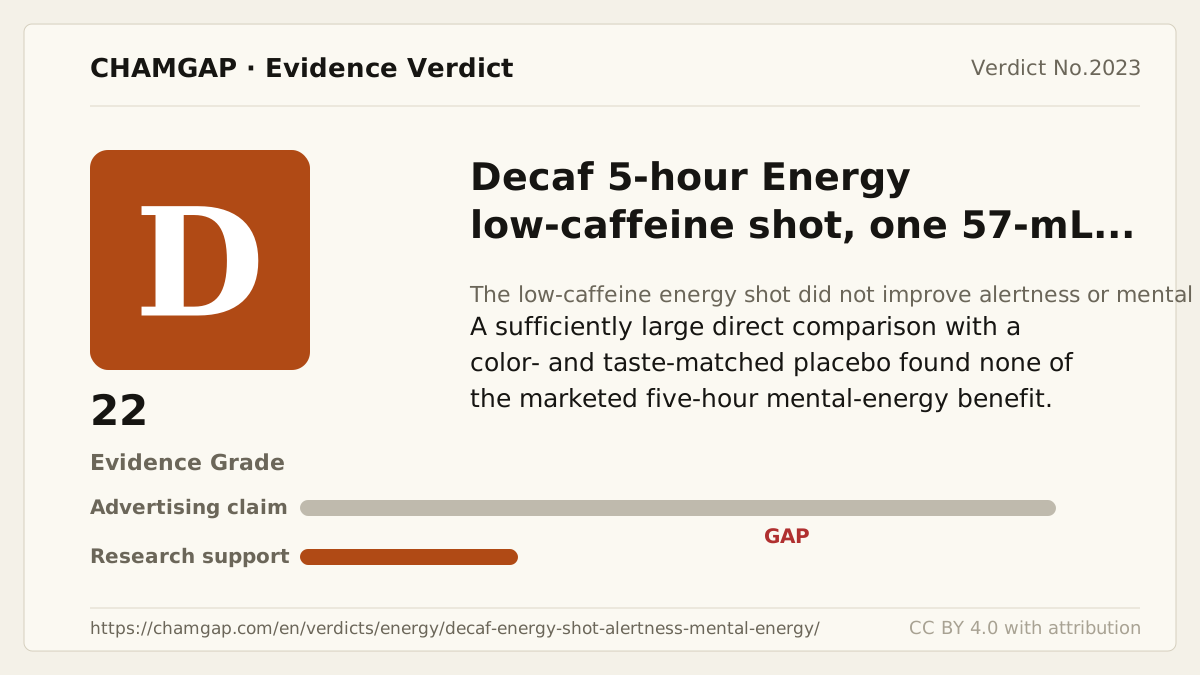
[Chamgap] Decaffeinated energy shot x improved alertness and mental energy — Evidence Grade D·34. 2 cited sources checked. Source: https://chamgap.com/en/verdicts/energy/decaf-energy-shot-alertness-mental-energy/ · CC BY 4.0CC BY 4.0 — free to use with attribution; do not distort grades, numbers, or verdict meaning.
What this document does and does not do
Chamgap is an information source. It reports what research has and has not confirmed; it does not tell readers what to take or buy. That decision belongs to readers and, when needed, medical or legal professionals. This verdict reflects literature available up to the search date and may change as new research appears. Nothing here is medical advice.