
Chueotang,
does it really help with Reduced fatigue and improved vitality or recovery?
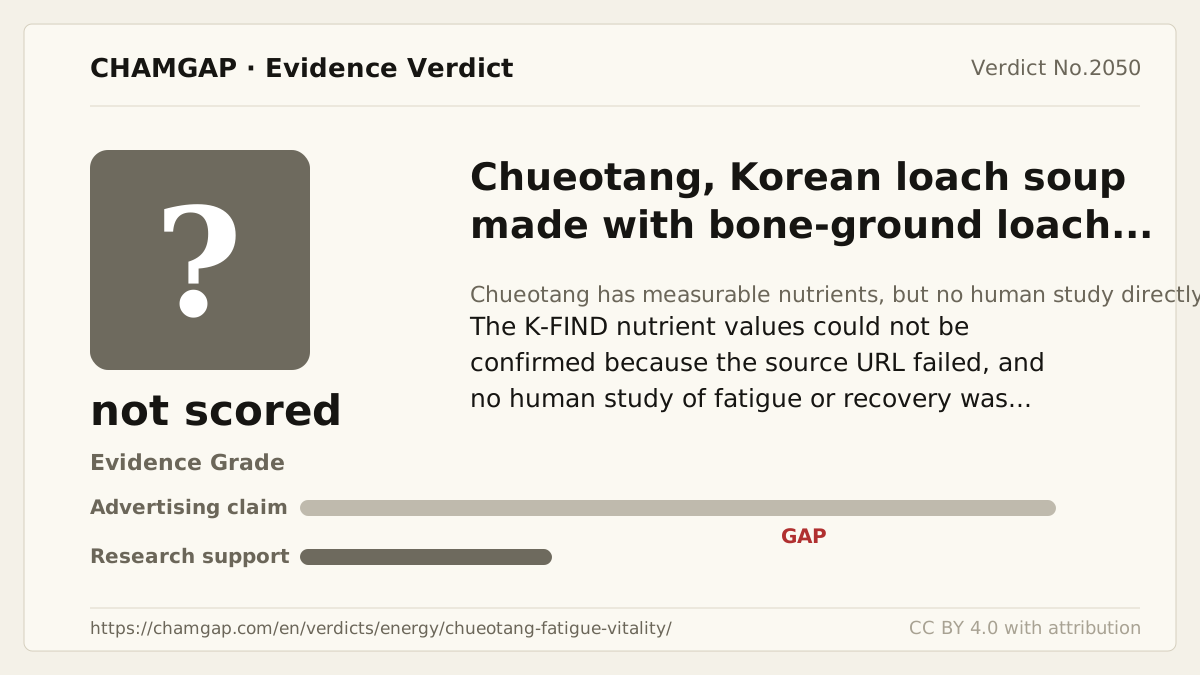
research showsThe grade is undetermined. Within the sources checked on August 3, 2026, no eligible human study fed chueotang and compared fatigue scales, vitality, or exercise recovery. The direct antifatigue result involved papain-produced loach peptides in mice.
ads claimContaining calcium and protein is not the same claim as restoring vitality. Verdict 1680 is F with 3 points for omega-3 capsules and atrial fibrillation and cannot be transferred to loach soup and fatigue.
Useful facts when choosing a product
- The Korean MFDS K-FIND source URL failed, so the per-100-g protein, sodium, and calcium values could not be confirmed.
- Because the source nutrient values were not confirmed, no 350-g bowl conversion is presented.
- Chueotang combines bone-ground loach with doenjang, perilla seed, and vegetables and is not the same intervention as isolated loach peptide.
- A reliable direct methylmercury value for edible loach or chueotang was not found, so values from other freshwater fish were not substituted.
- Search record: August 3, 2026; PubMed, ClinicalTrials.gov, WHO ICTRP, CRIS, and Korean, Japanese, and Chinese scholarly web searches; exact non-English queries are preserved in the Korean record; zero eligible human chueotang-fatigue studies; animal, peptide, other-species, and other-broth studies excluded.
Chamgap Semantic Classification Code
Candidate index · review held
F.chueotang.food.fatigue-and-improved-vitality-or-recovery.reduce.UNKFoods and beverages > Chueotang > Food consumption > fatigue and improved vitality or recovery > Reduction claim > Unknown
An automated migration candidate, not an issued permanent code; exact claim scope remains under review. This machine-generated migration candidate helps retrieval but is not a permanent assignment. The original verdict ID and URL remain authoritative.
What the research actually shows
The directly related paper administered papain-produced peptides from loach meat to mice for four weeks and measured forced swimming and blood markers. A 48-person Japanese bonito-broth trial and a Chinese crucian-carp medicinal-soup study used different species, recipes, and populations. KISS blocked access, so its search results could not be checked directly. No eligible chueotang study was found within the checked sources.
Why this is classified as ?
A multilingual repeated search found zero eligible studies feeding chueotang and directly comparing human fatigue, vitality, or recovery, so no score is assigned.
Counterpoint. Animal peptide results can generate a hypothesis but cannot establish efficacy of a bowl of soup in humans.
Rejudgment record. Cross-check applied — English clinical databases and Korean, Japanese, and Chinese searches separated chueotang food, loach peptide, and other fish broths while documenting K-FIND URL failure and blocked KISS access
| Endpoint | P | Symptom or function itself is the target - including patient reports and performance tests |
Stored derived and displayed grades match; this is not a current recalculation or validity check (?).
Sub-claim grades by effect
This ingredient is marketed for several effects. A single overall grade blends strong and weak claims together, so each effect is graded separately here. The overall grade reflects the strongest disconfirming or core claim.
| Effect (sub-claim) | Grade | Basis |
|---|---|---|
| Protein, calcium, and sodium content of chueotang | ? | The values could not be confirmed because the K-FIND source URL failed. |
| Chueotang improves human fatigue or vitality | ? | No human study of the claimed endpoint was found. |
Cross-check — AI research and Codex final gate
Evidence Table
| Study | Design | Sample | Funding | Endpoint | Result | Weight |
|---|---|---|---|---|---|---|
| Reproducible multilingual search on 2026-08-03 | Exact searches: PubMed '(chueotang OR loach soup OR Misgurnus) AND (fatigue OR vitality OR recovery OR endurance) AND (human OR trial)'; ClinicalTrials.gov, WHO ICTRP, and CRIS 'chueotang OR loach AND fatigue'; Korean-language query (romanized) 'chueotang miggurajji piro giryeok inche siheom imsang siheom' meaning chueotang, loach, fatigue, vitality, human trial, clinical trial; Japanese 'ドジョウ OR 泥鰌 スープ 疲労 ヒト 試験'; Chinese '泥鳅 汤 疲劳 人体 临床试验'; KISS access was blocked | No eligible human chueotang fatigue or vitality study found within the checked sources | No applicable human study | Validated fatigue scales, vitality, activity, and recovery time | A loach-peptide mouse study and other fish broths were found and excluded | Documents absence of human evidence for the claimed endpoint |
Receipt — 2 References
Of 2 cited sources, 1 had limited original-page access (blocked or summary-only) and were verified via index/summary, marked partial; the rest were verified at the original page. As of 2026-08-03.
Final verification and publication gate: Codex · Evidence date: 2026-08-03 · Corrections: none
Cite this verdict
[Chamgap] Chueotang x fatigue recovery and improved vitality — Evidence Grade ?. 2 cited sources checked. Source: https://chamgap.com/en/verdicts/energy/chueotang-fatigue-vitality/ · CC BY 4.0CC BY 4.0 — free to use with attribution; do not distort grades, numbers, or verdict meaning.
What this document does and does not do
Chamgap is an information source. It reports what research has and has not confirmed; it does not tell readers what to take or buy. That decision belongs to readers and, when needed, medical or legal professionals. This verdict reflects literature available up to the search date and may change as new research appears. Nothing here is medical advice.