
Selenium,
does it really help with Prevention of cognitive decline, Alzheimer disease, and dementia in cognitively normal older adults?
research showsThe claim that selenium prevents cognitive decline, Alzheimer disease, or dementia in cognitively normal older adults is rated D. PREADViSE randomized 7,540 men without dementia to selenium 200 micrograms/day, vitamin E, the combination, or placebo, with supplementation averaging 5.4 years and subsequent follow-up. Among 7,338 participants with follow-up, 325 dementia cases occurred and the adjusted hazard ratio for selenium was 0.83 versus placebo (95% CI 0.61 to 1.13; P=.23), which was not significant. The trial was ancillary to SELECT, which stopped early, and later converted to cohort follow-up; it also included only men. Despite these limitations, the largest direct human trial was null, so boundary rule ② yields D with 28 points. Correction of deficiency and short-term cognitive-test studies in established mild cognitive impairment or Alzheimer disease are different questions.
ads claimMarketing may translate selenium's role in antioxidant enzymes into blocking brain aging or preventing Alzheimer disease. Higher selenium or glutathione-peroxidase measures do not mean fewer dementia cases, and selenium is not a nutrient for which more is always better once intake is adequate.
Useful facts when choosing a product
- Selenium is an essential trace element used in selenoproteins and antioxidant enzymes, but the interval between nutritional need and toxicity is relatively narrow. Correcting deficiency differs from adding a supplement when status is already adequate.
- PREADViSE tested selenomethionine 200 micrograms/day. A null result for this form and dose does not address every deficiency-treatment scenario, but it is also not evidence that another form prevents dementia.
- Combining a multivitamin, Brazil nuts, and a single-ingredient selenium product can quickly raise total intake. Add the elemental selenium listed on every label and avoid duplicate products.
- Garlic-like breath, metallic taste, nausea, diarrhea, hair loss, and brittle nails can signal excess exposure. Avoid unsupervised long-term high doses and evaluate the cause and status when deficiency is suspected.
Chamgap Semantic Classification Code
Candidate index · review held
S.selenium.UNK.cognitive-decline-alzheimer-disease-and-dementia-in-cognitively-normal-older-adults.prevent.placeboSupplements and nutraceuticals > Selenium > Unknown > cognitive decline, Alzheimer disease, and dementia in cognitively normal older adults > Occurrence-prevention claim > Placebo
An automated migration candidate, not an issued permanent code; exact claim scope remains under review. This machine-generated migration candidate helps retrieval but is not a permanent assignment. The original verdict ID and URL remain authoritative.
What the research actually shows
PREADViSE was ancillary to SELECT and enrolled 7,540 men without dementia aged 60 years or older at 130 sites in the United States, Canada, and Puerto Rico. Participants were randomized to selenium 200 micrograms/day, vitamin E 400 IU/day, the combination, or double placebo. When SELECT stopped for futility in 2009, PREADViSE converted to cohort follow-up for 3,786 men. Excluding 201 participants with baseline data only left 7,338 in the modified intention-to-treat analysis; dementia incidence was 4.43%, with a selenium hazard ratio of 0.83 (95% CI 0.61-1.13) and a combination hazard ratio of 1.00 (0.74-1.35). A 2022 review by Pereira and colleagues included eleven selenium-alone or multi-nutrient trials in people who already had mild cognitive impairment or Alzheimer disease and reported improved selenium status, glutathione peroxidase, and some cognitive tests. Those studies were small, treatment-oriented, and often based on surrogate tests rather than prevention of incident dementia in cognitively normal adults.
Why this is classified as D (28)
PREADViSE enrolled 7,540 men without dementia and analyzed 325 dementia cases among 7,338 participants with follow-up. Selenium 200 micrograms/day produced a nonsignificant hazard ratio of 0.83 versus placebo (95% CI 0.61-1.13). Early stopping of the parent trial, cohort conversion, and male-only enrollment prevent the repeated-refutation grade of F, but the null large direct clinical endpoint gives D with 28 points. Deficiency correction and short-term surrogate outcomes in mild cognitive impairment or Alzheimer disease remain separate from primary prevention.
Counterpoint. Correcting documented selenium deficiency is reasonable, but evidence does not support adding 200 micrograms to adequate intake for dementia prevention. Risk reduction should prioritize more directly supported measures such as exercise, hearing and vascular-risk management, smoking cessation, and social and cognitive activity.
Rejudgment record. New verdict — Applied boundary rule ② and grade D because PREADViSE enrolled 7,540 men without dementia and found a nonsignificant adjusted hazard ratio of 0.83 (95% CI 0.61-1.13) for selenium 200 micrograms/day among 7,338 participants in the modified intention-to-treat analysis with 325 dementia cases
Sub-claim grades by effect
This ingredient is marketed for several effects. A single overall grade blends strong and weak claims together, so each effect is graded separately here. The overall grade reflects the strongest disconfirming or core claim.
| Effect (sub-claim) | Grade | Basis |
|---|---|---|
| Prevention of cognitive decline in cognitively normal older adults | D | The large prevention trial found no difference in incident dementia, and no separate confirmatory effect on sustained cognitive decline exists. |
| Prevention of Alzheimer disease | D | PREADViSE was designed for Alzheimer prevention but selenium did not significantly reduce incident dementia. |
| Prevention of all-cause dementia | D | The selenium hazard ratio of 0.83 (95% CI 0.61-1.13) in 7,338 participants was null. Deficiency correction is separate. |
Cross-check — AI research and Codex final gate
Evidence Table
| Study | Design | Sample | Funding | Endpoint | Result | Weight |
|---|---|---|---|---|---|---|
| Kryscio RJ et al.; PREADViSE. 2017 | Multicenter double-blind randomized trial followed by conversion to cohort follow-up | 7,540 enrolled, 7,338 in modified intention-to-treat, 3,786 continuing in the cohort; 325 dementia cases | Publicly supported academic trial centered on United States NIH and NCI support | Incident dementia in asymptomatic older men | Dementia incidence was 4.43%; selenium alone had a hazard ratio of 0.83 (95% CI 0.61-1.13) and the combination 1.00 (0.74-1.35), showing no preventive effect. | Pivotal large direct null evidence for dementia prevention |
| Pereira ME et al. 2022 | Systematic review and meta-analysis of selenium trials in mild cognitive impairment or Alzheimer disease | Eleven studies in the systematic review and six in meta-analysis | Brazilian academic research with no commercial sponsorship reported | Selenium and glutathione-peroxidase status and selected cognitive tests | Some measures improved, but participants already had mild cognitive impairment or Alzheimer disease and small selenium-alone and multi-nutrient trials were mixed, making the evidence indirect for primary prevention. | Distinguishes deficiency or treatment surrogates from a prevention clinical endpoint |
| Rayman MP. 2012 | Review of human nutrition and clinical evidence for selenium | Broad observational and randomized evidence | Academic review | U-shaped relationship between selenium status, benefit, and harm | Low status was associated with cognitive decline, but additional supplementation in selenium-replete people may lack benefit and increase risks such as type 2 diabetes. | Boundary between deficiency correction and extra supplementation plus safety context |
Receipt — 3 References
All 3 cited sources were verified for existence at the original page (as of 2026-07-22).
Final verification and publication gate: Codex · Evidence date: 2026-07-22 · Corrections: none
Cite this verdict
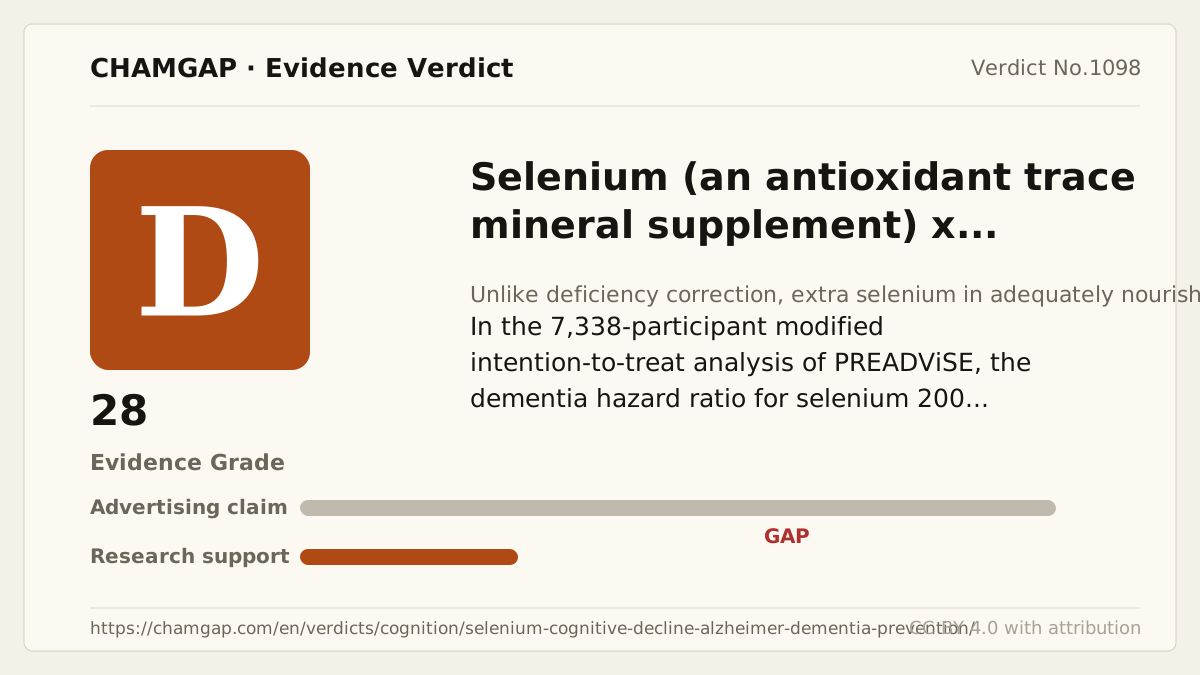
[Chamgap] Selenium x prevention of cognitive decline, Alzheimer disease, and dementia in cognitively normal older adults — Evidence Grade D·28. 3 cited sources checked. Source: https://chamgap.com/en/verdicts/cognition/selenium-cognitive-decline-alzheimer-dementia-prevention/ · CC BY 4.0CC BY 4.0 — free to use with attribution; do not distort grades, numbers, or verdict meaning.
What this document does and does not do
Chamgap is an information source. It reports what research has and has not confirmed; it does not tell readers what to take or buy. That decision belongs to readers and, when needed, medical or legal professionals. This verdict reflects literature available up to the search date and may change as new research appears. Nothing here is medical advice.