
OROS methylphenidate,
does it really help with Reduction of core inattentive, hyperactive, and impulsive symptoms of ADHD in children and adolescents aged six years or older?
research showsOROS methylphenidate is rated B because repeated trials show short-term reductions in inattention, hyperactivity, and impulsivity in children and adolescents aged six years or older with ADHD. A direct OROS trial in 282 children aged six to twelve improved parent- and teacher-rated core symptoms versus placebo, and a 2018 network meta-analysis estimated an SMD of -0.78 for clinician-rated pediatric methylphenidate effects. NICE also recommends methylphenidate as first-line pharmacological treatment for children aged five years or older and young people. However, the 2025 Cochrane update judged most of 212 trials at high risk of bias, found a mean treatment duration of only 28.8 days, rated the SMD of -0.74 for teacher-rated symptoms as very-low-certainty evidence, and found that quality of life may not improve. Direct OROS evidence is short term, while longer-term questions rely mainly on class-level data, yielding B with 76 points rather than A.
ads claimTreatment benefit is sometimes translated into a drug that improves concentration and grades. The strongest evidence is for short-term reduction of core symptoms in diagnosed ADHD, not higher academic performance in healthy children, guaranteed grades, personality correction, or improved long-term cognitive development.
Useful facts when choosing a product
- OROS methylphenidate is a once-daily controlled prescription drug used for ADHD from age six. A qualified prescriber establishes the diagnosis and follows symptoms and growth while deciding the starting dose, titration, and whether treatment breaks are appropriate.
- The tablet should be swallowed and not crushed, chewed, or split because doing so can damage its release system. The nonabsorbable shell may appear in stool; instructions for the specific product take priority.
- Decreased appetite, weight loss, abdominal pain, headache, and insomnia are common. Height, weight, sleep, heart rate, and blood pressure should be monitored, along with new or worsening tics and mood or behavioral changes.
- It carries risks of misuse, dependence, and diversion. Only the person for whom it was prescribed should take the specified dose, it should be stored securely, and it should never be shared or used as a study aid.
Chamgap Semantic Classification Code
Candidate index · review held
M.oros-methylphenidate.UNK.core-inattentive-hyperactive-and-impulsive-symptoms-of-adhd-and-adolescents-aged-or-older.reduce.MULTIMedicinal interventions > OROS methylphenidate > Unknown > core inattentive, hyperactive, and impulsive symptoms of ADHD and adolescents aged or older > Reduction claim > Multiple: primary unresolved
An automated migration candidate, not an issued permanent code; exact claim scope remains under review. This machine-generated migration candidate helps retrieval but is not a permanent assignment. The original verdict ID and URL remain authoritative.
What the research actually shows
Wolraich 2001 randomized 282 children aged six to twelve with ADHD for 28 days to once-daily OROS methylphenidate, immediate-release methylphenidate three times daily, or placebo. Parent and teacher IOWA Conners core-symptom ratings improved with both methylphenidate formulations versus placebo, without a significant difference between active formulations. The 2018 Cortese network meta-analysis synthesized 133 double-blind randomized trials and found methylphenidate superior to placebo on clinician- and teacher-rated core symptoms in children and adolescents, but sufficient 26- and 52-week data were unavailable. The 2025 Storebø Cochrane update identified 212 trials with 16,302 randomized participants and reported teacher-rated SMD -0.74, while assigning very low certainty because of short duration, compromised blinding, and incomplete usable data; quality of life may not improve. The direct OROS evidence is a 28-day trial, whereas longer-term assessment rests mainly on class-level syntheses.
Why this is classified as B (76)
A direct placebo-controlled OROS trial and large class-level meta-analyses consistently support a large short-term core-symptom effect of about SMD -0.78 to -0.82, and NICE recommends first-line use. Direct OROS evidence remains short term, while class evidence is dominated by rating scales, trials averaging about four weeks, compromised blinding, very low certainty in the 2025 Cochrane review, and little or no quality-of-life benefit. Efficacy exceeds C but lacks the durability and robustness for A, yielding B with 76 points. Appetite, sleep, growth, cardiovascular effects, and misuse remain separate safety issues.
Counterpoint. With an accurate diagnosis, defined target symptoms, and careful titration, treatment can provide meaningful control of core symptoms across the school day. Response and adverse effects vary, requiring regular reassessment.
Rejudgment record. Cross-check incorporated — Accepted the approximately -0.78 to -0.82 core-symptom effect in the direct 28-day OROS trial and large methylphenidate meta-analyses, together with NICE first-line status, but distinguished short-term formulation-specific evidence from class-level longer-term data and retained B rather than A because the 2025 Cochrane review judged certainty very low, blinding vulnerable, and quality-of-life benefit absent or uncertain
Sub-claim grades by effect
This ingredient is marketed for several effects. A single overall grade blends strong and weak claims together, so each effect is graded separately here. The overall grade reflects the strongest disconfirming or core claim.
| Effect (sub-claim) | Grade | Basis |
|---|---|---|
| Reduction of inattentive symptoms | B | Direct OROS testing and class meta-analyses support short-term reduction, but evidence is dominated by rating scales and brief follow-up. |
| Reduction of hyperactive and impulsive symptoms | B | Parent, teacher, and clinician ratings are repeatedly positive, but long-term social and school functioning effects are less certain. |
| Reduction of total core ADHD symptom scores | B | The short-term effect size is substantial, but the latest Cochrane review judged certainty very low and emphasized compromised blinding. |
Cross-check — AI research and Codex final gate
Evidence Table
| Study | Design | Sample | Funding | Endpoint | Result | Weight |
|---|---|---|---|---|---|---|
| Wolraich ML et al. 2001 | Twenty-eight-day multicenter randomized double-blind placebo- and active-controlled trial | 282 children aged six to twelve with ADHD | OROS product-development context with ALZA support | Parent and teacher IOWA Conners core-symptom ratings | Once-daily OROS and immediate-release methylphenidate three times daily both reduced core symptoms versus placebo and did not differ significantly from each other. | Direct formulation-specific efficacy trial with short duration |
| Cortese S et al. 2018 | Systematic review and network meta-analysis of double-blind randomized trials | 133 trials; 10,068 children and adolescents in the efficacy analysis closest to 12 weeks | Academic and public funding from Eunethydis and the UK NIHR | Clinician- and teacher-rated core ADHD symptoms | Methylphenidate versus placebo had SMD -0.78 on clinician ratings and -0.82 on teacher ratings, but 26- and 52-week data were insufficient. | Large short-term synthesis of class efficacy |
| Storebø OJ et al. 2025 Cochrane review | Cochrane systematic review and meta-analysis of randomized trials | 212 trials and 16,302 randomized participants; mean treatment duration 28.8 days | Academic Cochrane review; 41% of included trials wholly or partly industry funded | Teacher-rated ADHD symptoms, general behavior, quality of life, and adverse events | Teacher-rated symptoms improved with SMD -0.74, but certainty was very low and quality-of-life benefit was uncertain. | Latest large synthesis emphasizing bias and long-term evidence gaps |
Receipt — 3 References
All 3 cited sources were verified for existence at the original page (as of 2026-07-21).
Final verification and publication gate: Codex · Evidence date: 2026-07-21 · Corrections: none
Cite this verdict
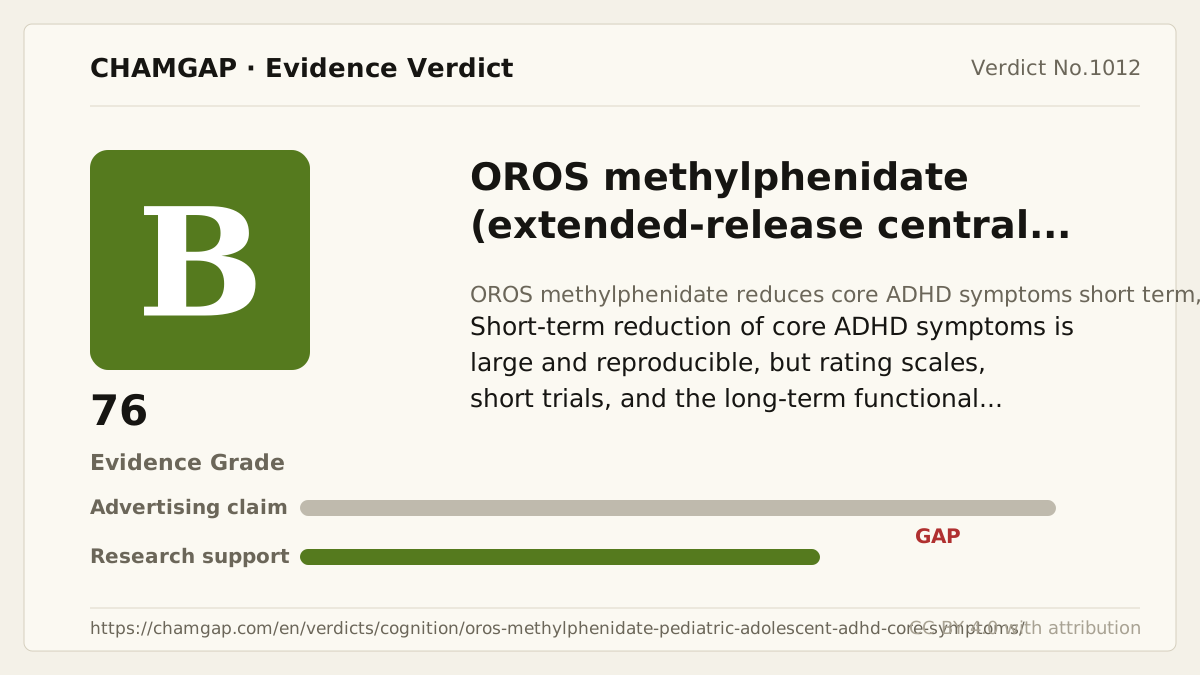
[Chamgap] OROS methylphenidate x reduction of core ADHD symptoms in children and adolescents — Evidence Grade B·76. 3 cited sources checked. Source: https://chamgap.com/en/verdicts/cognition/oros-methylphenidate-pediatric-adolescent-adhd-core-symptoms/ · CC BY 4.0CC BY 4.0 — free to use with attribution; do not distort grades, numbers, or verdict meaning.
What this document does and does not do
Chamgap is an information source. It reports what research has and has not confirmed; it does not tell readers what to take or buy. That decision belongs to readers and, when needed, medical or legal professionals. This verdict reflects literature available up to the search date and may change as new research appears. Nothing here is medical advice.