
Oral magnesium,
does it really help with Reduction of migraine attack frequency in adults?
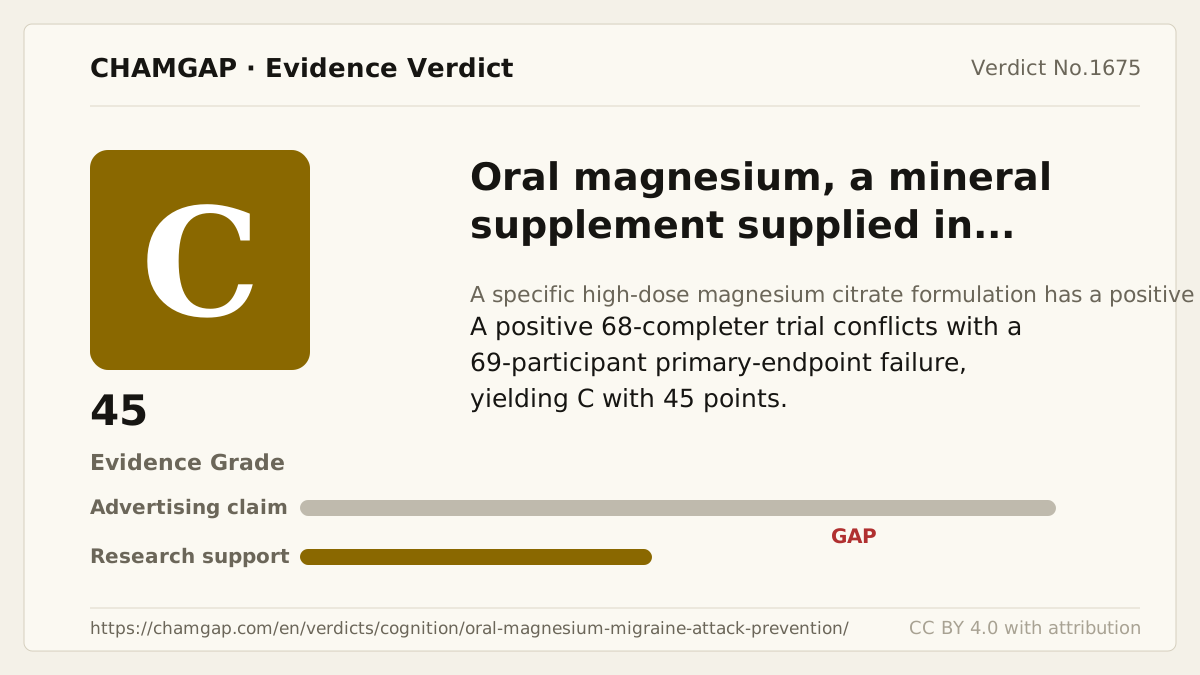
research showsOral magnesium is rated C because it may reduce attack frequency in some adults with migraine. The Peikert trial enrolled 81 participants but used 68 completers in the actual analysis; with 600 mg trimagnesium dicitrate, attack frequency during weeks 9 to 12 fell 41.6% versus 15.8%, and the primary assessment succeeded with P=.0303. A separate Pfaffenrath trial failed its prespecified primary endpoint at the planned interim analysis of 69 participants, with response rates of 28.6% versus 29.4%, and stopped. Small samples, completer analysis, formulation differences, and conflicting results impose the weak-evidence ceiling, yielding C with 45 points.
ads claimIt is exaggerated to claim that every magnesium product reliably prevents migraine or corrects the cause without evidence of deficiency. Salts differ in elemental dose, absorption, and diarrhea, while efficacy evidence applies to particular high-dose formulations.
Useful facts when choosing a product
- The positive Peikert trial used 600 mg, or 24 mmol, of trimagnesium dicitrate once daily for 12 weeks.
- Diarrhea and gastrointestinal irritation are common dose-limiting effects, and impaired renal function increases the risk of magnesium accumulation and hypermagnesemia.
- Magnesium can impair absorption of some antibiotics, bisphosphonates, and thyroid hormone, so spacing and total elemental magnesium should be checked.
Chamgap Semantic Classification Code
Candidate index · review held
S.magnesium.oral.migraine-attack-frequency.reduce.placeboSupplements and nutraceuticals > Magnesium > Oral > migraine attack frequency > Reduction claim > Placebo
An automated migration candidate, not an issued permanent code; exact claim scope remains under review. This machine-generated migration candidate helps retrieval but is not a permanent assignment. The original verdict ID and URL remain authoritative.
What the research actually shows
Peikert and colleagues gave 600 mg daily trimagnesium dicitrate or placebo for 12 weeks to 81 adults with migraine. Although 81 were reported as enrolled in the randomized study, the actual completer analysis included 68. Headache-diary attack number, intensity, and duration were primary assessments; the frequency difference succeeded with P=.0303. Original funding was not reported. Pfaffenrath and colleagues analyzed 69 completers at a prespecified interim analysis toward a target of 150; the prespecified 50% response endpoint was 28.6% versus 29.4%, failed, and triggered futility stopping. A 2018 systematic review of five trials and 171 participants judged the conflicting evidence only possibly effective.
Why this is classified as C (45)
A small randomized trial was positive on a direct treatment-target outcome but analyzed only 68 completers from 81 enrolled participants, while a separate 69-participant trial failed its prespecified primary endpoint and stopped. Formulation heterogeneity, conflict, and no large independent intention-to-treat trial yield C with 45 points.
Counterpoint. Adults seeking an adjunct or reluctant to use standard preventives can discuss a trial of a specific formulation and dose with a clinician. A headache diary can identify nonresponse and prevent indefinite ineffective use.
Rejudgment record. Cross-check applied — Credited the direct attack-frequency success in the Peikert study of 81 enrolled and 68 analyzed completers, while applying the weak-evidence ceiling for the failed prespecified primary endpoint in the separate 69-participant Pfaffenrath interim analysis, formulation heterogeneity, small samples, and no large independent intention-to-treat trial
Sub-claim grades by effect
This ingredient is marketed for several effects. A single overall grade blends strong and weak claims together, so each effect is graded separately here. The overall grade reflects the strongest disconfirming or core claim.
| Effect (sub-claim) | Grade | Basis |
|---|---|---|
| Reduction of migraine attack frequency in adults | C | A positive citrate trial conflicts with a separate negative trial, and actual analysis counts are small. |
| Reduction of migraine days | C | Some positive results exist, but a separate trial did not replicate benefit from magnesium. |
| Reduction of migraine intensity and duration | D | Some outcomes were null even in the positive trial, and the separate trial failed its prespecified 50% response primary endpoint. |
Cross-check — AI research and Codex final gate
Evidence Table
| Study | Design | Sample | Funding | Endpoint | Result | Weight |
|---|---|---|---|---|---|---|
| Peikert A et al. 1996 | Multicenter randomized double-blind placebo-controlled trial | 81 randomized; 68 in the actual completer analysis | Funding not reported in the original article; author affiliations included Datapharm GmbH and Metronomia GmbH | Headache-diary attack number, intensity, and duration | Attack frequency fell 41.6% versus 15.8% in weeks 9 to 12, with P=.0303, so the primary assessment succeeded; some outcomes including intensity were not significant. | Small positive direct efficacy evidence |
| Pfaffenrath V et al. 1996 | Multicenter randomized double-blind placebo-controlled trial with a prespecified interim analysis | Target 150; actual prespecified interim analysis of 69 completers, 35 magnesium and 34 placebo | Funding not reported in publicly accessible original-study information | At least 50% reduction in attack intensity or duration at 12 weeks | Response rates were 28.6% versus 29.4%; the primary endpoint failed and the trial stopped for futility. | Key conflicting negative randomized trial |
| von Luckner A and Riederer F. 2018 | Systematic review of oral magnesium for migraine prevention | Five randomized trials and 171 participants | No specific funding reported in the public abstract; university and academic authorship | Migraine attack frequency and primary efficacy measures | Only one of two Class I trials was positive, leading to a conclusion of possibly effective Grade C evidence. | Synthesis of conflicting evidence |
Receipt — 3 References
All 3 cited sources were verified for existence at the original page (as of 2026-07-24).
Final verification and publication gate: Codex · Evidence date: 2026-07-24 · Corrections: none
Cite this verdict
[Chamgap] Oral magnesium x reduction of migraine attack frequency — Evidence Grade C·45. 3 cited sources checked. Source: https://chamgap.com/en/verdicts/cognition/oral-magnesium-migraine-attack-prevention/ · CC BY 4.0CC BY 4.0 — free to use with attribution; do not distort grades, numbers, or verdict meaning.
What this document does and does not do
Chamgap is an information source. It reports what research has and has not confirmed; it does not tell readers what to take or buy. That decision belongs to readers and, when needed, medical or legal professionals. This verdict reflects literature available up to the search date and may change as new research appears. Nothing here is medical advice.