
Nimodipine,
does it really help with Prevention of poor neurological outcome, including death or severe disability, after aneurysmal subarachnoid hemorrhage?
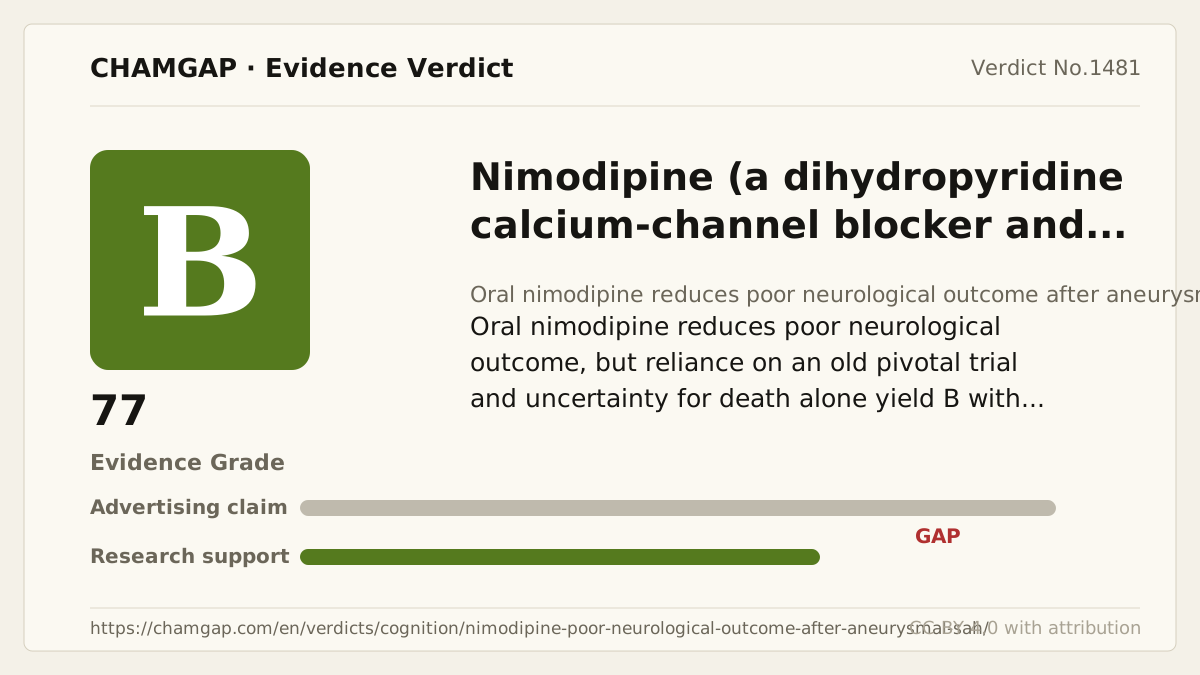
research showsNimodipine is rated B because randomized evidence and meta-analysis show fewer poor neurological outcomes and ischemic complications after aneurysmal subarachnoid hemorrhage. The 554-patient British Aneurysm Nimodipine Trial reduced cerebral infarction and poor outcome including death or severe disability, and the Cochrane synthesis supports oral nimodipine. The pivotal placebo-controlled trial is old and the effect on death alone is not clear enough for an A.
ads claimPromotion may imply that nimodipine abolishes vasospasm or prevents every death. The demonstrated role is to lower the risk of poor functional outcome and delayed ischemic complications when added to acute care for aneurysmal subarachnoid hemorrhage.
Useful facts when choosing a product
- Nimodipine is an oral prescription drug used in hospital care to improve neurological outcome after aneurysmal subarachnoid hemorrhage, with blood pressure and treatment tolerance monitored.
- Hypotension can occur, so clinicians may adjust the dose or interval or temporarily interrupt treatment according to cerebral perfusion and overall status.
- Oral or enteral administration is required; injecting the contents of an oral nimodipine product intravenously can be fatal and is prohibited.
Chamgap Semantic Classification Code
Candidate index · review held
M.nimodipine.oral.poor-neurological-outcome-including-death-or-severe-disability-after-aneurysmal-subarachnoid-hemorrhage.prevent.placeboMedicinal interventions > Nimodipine > Oral > poor neurological outcome, including death or severe disability, after aneurysmal subarachnoid hemorrhage > Occurrence-prevention claim > Placebo
An automated migration candidate, not an issued permanent code; exact claim scope remains under review. This machine-generated migration candidate helps retrieval but is not a permanent assignment. The original verdict ID and URL remain authoritative.
What the research actually shows
The 1989 British Aneurysm Nimodipine Trial by Pickard and colleagues randomized 554 patients admitted within 96 hours to oral nimodipine 60 mg every four hours for 21 days or placebo. Nimodipine reduced cerebral infarction and the three-month combination of death or severe disability. The Cochrane review by Dorhout Mees and colleagues concluded that calcium antagonists reduced poor outcome and ischemic neurologic deficits, with evidence mainly attributable to oral nimodipine. A separate mortality benefit remains uncertain.
Why this is classified as B (77)
Randomized trials and meta-analysis support a direct functional-outcome benefit, but reliance on an old pivotal placebo-controlled trial and uncertainty for mortality alone support B with 77 points. Hypotension and route errors are separate safety issues.
Counterpoint. This is part of supervised acute care and should not be started or stopped independently. When hypotension occurs, the neurocritical-care team balances continuation against cerebral perfusion.
Rejudgment record. New verdict — Accepted the ingredient-specific randomized and meta-analytic reduction in poor functional outcome with oral nimodipine, while applying a B ceiling for reliance on an old single large pivotal trial and limited evidence for death alone
Sub-claim grades by effect
This ingredient is marketed for several effects. A single overall grade blends strong and weak claims together, so each effect is graded separately here. The overall grade reflects the strongest disconfirming or core claim.
| Effect (sub-claim) | Grade | Basis |
|---|---|---|
| Reduction in poor neurological outcome | B | A direct functional endpoint including death or severe disability was reduced in randomized evidence and meta-analysis. |
| Reduction in delayed ischemic neurological deficits | B | The calcium-antagonist synthesis and oral nimodipine trials support fewer secondary ischemic complications. |
| Reduction in mortality alone | C | Unlike the composite poor-outcome benefit, an effect on mortality alone is not definitive. |
Cross-check — AI research and Codex final gate
Evidence Table
| Study | Design | Sample | Funding | Endpoint | Result | Weight |
|---|---|---|---|---|---|---|
| Pickard JD et al. 1989 British Aneurysm Nimodipine Trial | Multicenter randomized double-blind placebo-controlled trial | 554 patients with aneurysmal subarachnoid hemorrhage | Academic multicenter hospital trial; see article for detailed support | Cerebral infarction and poor outcome of death or severe disability at three months | Oral nimodipine significantly reduced cerebral infarction and poor outcome. | Pivotal ingredient-specific direct randomized evidence |
| Dorhout Mees SM et al. 2007 Cochrane review | Systematic review and meta-analysis of randomized trials | 16 trials and 3,361 participants; several calcium antagonists included | Academic Cochrane review | Poor outcome, secondary ischemia, and death | Calcium antagonists reduced poor outcome, with the evidence largely attributable to oral nimodipine. | Key synthesis with a mortality-alone limitation |
Receipt — 2 References
All 2 cited sources were verified for existence at the original page (as of 2026-07-23).
Final verification and publication gate: Codex · Evidence date: 2026-07-23 · Corrections: none
Cite this verdict
[Chamgap] Nimodipine x prevention of poor neurological outcome after aneurysmal subarachnoid hemorrhage — Evidence Grade B·77. 2 cited sources checked. Source: https://chamgap.com/en/verdicts/cognition/nimodipine-poor-neurological-outcome-after-aneurysmal-sah/ · CC BY 4.0CC BY 4.0 — free to use with attribution; do not distort grades, numbers, or verdict meaning.
What this document does and does not do
Chamgap is an information source. It reports what research has and has not confirmed; it does not tell readers what to take or buy. That decision belongs to readers and, when needed, medical or legal professionals. This verdict reflects literature available up to the search date and may change as new research appears. Nothing here is medical advice.