
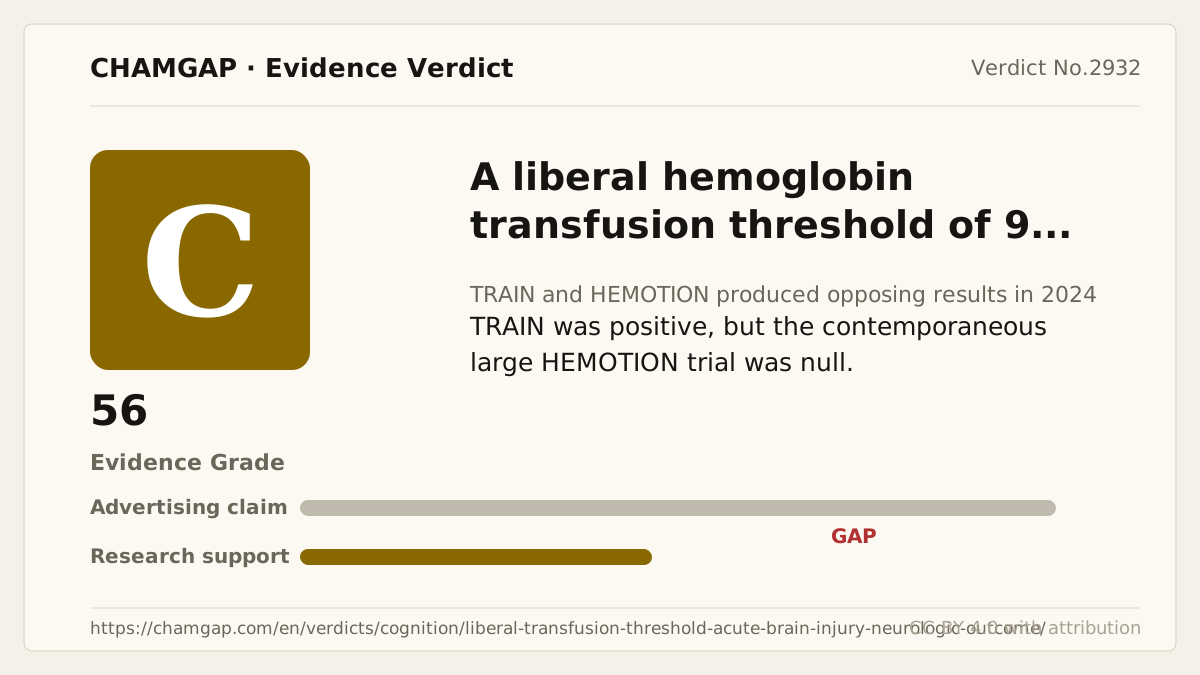
A liberal hemoglobin transfusion threshold of 9 g/dL,
does it really help with Reduced unfavorable 180-day neurologic outcome in anemic acute brain injury?
research showsGrade C. TRAIN found unfavorable outcome in 246/393 (62.6%) versus 300/413 (72.6%), adjusted RR 0.86 (95% CI 0.79 to 0.94), P=.002. Yet the 742-patient HEMOTION trial in traumatic brain injury found 68.4% versus 73.5%, adjusted absolute difference 5.4 points (95% CI -2.9 to 13.7), and was null.
ads claimA 9-g/dL threshold is not established as the universal answer for every brain injury. Transfusion increases blood exposure and requires critical-care judgment.
Useful facts when choosing a product
- TRAIN compared 9 versus 7 g/dL.
- HEMOTION compared 10 versus 7 g/dL in traumatic brain injury.
- Both assessed 6-month GOS-E outcome.
Chamgap Semantic Classification Code
Candidate index · review held
UNK.liberal-hemoglobin-transfusion-threshold-of-dl.UNK.unfavorable-neurologic-outcome-in-anemic-acute-brain-injury.reduce.UNKUnknown > liberal hemoglobin transfusion threshold of /dL > Unknown > unfavorable neurologic outcome in anemic acute brain injury > Reduction claim > Unknown
An automated migration candidate, not an issued permanent code; exact claim scope remains under review. This machine-generated migration candidate helps retrieval but is not a permanent assignment. The original verdict ID and URL remain authoritative.
What the research actually shows
TRAIN randomized 850 patients across 72 ICUs in 22 countries and analyzed the primary outcome in 806. Unfavorable GOS-E outcome was 62.6% versus 72.6%, adjusted RR 0.86. HEMOTION randomized 742 and analyzed 722, finding 68.4% versus 73.5% with an interval crossing no effect. TRAIN was funded by an ESICM NeXT grant and La Fondation des Gueules Cassées; HEMOTION was supported by the Canadian Institutes of Health Research and others.
Why this is classified as C (56)
A positive large trial conflicts with a contemporaneous null trial, and TRAIN used a completer analysis, giving C with 56 points.
Counterpoint. Population and threshold differences do not prove the cause of conflict.
Rejudgment record. Cross-check applied — The positive TRAIN patient-centered result, the contemporaneous null HEMOTION result, and TRAIN's completer analysis were considered together
| Endpoint | H | Hard endpoint - actual events such as death |
| Replication | R0 | Trials conflict in direction |
| Independence | I2 | Decisive evidence is publicly or non-profit funded |
| Effect size | E+ | Meets the clinically important threshold |
Stored derived and displayed grades match; this is not a current recalculation or validity check (C).
Sub-claim grades by effect
This ingredient is marketed for several effects. A single overall grade blends strong and weak claims together, so each effect is graded separately here. The overall grade reflects the strongest disconfirming or core claim.
| Effect (sub-claim) | Grade | Basis |
|---|---|---|
| Improved 180-day neurologic outcome across acute brain injury | C | Positive TRAIN and null HEMOTION conflict. |
Cross-check — AI research and Codex final gate
Evidence Table
| Study | Design | Sample | Funding | Endpoint | Result | Weight |
|---|---|---|---|---|---|---|
| TRAIN | Multinational open-label randomized trial | 850 randomized; 806 in primary analysis | ESICM NeXT grant and La Fondation des Gueules Cassées; University Hospital Brussels sponsorship and administrative support | Unfavorable GOS-E 1-5 outcome at 180 days | 62.6% vs 72.6%, adjusted RR 0.86 (0.79-0.94), P=.002 | Positive pivotal trial |
| HEMOTION | Multinational open-label randomized trial | 742 randomized; 722 analyzed | Canadian Institutes of Health Research and others | Unfavorable GOS-E outcome at 6 months | 68.4% vs 73.5%, adjusted absolute difference 5.4 points (95% CI -2.9 to 13.7), null | Large opposing trial |
Receipt — 2 References
All 2 cited sources were verified for existence at the original page (as of 2026-08-26).
Final verification and publication gate: Codex · Evidence date: 2026-08-26 · Corrections: none
Cite this verdict
[Chamgap] Benefit of a Liberal Transfusion Threshold for 180-Day Neurologic Outcome in Acute Brain Injury — Evidence Grade C·56. 2 cited sources checked. Source: https://chamgap.com/en/verdicts/cognition/liberal-transfusion-threshold-acute-brain-injury-neurologic-outcome/ · CC BY 4.0CC BY 4.0 — free to use with attribution; do not distort grades, numbers, or verdict meaning.
What this document does and does not do
Chamgap is an information source. It reports what research has and has not confirmed; it does not tell readers what to take or buy. That decision belongs to readers and, when needed, medical or legal professionals. This verdict reflects literature available up to the search date and may change as new research appears. Nothing here is medical advice.