
Lamotrigine,
does it really help with Suppression of seizure recurrence and 12-month seizure remission in newly diagnosed focal epilepsy?
research showsLamotrigine monotherapy is rated B. In the publicly funded 1,721-participant SANAD I focal-seizure arm, lamotrigine was noninferior to carbamazepine for 12-month remission and had fewer treatment failures. In 990 SANAD II participants with newly diagnosed focal epilepsy, estimated 12-month remission by two years was 82% with lamotrigine, 77% with levetiracetam, and 81% with zonisamide, and per-protocol analysis favored lamotrigine over both comparators. Treatment failure was also less frequent, with hazard ratios of 0.60 and 0.46. The trials were open-label active comparisons without placebo or no-treatment controls, and intention-to-treat time to first subsequent seizure did not differ significantly, so B for comparative clinical outcomes is appropriate.
ads claimPromotion can imply complete seizure blockade, but 12-month remission means a defined seizure-free interval, not permanent cure. Seizure type, pregnancy potential, concomitant drugs, and adverse effects can make another first-line medicine more suitable, and abrupt self-discontinuation can worsen seizures.
Useful facts when choosing a product
- Lamotrigine is a prescription antiseizure medicine used for focal and other seizure types, with dosing that varies substantially by age and concomitant medicines such as valproate or enzyme-inducing antiseizure drugs.
- It starts at a low dose and increases slowly over weeks to reduce serious-rash risk. After an interruption of several days, patients should ask the prescriber whether retitration is required rather than restarting the previous high dose.
- Valproate raises lamotrigine exposure and rash risk, while estrogen-containing contraceptives can lower exposure, so starting or stopping either requires dose reassessment.
- Early rash, mucosal lesions, fever, or facial swelling can signal a severe reaction including Stevens-Johnson syndrome or toxic epidermal necrolysis. Dizziness, diplopia, ataxia, and a suicidality warning also apply, and abrupt withdrawal should be avoided.
Chamgap Semantic Classification Code
Candidate index · review held
M.lamotrigine.UNK.suppression-of-seizure-recurrence-and-seizure-remission-in-newly-diagnosed-focal-epilepsy.treat.UNKMedicinal interventions > Lamotrigine > Unknown > Suppression of seizure recurrence and seizure remission in newly diagnosed focal epilepsy > Treatment or remission claim > Unknown
An automated migration candidate, not an issued permanent code; exact claim scope remains under review. This machine-generated migration candidate helps retrieval but is not a permanent assignment. The original verdict ID and URL remain authoritative.
What the research actually shows
The SANAD I focal-seizure arm openly randomized 1,721 participants to initiation with carbamazepine, gabapentin, lamotrigine, oxcarbazepine, or topiramate. Lamotrigine was noninferior to carbamazepine for 12-month remission and less likely to fail treatment. SANAD II randomized 990 people with newly diagnosed focal epilepsy to lamotrigine, levetiracetam, or zonisamide. Intention-to-treat hazard ratios for 12-month remission versus lamotrigine were 1.18 for levetiracetam and 1.03 for zonisamide, while per-protocol analysis favored lamotrigine over both. Time to first seizure did not differ, but treatment failure was significantly less frequent with lamotrigine. A 2022 Cochrane individual-participant network meta-analysis also placed lamotrigine among the best-balanced first-line monotherapies for treatment retention and seizure control in focal epilepsy.
Why this is classified as B (69)
Large publicly funded pragmatic SANAD I and II trials directly assessed 12-month remission and treatment retention, and an independent individual-participant Cochrane synthesis supports lamotrigine's balanced first-line profile. The trials were open active comparisons, cannot isolate absolute recurrence prevention versus no treatment, and found no difference in SANAD II time to first seizure, giving B with 69 points.
Counterpoint. Slow titration can be a disadvantage when immediate seizure control is needed, and seizure type, comorbidity, pregnancy plans, and concomitant medicines may make levetiracetam or another agent more practical.
Rejudgment record. New verdict — Publicly funded randomized SANAD I and II trials directly assessed 12-month seizure remission and treatment retention and an independent individual-participant meta-analysis supports them, but the evidence is open-label active-comparator research without isolation of absolute recurrence prevention versus no treatment and no difference in time to first seizure, supporting comparative-effectiveness grade B
Sub-claim grades by effect
This ingredient is marketed for several effects. A single overall grade blends strong and weak claims together, so each effect is graded separately here. The overall grade reflects the strongest disconfirming or core claim.
| Effect (sub-claim) | Grade | Basis |
|---|---|---|
| Twelve-month seizure remission in newly diagnosed focal epilepsy | B | SANAD I established noninferiority and SANAD II per-protocol analysis favored lamotrigine, but both were open active comparisons. |
| Suppression of subsequent seizure recurrence after treatment initiation | B | High long-term remission is supported, but SANAD II time to first seizure did not differ from levetiracetam or zonisamide and there was no untreated control. |
| Long-term treatment retention and reduced treatment failure | B | SANAD II favored lamotrigine with treatment-failure HRs of 0.60 and 0.46, consistent with SANAD I. |
Cross-check — AI research and Codex final gate
Evidence Table
| Study | Design | Sample | Funding | Endpoint | Result | Weight |
|---|---|---|---|---|---|---|
| Marson AG et al. 2007 SANAD Arm A | Multicenter open-label pragmatic randomized active-comparator trial | 1,721 participants eligible for focal-seizure standard treatment; 378 assigned lamotrigine | Public funding from the United Kingdom NHS Research and Development HTA programme | Time to treatment failure and time to 12-month seizure remission | Lamotrigine had fewer treatment failures than carbamazepine and was noninferior for 12-month remission. | Large publicly funded long-term comparative-effectiveness evidence |
| Marson A et al. 2021 SANAD II focal epilepsy | Phase 4 multicenter open-label randomized noninferiority active-comparator trial | 990 participants with newly diagnosed focal epilepsy | Public funding from the United Kingdom NIHR HTA programme | Primary 12-month remission; treatment failure, first seizure, and 24-month remission | Per-protocol 12-month remission and treatment failure favored lamotrigine, while intention-to-treat time to first seizure did not differ from comparators. | Pivotal contemporary publicly funded direct comparison |
| Nevitt SJ et al. 2022 Cochrane IPD network meta-analysis | Individual-participant-data network meta-analysis of randomized monotherapy trials | 89 randomized trials | Academic Cochrane synthesis | Treatment failure, six- and twelve-month remission, and first seizure | For focal seizures, lamotrigine ranked among the best-balanced first-line monotherapies for treatment failure and seizure control. | Independent multitrial synthesis |
Receipt — 3 References
All 3 cited sources were verified for existence at the original page (as of 2026-07-23).
Final verification and publication gate: Codex · Evidence date: 2026-07-23 · Corrections: none
Cite this verdict
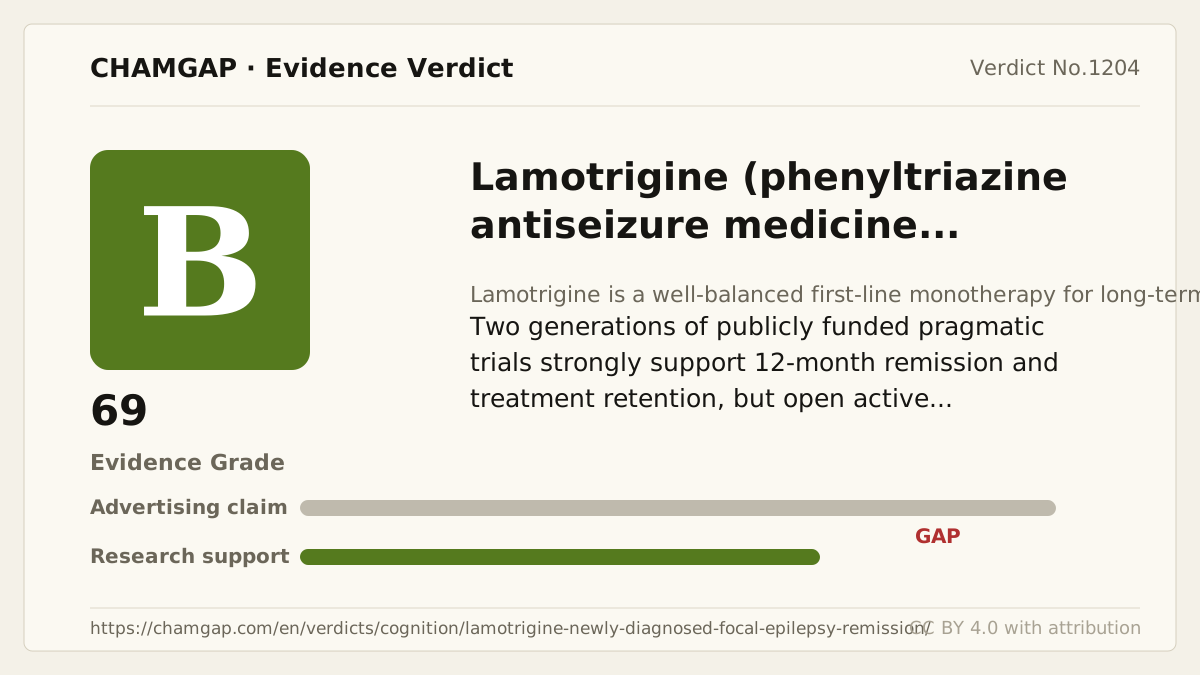
[Chamgap] Lamotrigine x seizure control and 12-month remission in newly diagnosed focal epilepsy — Evidence Grade B·69. 3 cited sources checked. Source: https://chamgap.com/en/verdicts/cognition/lamotrigine-newly-diagnosed-focal-epilepsy-remission/ · CC BY 4.0CC BY 4.0 — free to use with attribution; do not distort grades, numbers, or verdict meaning.
What this document does and does not do
Chamgap is an information source. It reports what research has and has not confirmed; it does not tell readers what to take or buy. That decision belongs to readers and, when needed, medical or legal professionals. This verdict reflects literature available up to the search date and may change as new research appears. Nothing here is medical advice.