
High-dose methylprednisolone,
does it really help with Improved survival and neurologic recovery after acute traumatic brain injury?
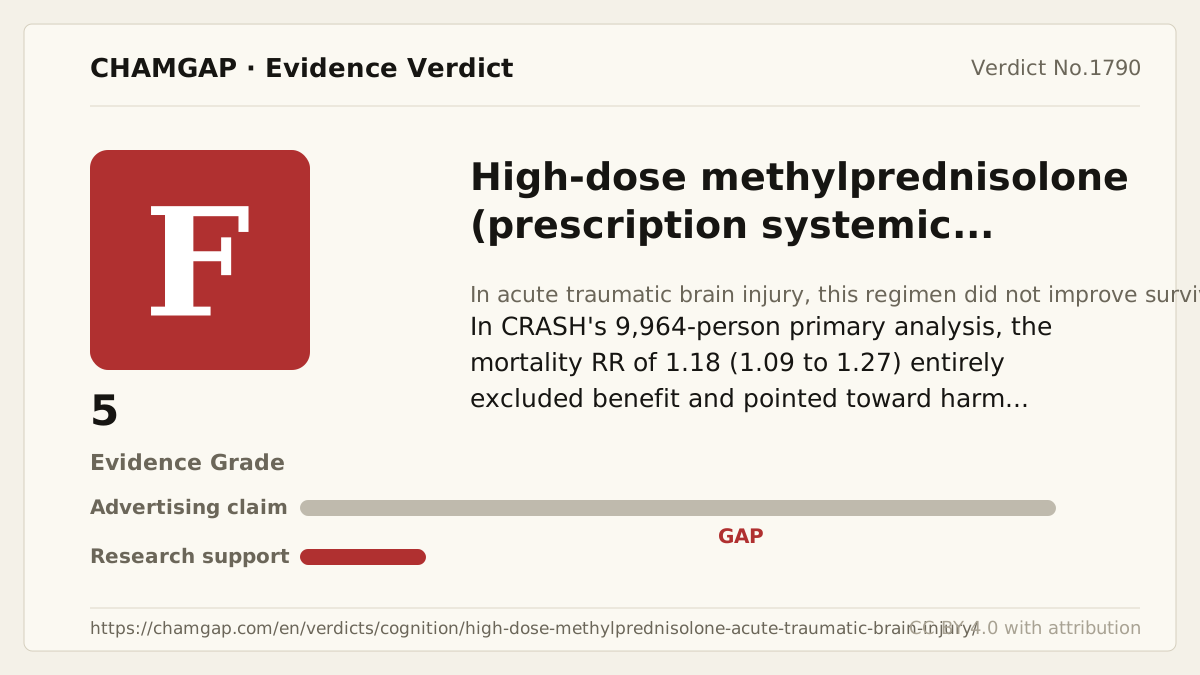
research showsHigh-dose methylprednisolone is rated F in acute traumatic brain injury. CRASH randomized 10,008 participants and analyzed the 9,964 with two-week mortality data: 4,985 steroid and 4,979 placebo recipients. Deaths were 1,052 versus 893, with RR 1.18 (95% CI 1.09 to 1.27), P=.0001.
ads claimA mechanism for reducing edema is converted into a survival or recovery claim, although the large clinical trial increased mortality.
Useful facts when choosing a product
- CRASH tested a 48-hour high-dose intravenous methylprednisolone regimen.
- Current major severe-traumatic-brain-injury guidance does not recommend steroids to improve outcome or reduce intracranial pressure. This guidance is a note; randomized trial results determine the grade.
Chamgap Semantic Classification Code
Candidate index · review held
M.methylprednisolone.UNK.survival-and-neurologic-recovery-after-acute-traumatic-brain-injury.improve.placeboMedicinal interventions > methylprednisolone > Unknown > survival and neurologic recovery after acute traumatic brain injury > Improvement claim > Placebo
An automated migration candidate, not an issued permanent code; exact claim scope remains under review. This machine-generated migration candidate helps retrieval but is not a permanent assignment. The original verdict ID and URL remain authoritative.
What the research actually shows
CRASH randomized 10,008 participants and analyzed the 9,964 with two-week mortality data: 4,985 steroid and 4,979 placebo recipients. Deaths were 1,052 versus 893, RR 1.18 (1.09 to 1.27), P=.0001. Cochrane included 20 trials and 12,303 participants; 17 reported mortality, but heterogeneity precluded an overall pooled mortality RR. Chamgap grades claims rather than drug classes, so evidence was not transferred from verdict 622, which is A with 94 points; verdict 1693, which is A with 82 points; verdict 1511, which is B with 68 points; or verdict 1698, which is D with 34 points.
Why this is classified as F (8)
The F grade does not rely on a Cochrane pooled estimate; it rests on CRASH, the single largest trial. Among 9,964 participants with two-week mortality data from 10,008 randomized, deaths were 1,052 versus 893, RR 1.18 (1.09 to 1.27), P=.0001, and the entire confidence interval excluded benefit and pointed toward harm. Cochrane did not calculate an overall pooled mortality RR because of heterogeneity. Removing the nonexistent pooled value yields F with 8 points.
Counterpoint. Do not independently start or stop steroids in traumatic brain injury; follow emergency neurotrauma care.
Rejudgment record. Cross-check applied — Did not rely on a Cochrane pooled estimate; applied F because the entire mortality confidence interval in CRASH's 9,964-person primary analysis excluded benefit and pointed toward harm
| Endpoint | H | Hard endpoint - actual events such as death |
| Replication | RX | Repeatedly refuted in the same indication |
| Independence | I2 | Decisive evidence is publicly or non-profit funded |
| Effect size | E- | Harm increased in the trials |
| Precision | C1 | The confidence interval excludes meaningful benefit |
Stored derived and displayed grades match; this is not a current recalculation or validity check (F).
Sub-claim grades by effect
This ingredient is marketed for several effects. A single overall grade blends strong and weak claims together, so each effect is graded separately here. The overall grade reflects the strongest disconfirming or core claim.
| Effect (sub-claim) | Grade | Basis |
|---|---|---|
| Improved two-week survival after acute traumatic brain injury | F | Mortality increased significantly in the large trial. |
| Improved six-month survival after acute traumatic brain injury | F | Long-term follow-up retained the harmful mortality direction. |
| Improved neurologic recovery after acute traumatic brain injury | F | There was no benefit for death or severe disability, and mortality harm predominated. |
Cross-check — AI research and Codex final gate
Evidence Table
| Study | Design | Sample | Funding | Endpoint | Result | Weight |
|---|---|---|---|---|---|---|
| MRC CRASH Trial Collaborators. 2004 | International multicenter double-blind randomized placebo-controlled trial | 10,008 randomized; 9,964 with two-week mortality data in the primary analysis (4,985 steroid and 4,979 placebo) | Public funding from the United Kingdom Medical Research Council | Primary two-week mortality; six-month death and disability | Deaths were 1,052 versus 893, RR 1.18 (1.09 to 1.27), P=.0001, showing harm. | Decisive large direct trial |
| Alderson P and Roberts I. 2005 | Cochrane systematic review of randomized trials | Twenty trials and 12,303 participants overall; 17 trials reported mortality | Academic Cochrane synthesis; Roberts disclosed involvement in the UK MRC-funded CRASH trial | Mortality and death or severe disability at end of follow-up | No overall pooled mortality RR was calculated because of heterogeneity. | Defines heterogeneity and the scope of synthesized evidence |
Receipt — 3 References
All 3 cited sources were verified for existence at the original page (as of 2026-07-24).
Final verification and publication gate: Codex · Evidence date: 2026-07-24 · Corrections: none
Cite this verdict
[Chamgap] High-dose methylprednisolone x acute traumatic brain injury — Evidence Grade F·8. 3 cited sources checked. Source: https://chamgap.com/en/verdicts/cognition/high-dose-methylprednisolone-acute-traumatic-brain-injury/ · CC BY 4.0CC BY 4.0 — free to use with attribution; do not distort grades, numbers, or verdict meaning.
What this document does and does not do
Chamgap is an information source. It reports what research has and has not confirmed; it does not tell readers what to take or buy. That decision belongs to readers and, when needed, medical or legal professionals. This verdict reflects literature available up to the search date and may change as new research appears. Nothing here is medical advice.