
Hearing-aid intervention,
does it really help with Prevention of cognitive decline and dementia in older adults with hearing loss?
research showsHearing-aid-based intervention is graded D for preventing cognitive decline or dementia in older adults with hearing loss. In all 977 ACHIEVE participants, the between-group difference in three-year global cognitive change was 0.002 SD (95% CI -0.077 to 0.081), p=0.96, a null primary endpoint. The result in the higher-risk ARIC population was a prespecified sensitivity and subgroup finding, not a replacement for the null overall primary analysis, and incident dementia prevention was not established.
ads claimBetter hearing and communication, or observational associations, may be expanded into proven causal prevention of dementia.
Useful facts when choosing a product
- The ACHIEVE hearing intervention included hearing aids, fitting adjustments, and audiological rehabilitation counseling.
- The total cohort's three-year global cognition primary endpoint did not differ from health education.
- Hearing aids can cause ear irritation, pressure, feedback, discomfort, and adaptation burden, although no significant intervention-attributed adverse events were reported in ACHIEVE.
Chamgap Semantic Classification Code
Candidate index · review held
P.hearing-aid-based-hearing-intervention.device.cognitive-decline-and-dementia-with-hearing-loss.prevent.activeProcedures, devices and tests > Hearing-aid-based hearing intervention > Device delivered > cognitive decline and dementia with hearing loss > Occurrence-prevention claim > Active comparator
An automated migration candidate, not an issued permanent code; exact claim scope remains under review. This machine-generated migration candidate helps retrieval but is not a permanent assignment. The original verdict ID and URL remain authoritative.
What the research actually shows
The ACHIEVE intervention combined hearing aids, fitting, and audiological rehabilitation counseling and compared it with health education. The overall primary analysis was null; the positive signal depended on differing effects by recruitment source. A systematic review by Sanders and colleagues found 17 studies, 3,526 participants, and 50 different cognitive tests and called the cognitive effect controversial. Associations from observational studies were not treated as randomized causal effects.
Why this is classified as D (34)
The ACHIEVE total-cohort primary endpoint was null, with a difference of 0.002 SD and p=0.96, incident dementia prevention was not established, and earlier evidence was inconsistent, yielding D with 34 points.
Counterpoint. Improved hearing, communication, and quality of life are separate outcomes from prevention of cognitive decline or dementia.
Rejudgment record. New verdict — Applied rule ② because the ACHIEVE total-cohort three-year global cognition primary endpoint was null, did not substitute the recruitment-source subgroup signal for the overall result, and incorporated absent direct incident-dementia evidence and prior inconsistency
Sub-claim grades by effect
This ingredient is marketed for several effects. A single overall grade blends strong and weak claims together, so each effect is graded separately here. The overall grade reflects the strongest disconfirming or core claim.
| Effect (sub-claim) | Grade | Basis |
|---|---|---|
| Prevention of cognitive decline in the overall older population with hearing loss | D | The ACHIEVE total-cohort primary endpoint was null with p=0.96. |
| Prevention of incident dementia | D | No completed randomized evidence designed and powered to establish fewer incident dementia cases was found. |
| Improvement in hearing and communication | C | Direct auditory benefit is a separate outcome and does not raise the cognition or dementia-prevention grade. |
Cross-check — AI research and Codex final gate
Evidence Table
| Study | Design | Sample | Funding | Endpoint | Result | Weight |
|---|---|---|---|---|---|---|
| Lin FR et al. 2023 | Multicenter randomized active-controlled trial | 977 participants; 490 hearing intervention and 487 health education | United States NIH public funding; some donated devices and disclosed author interests | Three-year change in a standardized global cognition score | Overall difference 0.002 SD (95% CI -0.077 to 0.081), p=0.96; null primary endpoint. | Key large randomized trial |
| Sanders ME, Kant E, Smit AL, and Stegeman I. 2021 | Systematic review | Seventeen studies, 3,526 participants, and 50 cognitive tests | Academic research | Multiple cognitive domains and global cognition | Results were heterogeneous and controversial, precluding meta-analysis. | Pre-ACHIEVE inconsistency assessment |
Receipt — 2 References
All 2 cited sources were verified for existence at the original page (as of 2026-07-23).
Final verification and publication gate: Codex · Evidence date: 2026-07-23 · Corrections: none
Cite this verdict
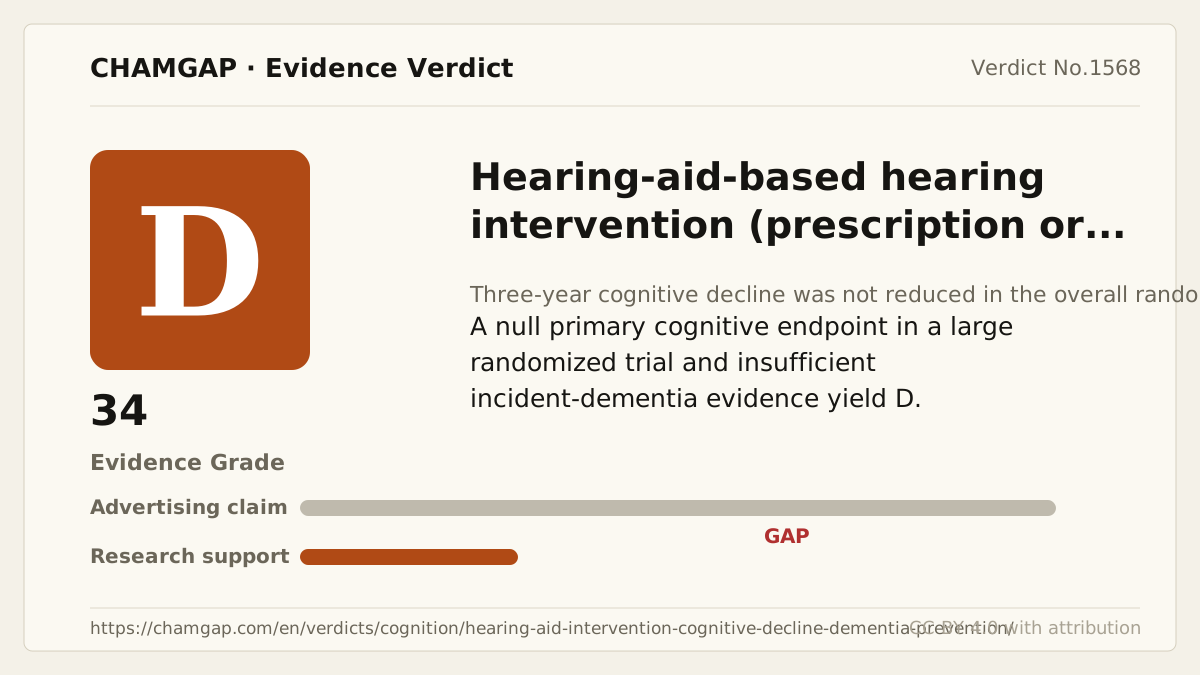
[Chamgap] Hearing-aid intervention x prevention of cognitive decline and dementia — Evidence Grade D·34. 2 cited sources checked. Source: https://chamgap.com/en/verdicts/cognition/hearing-aid-intervention-cognitive-decline-dementia-prevention/ · CC BY 4.0CC BY 4.0 — free to use with attribution; do not distort grades, numbers, or verdict meaning.
What this document does and does not do
Chamgap is an information source. It reports what research has and has not confirmed; it does not tell readers what to take or buy. That decision belongs to readers and, when needed, medical or legal professionals. This verdict reflects literature available up to the search date and may change as new research appears. Nothing here is medical advice.