
Ginger dry extract 200 mg three times daily for three months,
does it really help with Prevention of episodic migraine in adults?
research showsGrade D with 30 points. In a double-blind randomized trial of 107 adults, ginger dry extract 200 mg three times daily for three months did not increase the proportion achieving at least a 50% reduction in migraine attacks versus placebo. Severe-pain days, acute analgesic use, and attack duration also showed no between-group advantage.
ads claimThe claim that ginger prevents migraine because it may affect nausea transfers evidence from other symptoms, combination products, or acute treatment to long-term monotherapy.
Useful facts when choosing a product
- This was a three-month prevention trial, not acute-attack treatment.
- It differs from feverfew-plus-ginger combinations.
- Culinary ginger doses are not interchangeable with the standardized 200-mg extract.
Chamgap Semantic Classification Code
Permanent code issued
S.ginger-dry-extract.oral.migraine-attack-frequency.reduce.placeboSupplements and nutraceuticals > Ginger dry extract 200 mg three times daily for three months > Oral > Prevention of episodic migraine in adults > Reduction claim > Placebo
Codex retrospectively verified the principal intervention, delivery, population, endpoint, and comparator from the existing reviewed verdict and issued a permanent semantic code. Secondary outcomes on the page are not transferred as separate claims. The code identifies the intervention and claim; it never contains the evidence grade, score, or safety result.
Exact Claim Classification
These independent facets prevent evidence from different forms, routes, populations, effects, and comparators from being mixed.
| Intervention class | S · Supplement or nutraceutical |
|---|---|
| Canonical ingredient or intervention | Ginger dry extract 200 mg three times daily for three months |
| Source or part used | Single supplement ingredient specified in the verdict; unreported manufacturing details remain unverified |
| Formulation or processing | Ginger dry extract 200 mg three times daily for three months |
| Route | Oral |
| Dose | Ginger dry extract 200 mg three times daily for three months |
| Duration | Three months |
| Population | 107 adults |
| Effect or condition | Prevention of episodic migraine in adults |
| Primary endpoint | 50% attack responder rate, severe-pain days, analgesic use, and duration |
| Comparator | Placebo |
| Duplicate-detection key | ginger-dry-extract|oral|107 adults|migraine-attack-frequency|Three months |
What the research actually shows
Participants took 200 mg of dry ginger extract standardized to 5% active constituents three times daily for three months versus placebo.
Why this is classified as D (30)
Double blinding and a placebo control are strengths, but the core between-group results were null in the sole direct trial, giving D with 30 points.
Counterpoint. Incomplete precision and no externally anchored benefit threshold prevent claiming proof of zero effect.
Rejudgment record. Cross-check applied — Centered the 50% responder and all core between-group comparisons and excluded within-group change, acute combinations, and active-control studies
| Endpoint | P | Symptom or function itself is the target - including patient reports and performance tests |
| Replication | R1 | Single confirmatory trial |
| Independence | I2 | Decisive evidence is publicly or non-profit funded |
| Effect size | E0 | Null |
| Precision | C0 | The confidence interval leaves room for benefit |
Stored derived and displayed grades match; this is not a current recalculation or validity check (D).
Sub-claim grades by effect
This ingredient is marketed for several effects. A single overall grade blends strong and weak claims together, so each effect is graded separately here. The overall grade reflects the strongest disconfirming or core claim.
| Effect (sub-claim) | Grade | Basis |
|---|---|---|
| At least 50% reduction in migraine attacks | D | There was no significant difference from placebo. |
| Reduced severe-pain days, acute analgesic use, or attack duration | D | Within-group changes occurred without a between-group advantage. |
Cross-check — AI research and Codex final gate
Evidence Table
| Study | Design | Sample | Funding | Endpoint | Result | Weight |
|---|---|---|---|---|---|---|
| Martins LB et al. 2020 | Double-blind placebo-controlled randomized trial | 107 adults | Independent of a manufacturer in the publication; support details checked in full text | 50% attack responder rate, severe-pain days, analgesic use, and duration | No significant between-group difference in the core outcomes | Only direct prevention trial |
Receipt — 1 References
All 1 cited sources were verified for existence at the original page (as of 2026-09-07).
Final verification and publication gate: Codex · Evidence date: 2026-09-07 · Corrections: none
Cite this verdict
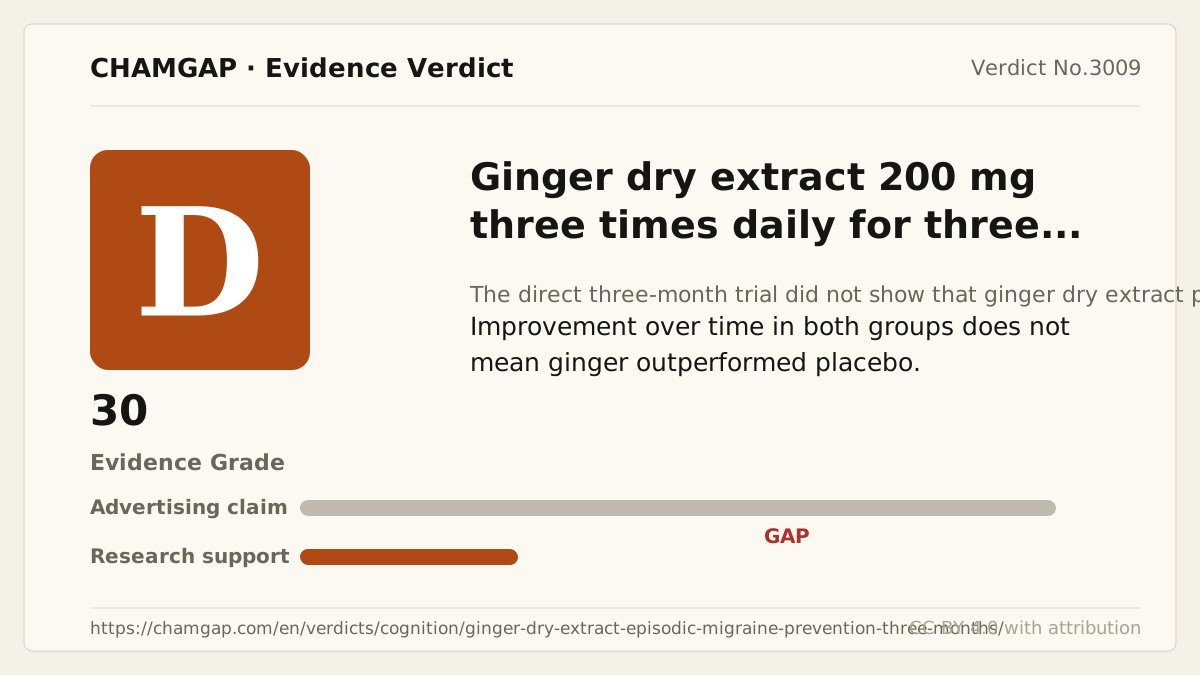
[Chamgap] Ginger Dry Extract for Migraine Prevention—No Added Benefit in a Three-Month Placebo-Controlled Trial — Evidence Grade D·30. 1 cited sources checked. Source: https://chamgap.com/en/verdicts/cognition/ginger-dry-extract-episodic-migraine-prevention-three-months/ · CC BY 4.0CC BY 4.0 — free to use with attribution; do not distort grades, numbers, or verdict meaning.
What this document does and does not do
Chamgap is an information source. It reports what research has and has not confirmed; it does not tell readers what to take or buy. That decision belongs to readers and, when needed, medical or legal professionals. This verdict reflects literature available up to the search date and may change as new research appears. Nothing here is medical advice.