
Ethosuximide,
does it really help with Seizure freedom and prevention of treatment failure in childhood absence seizures?
research showsEthosuximide is rated B because it achieves absence-seizure freedom and treatment retention in children. In Glauser's double-blind randomized comparison of 453 children, freedom from treatment failure at 16 weeks was 53% with ethosuximide, 58% with valproic acid, and 29% with lamotrigine; ethosuximide was superior to lamotrigine and similar to valproate. At 12 months, seizure control without treatment failure was 45% versus 21% with lamotrigine. An active comparison without placebo and no efficacy superiority over valproate support B with 75 points.
ads claimStrong comparative efficacy for absence seizures should not be generalized to a side-effect-free universal treatment for every childhood epilepsy. Accurate seizure-type and electroencephalographic diagnosis is essential.
Useful facts when choosing a product
- Ethosuximide is a prescription oral antiseizure medicine used mainly for absence seizures, with gradual dose adjustment according to weight and response.
- Nausea, abdominal discomfort, appetite loss, fatigue, dizziness, and behavioral or mood changes can occur; taking it with food may reduce stomach upset.
- Rare severe rash, cytopenias, bone-marrow suppression, and liver or kidney abnormalities require prompt reporting of fever, sore throat, bruising, bleeding, or rash and appropriate testing.
- Abrupt discontinuation can worsen seizures, so tapering or stopping should follow the prescriber's plan.
Chamgap Semantic Classification Code
Candidate index · review held
M.ethosuximide.UNK.seizure-freedom-and-prevention-of-treatment-failure-in-childhood-absence-seizures.prevent.UNKMedicinal interventions > Ethosuximide > Unknown > Seizure freedom and prevention of treatment failure in childhood absence seizures > Occurrence-prevention claim > Unknown
An automated migration candidate, not an issued permanent code; exact claim scope remains under review. This machine-generated migration candidate helps retrieval but is not a permanent assignment. The original verdict ID and URL remain authoritative.
What the research actually shows
The 2010 Childhood Absence Epilepsy Study Group trial double-blindly assigned 453 children with newly diagnosed childhood absence epilepsy to ethosuximide, valproic acid, or lamotrigine. Freedom from failure at 16 weeks was 53%, 58%, and 29%; ethosuximide exceeded lamotrigine and did not differ from valproate. Attentional dysfunction was more common with valproate than ethosuximide, 49% versus 33%. At 12 months, freedom from failure remained 45% with ethosuximide, 44% with valproate, and 21% with lamotrigine.
Why this is classified as B (75)
A 453-child double-blind randomized trial showed better seizure control without treatment failure than lamotrigine, similar efficacy to valproate, and persistence at 12 months. Active comparison without placebo supports B with 75 points. Gastrointestinal, hematologic, and severe skin risks remain separate safety considerations.
Counterpoint. Efficacy resembled valproate while attentional dysfunction was less frequent with ethosuximide, a separate safety-related treatment-selection factor.
Rejudgment record. Cross-check applied — A large double-blind randomized active-comparator trial found ethosuximide superior to lamotrigine and similar to valproate for seizure freedom and prevention of treatment failure, but no placebo comparison or efficacy superiority over valproate supports comparative-effectiveness grade B
Sub-claim grades by effect
This ingredient is marketed for several effects. A single overall grade blends strong and weak claims together, so each effect is graded separately here. The overall grade reflects the strongest disconfirming or core claim.
| Effect (sub-claim) | Grade | Basis |
|---|---|---|
| Freedom from childhood absence seizures | B | Clinical and electrographic seizure freedom exceeded lamotrigine and was similar to valproate. |
| Prevention of treatment failure | B | Freedom from treatment failure exceeded lamotrigine at both 16 weeks and 12 months. |
| Maintenance of seizure control for 12 months | B | At 12 months, freedom from treatment failure was 45% versus 21% with lamotrigine. |
Cross-check — AI research and Codex final gate
Evidence Table
| Study | Design | Sample | Funding | Endpoint | Result | Weight |
|---|---|---|---|---|---|---|
| Glauser TA et al. 2010 Childhood Absence Epilepsy Study | Multicenter double-blind randomized active-comparator trial | 453 children with newly diagnosed childhood absence epilepsy | Public funding from the United States NIH and NINDS | Freedom from treatment failure at 16 weeks, seizure freedom, and attentional dysfunction | Freedom from failure was 53% with ethosuximide, 58% with valproate, and 29% with lamotrigine; attentional dysfunction was less frequent than with valproate. | Pivotal large double-blind direct comparison |
| Brigo F et al. 2021 Cochrane review | Systematic review of randomized trials for absence seizures in children and adolescents | Eight trials with 691 participants | Academic Cochrane synthesis | Seizure freedom, at least 50% reduction, EEG normalization, and adverse events | In the large trial, 12-month seizure freedom was 45% with ethosuximide, 21% with lamotrigine, and 44% with valproate; smaller trials were low quality. | Independent synthesis and evidence-limit assessment |
Receipt — 2 References
All 2 cited sources were verified for existence at the original page (as of 2026-07-23).
Final verification and publication gate: Codex · Evidence date: 2026-07-23 · Corrections: none
Cite this verdict
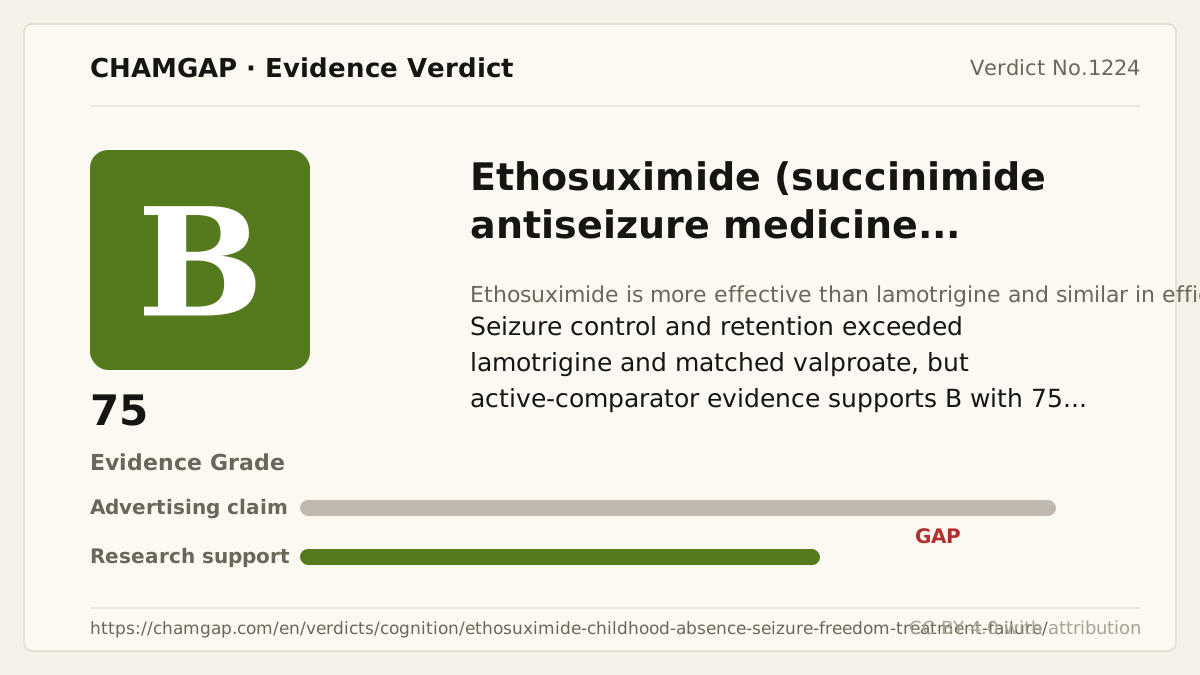
[Chamgap] Ethosuximide x seizure freedom and prevention of treatment failure in childhood absence seizures — Evidence Grade B·75. 2 cited sources checked. Source: https://chamgap.com/en/verdicts/cognition/ethosuximide-childhood-absence-seizure-freedom-treatment-failure/ · CC BY 4.0CC BY 4.0 — free to use with attribution; do not distort grades, numbers, or verdict meaning.
What this document does and does not do
Chamgap is an information source. It reports what research has and has not confirmed; it does not tell readers what to take or buy. That decision belongs to readers and, when needed, medical or legal professionals. This verdict reflects literature available up to the search date and may change as new research appears. Nothing here is medical advice.