
Dexamethasone,
does it really help with Reduced death and poor neurological outcome when given immediately before or with antibiotics in adults with bacterial meningitis?
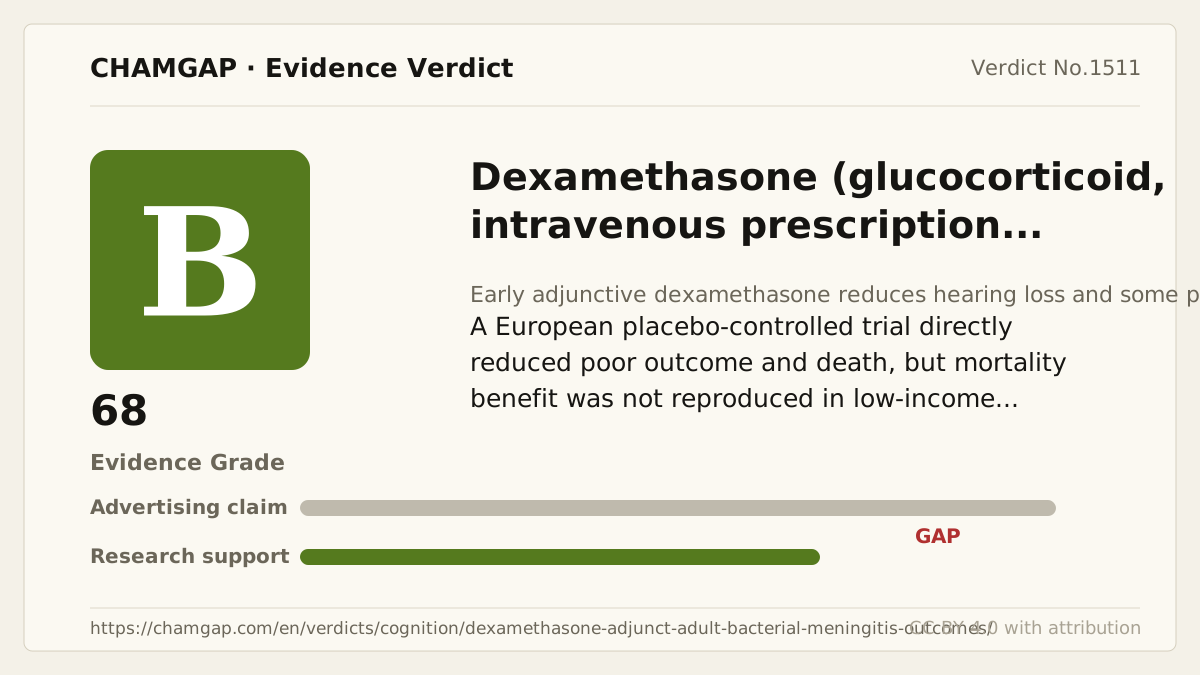
research showsDexamethasone is rated B when started immediately before or with the first antibiotic dose in adults with bacterial meningitis. In the 301-participant European placebo-controlled trial by de Gans, poor outcome at eight weeks was 15% versus 25% and mortality was 7% versus 15%, with benefit concentrated mainly in pneumococcal meningitis. A 465-participant adult trial in Malawi did not reproduce a mortality benefit, and the 2015 Cochrane review did not establish lower overall mortality, although reduced hearing loss was more consistent. The direct positive high-income evidence is accepted, but geographic and pathogen heterogeneity limits the verdict to B with 68 points.
ads claimMortality reduction from one European trial can be expanded into an identical effect for every adult bacterial meningitis population and health-care setting. The evidence instead shows variation by timing, pathogen, geography, and HIV prevalence.
Useful facts when choosing a product
- Dexamethasone is an adjunctive intravenous prescription medicine in bacterial meningitis and does not replace antibacterial treatment.
- The pivotal European trial started 10 mg 15 to 20 minutes before or with the first antibiotic and continued dosing every six hours for four days.
- Benefit was most apparent in pneumococcal meningitis, while the same mortality effect was not established in low-income or high-HIV-prevalence populations.
- Hyperglycemia, gastrointestinal bleeding, secondary infection, and recurrent fever can occur; these safety issues are assessed separately from efficacy.
Chamgap Semantic Classification Code
Candidate index · review held
M.dexamethasone.intravenous.death-and-poor-neurological-outcome-when-given-immediately-before-or-with-antibiotics-with-bacterial-meningitis.reduce.placeboMedicinal interventions > Dexamethasone > Intravenous > death and poor neurological outcome when given immediately before or with antibiotics with bacterial meningitis > Reduction claim > Placebo
An automated migration candidate, not an issued permanent code; exact claim scope remains under review. This machine-generated migration candidate helps retrieval but is not a permanent assignment. The original verdict ID and URL remain authoritative.
What the research actually shows
The European multicenter trial by de Gans and van de Beek randomized 301 adults to dexamethasone or placebo, starting 10 mg 15 to 20 minutes before or with the first antibiotic and continuing every six hours for four days. Poor outcome on the Glasgow Outcome Scale and mortality at eight weeks were reduced, most clearly in pneumococcal meningitis. The Malawi trial by Scarborough randomized 465 adults, about 90% of whom had HIV infection, and found no benefit for 40-day mortality. The 2015 Cochrane review synthesized 25 trials with 4,121 participants and found no reduction in overall mortality, but reported less hearing loss and neurological sequelae and no benefit in low-income countries.
Why this is classified as B (68)
A high-income adult placebo-controlled trial provided direct hard-endpoint benefit, with poor outcome of 15% versus 25% and mortality of 7% versus 15%. Mortality benefit was not reproduced in a large low-income trial, and the Cochrane overall analysis did not establish lower mortality. More consistent reduction in hearing loss and some neurological sequelae supports B with 68 points for geographically and pathogen-limited direct evidence.
Counterpoint. This verdict is limited to early adjunctive treatment of adult bacterial meningitis. It does not combine evidence from dexamethasone in COVID-19, antenatal lung maturation, vitreous implants, or other glucocorticoid indications.
Rejudgment record. Cross-check applied — Accepted direct reductions in poor outcome and mortality in an ingredient-specific placebo-controlled trial, but applied grade B because a large low-income trial did not reproduce mortality benefit and the overall meta-analysis showed geographic and pathogen heterogeneity with uncertain mortality. At cross-check the score was lowered to 68 to reflect the Cochrane pooled all-cause mortality RR of 0.90 (0.80 to 1.01) across 25 trials and the null result in low-income settings (grade B retained).
Sub-claim grades by effect
This ingredient is marketed for several effects. A single overall grade blends strong and weak claims together, so each effect is graded separately here. The overall grade reflects the strongest disconfirming or core claim.
| Effect (sub-claim) | Grade | Basis |
|---|---|---|
| Reduction in poor neurological outcome in adult bacterial meningitis | B | The European placebo-controlled trial was directly positive, but benefit was concentrated in pneumococcal disease and a high-income setting. |
| Reduction in hearing loss after bacterial meningitis | B | The Cochrane synthesis found a more consistent reduction than for mortality. |
| Reduction in overall mortality in adult bacterial meningitis | C | The European trial was positive, but the effect was not reproduced in Malawi or the overall meta-analysis and remains uncertain by setting and pathogen. |
Cross-check — AI research and Codex final gate
Evidence Table
| Study | Design | Sample | Funding | Endpoint | Result | Weight |
|---|---|---|---|---|---|---|
| de Gans J and van de Beek D. 2002 | Multicenter randomized double-blind placebo-controlled trial | 301 adults | Partly supported by NV Organon, which supplied study medication | Poor outcome on the Glasgow Outcome Scale and mortality at eight weeks | Poor outcome was 15% versus 25% and mortality was 7% versus 15%, with benefit mainly in pneumococcal meningitis. | Pivotal direct positive trial |
| Scarborough M et al. 2007 | Randomized double-blind placebo-controlled trial | 465 adults in Malawi; about 90% with HIV infection | Wellcome Trust | Mortality at 40 days | Dexamethasone did not reduce 40-day mortality versus placebo. | Key evidence of non-replication by setting |
| Brouwer MC et al. 2015 Cochrane review | Systematic review and meta-analysis of randomized trials | 25 trials and 4,121 participants | Academic Cochrane review | Mortality, hearing loss, and neurological sequelae | Overall mortality was not reduced, while hearing loss and neurological sequelae were reduced and no benefit was found in low-income countries. | Key synthesis |
Receipt — 3 References
All 3 cited sources were verified for existence at the original page (as of 2026-07-23).
Final verification and publication gate: Codex · Evidence date: 2026-07-23 · Corrections: none
Cite this verdict
[Chamgap] Dexamethasone x reduced death and poor neurological outcome in adult bacterial meningitis — Evidence Grade B·68. 3 cited sources checked. Source: https://chamgap.com/en/verdicts/cognition/dexamethasone-adjunct-adult-bacterial-meningitis-outcomes/ · CC BY 4.0CC BY 4.0 — free to use with attribution; do not distort grades, numbers, or verdict meaning.
What this document does and does not do
Chamgap is an information source. It reports what research has and has not confirmed; it does not tell readers what to take or buy. That decision belongs to readers and, when needed, medical or legal professionals. This verdict reflects literature available up to the search date and may change as new research appears. Nothing here is medical advice.