
Creatine monohydrate,
does it really help with Delayed long-term clinical progression and functional decline in early Parkinson disease?
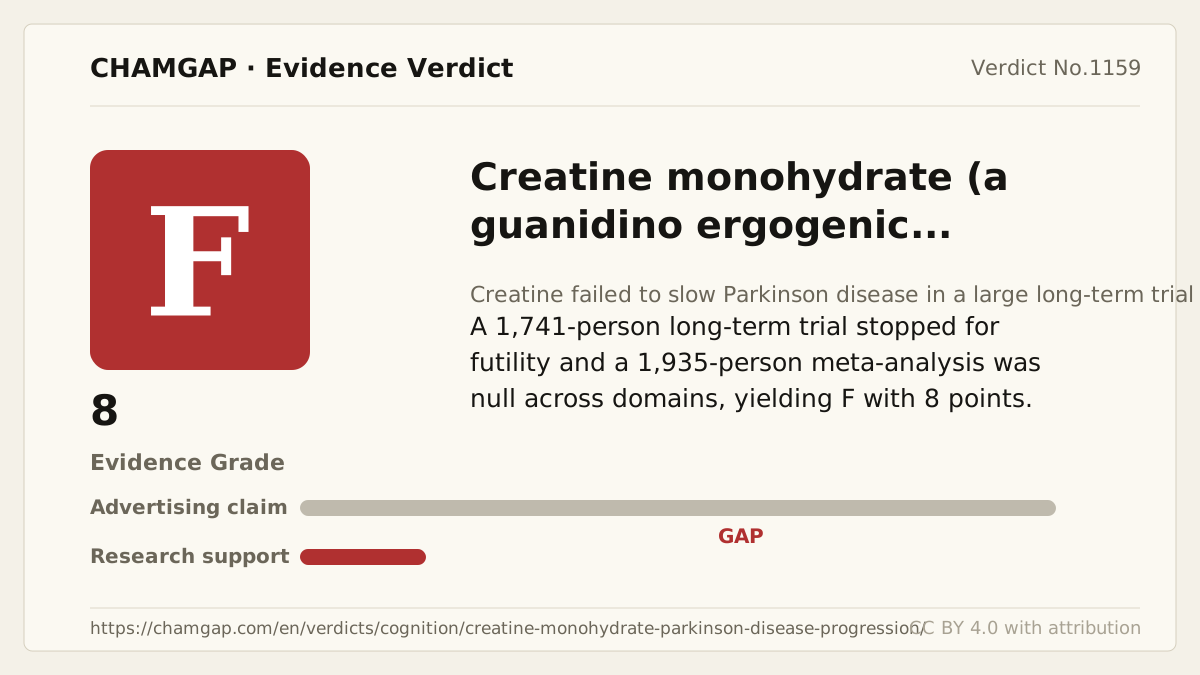
research showsCreatine monohydrate is rated F for delaying long-term progression or functional decline in early Parkinson disease. NET-PD LS-1 randomized 1,741 people with early treated Parkinson disease across 45 centers to creatine 10 g/day or placebo in a large double-blind trial. It was stopped early for futility at a planned interim analysis, and the primary outcome combining five clinical domains was null at p=0.45. A subsequent meta-analysis of three trials and 1,935 participants found no benefit on total UPDRS or its motor, activities-of-daily-living, and mentation subscales. Early preclinical neuroprotection expectations and exploratory signals were overturned by a large clinical trial and pooled evidence, warranting F.
ads claimMarketing can connect muscle energy and mitochondrial mechanisms to brain energy and neuronal protection, then claim slowed Parkinson progression. Biologic plausibility and exercise-performance efficacy do not establish long-term clinical disease modification in Parkinson disease.
Useful facts when choosing a product
- NET-PD LS-1 tested long-term creatine monohydrate at 10 g/day. Even at that exposure, delayed Parkinson progression was not demonstrated.
- Creatine can cause water-related weight gain and gastrointestinal discomfort. Adequate hydration and individual tolerability matter.
- Usual doses are generally well tolerated in healthy adults, but people with kidney disease, dehydration risk, or medicines that affect the kidneys should seek clinical advice. Creatine can also affect interpretation of serum creatinine.
- Prescription medicines, exercise and rehabilitation, fall-risk assessment, and specialist follow-up remain central to Parkinson symptom and function management. Creatine should not delay proven care or clinical monitoring.
Chamgap Semantic Classification Code
Candidate index · review held
S.creatine-monohydrate.UNK.delayed-long-term-clinical-progression-and-functional-decline-in-early-parkinson-disease.reduce.placeboSupplements and nutraceuticals > Creatine monohydrate > Unknown > Delayed long-term clinical progression and functional decline in early Parkinson disease > Reduction claim > Placebo
An automated migration candidate, not an issued permanent code; exact claim scope remains under review. This machine-generated migration candidate helps retrieval but is not a permanent assignment. The original verdict ID and URL remain authoritative.
What the research actually shows
NET-PD LS-1 enrolled 1,741 participants at 45 centers in the United States and Canada and compared creatine 10 g/day with placebo. Its primary outcome was a global statistic combining the modified Rankin Scale, Symbol Digit Modalities Test, PDQ-39, Schwab and England Activities of Daily Living scale, and ambulatory capacity; no clinical benefit appeared in any direction. The planned interim cohort included 955 participants with a median four-year follow-up, and the trial stopped for futility. Attia and colleagues in 2017 pooled three randomized trials with 1,935 participants and found no significant difference in total UPDRS or its motor, activities-of-daily-living, and mentation subscales. This is a large refutation of the central clinical claim, not merely insufficient evidence.
Why this is classified as F (8)
A 1,741-person multicenter long-term double-blind trial was null across five clinical domains and stopped for futility after a planned interim analysis. A meta-analysis of three trials and 1,935 participants was also null across UPDRS outcomes. Repeated refutation of an early neuroprotection hypothesis on core clinical endpoints yields F with 8 points. Weight, gastrointestinal, and kidney precautions are separate safety issues.
Counterpoint. Use of creatine for exercise or muscle performance is a separate verdict. A person with Parkinson disease using it for that purpose should not expect disease modification and should disclose kidney function, weight changes, and the full medicine list to the treating clinician.
Rejudgment record. New verdict — Applied F because NET-PD LS-1 with 1,741 participants was null across five direct clinical domains and stopped for futility at a planned interim analysis, followed by a three-trial meta-analysis of 1,935 participants that was null across UPDRS outcomes
Sub-claim grades by effect
This ingredient is marketed for several effects. A single overall grade blends strong and weak claims together, so each effect is graded separately here. The overall grade reflects the strongest disconfirming or core claim.
| Effect (sub-claim) | Grade | Basis |
|---|---|---|
| Delayed long-term clinical progression in early Parkinson disease | F | The five-domain global clinical endpoint was null in a 1,741-person long-term trial that stopped early for futility. |
| Delayed functional decline in early Parkinson disease | F | There was no benefit in direct functional domains including activities of daily living, ambulation, and quality of life. |
| Neuroprotection from creatine in Parkinson disease | F | A meta-analysis of three trials and 1,935 participants found no benefit on total UPDRS or its major subscales. |
Cross-check — AI research and Codex final gate
Evidence Table
| Study | Design | Sample | Funding | Endpoint | Result | Weight |
|---|---|---|---|---|---|---|
| Writing Group for the NINDS Exploratory Trials in Parkinson Disease (NET-PD) Investigators. 2015 | Forty-five-center randomized double-blind placebo-controlled long-term efficacy trial (NET-PD LS-1) | 1,741 randomized; 955 in the interim efficacy analysis | Public funding from the United States NINDS and NIH | Five-year global statistic across five clinical domains | There was no difference between creatine and placebo (p=0.45), and the trial stopped early for futility after a planned interim analysis. | Definitive large direct null evidence |
| Attia et al. 2017 | Meta-analysis of randomized creatine trials for neuroprotection in Parkinson disease | Three randomized trials and 1,935 participants | Inadequately reported | Total UPDRS and subscales I, II, and III | Neither total UPDRS nor motor, activities-of-daily-living, or mentation subscales favored creatine. | Pooled evidence of repeated null results |
Receipt — 2 References
All 2 cited sources were verified for existence at the original page (as of 2026-07-22).
Final verification and publication gate: Codex · Evidence date: 2026-07-22 · Corrections: none
Cite this verdict
[Chamgap] Creatine monohydrate x delayed long-term progression and functional decline in early Parkinson disease — Evidence Grade F·8. 2 cited sources checked. Source: https://chamgap.com/en/verdicts/cognition/creatine-monohydrate-parkinson-disease-progression/ · CC BY 4.0CC BY 4.0 — free to use with attribution; do not distort grades, numbers, or verdict meaning.
What this document does and does not do
Chamgap is an information source. It reports what research has and has not confirmed; it does not tell readers what to take or buy. That decision belongs to readers and, when needed, medical or legal professionals. This verdict reflects literature available up to the search date and may change as new research appears. Nothing here is medical advice.