
Citicoline,
does it really help with Increased 90-day functional independence and neurological recovery after moderate-to-severe acute ischemic stroke?
research showsCiticoline is rated F because it does not increase 90-day functional independence or neurological recovery after moderate-to-severe acute ischemic stroke. ICTUS was an international multicenter trial that randomized 2,298 participants. Its 90-day global recovery outcome combined NIHSS of 1 or less, modified Rankin Scale of 1 or less, and Barthel Index of at least 95 and produced an odds ratio of 1.03, with 95% CI 0.86 to 1.25 and p=0.364; the trial stopped for futility at the third interim analysis. A 2020 Cochrane review of 10 randomized trials involving 4,281 participants found no difference in Barthel functional recovery, RR 1.03, NIHSS neurological recovery, RR 1.08, mortality, RR 0.94, or disability or dependence, RR 1.11. The large confirmatory trial and the full randomized evidence repeatedly refute the claim, giving F with 8 points. Adverse events did not differ in ICTUS, but Cochrane considered harms reporting inadequate, so general tolerability and possible headache, gastrointestinal symptoms, or hypotension remain separate safety considerations.
ads claimMarketing expands phospholipid-precursor biology, neuroprotection, and choline supply into claims of independent living or repaired neurological function after stroke. Mechanism and early small-study signals do not supersede the 90-day functional outcome from ICTUS or the repeated null Cochrane results.
Useful facts when choosing a product
- ICTUS began within 24 hours, used 1,000 mg intravenously every 12 hours and then switched to oral dosing for a total of six weeks, yet did not improve 90-day functional or neurological recovery.
- Medicinal citicoline in some countries and commercial oral supplements differ in route, dose, and quality control, and there is no evidence that a supplement outperforms the intravenous-to-oral regimen tested in ICTUS.
- Acute stroke requires immediate activation of emergency services and assessment for thrombolysis, thrombectomy, and standard stroke care; citicoline must not delay those treatments.
- Overall adverse events and mortality did not differ from placebo in ICTUS, but harms reporting across the literature was limited and headache, insomnia, gastrointestinal discomfort, or reduced blood pressure can be reported.
Chamgap Semantic Classification Code
Candidate index · review held
UNK.citicoline.UNK.functional-independence-and-neurological-recovery-after-moderate-to-severe-acute-ischemic-stroke.increase.placeboUnknown > Citicoline > Unknown > functional independence and neurological recovery after moderate-to-severe acute ischemic stroke > Increase claim > Placebo
An automated migration candidate, not an issued permanent code; exact claim scope remains under review. This machine-generated migration candidate helps retrieval but is not a permanent assignment. The original verdict ID and URL remain authoritative.
What the research actually shows
ICTUS enrolled patients within 24 hours at 59 centers in Spain, Portugal, and Germany. It administered 1,000 mg intravenously every 12 hours for the first three days, followed by oral treatment for a total of six weeks. The combined 90-day endpoint of NIHSS 1 or less, modified Rankin Scale 1 or less, and Barthel Index at least 95 had an odds ratio of 1.03, and safety variables did not differ. The 2020 Cochrane review included 10 randomized trials through January 2020; six were industry sponsored and every trial was judged at high risk of bias. Even so, analyses of functional recovery, neurological recovery, mortality, and disability were consistently null, and a prespecified trial sequential analysis suggested that additional trials might not be needed for the primary outcomes.
Why this is classified as F (8)
ICTUS in 2,298 participants stopped for futility and produced a null combined 90-day recovery odds ratio of 1.03. The Cochrane synthesis of 10 trials involving 4,281 participants repeatedly found null functional recovery, RR 1.03, neurological recovery, RR 1.08, and mortality, RR 0.94. The large direct trial and total evidence point in the same direction, giving F with 8 points. Similar adverse-event rates in ICTUS and inadequate harms reporting overall are safety interpretations separate from efficacy.
Counterpoint. This verdict concerns 90-day recovery after moderate-to-severe acute ischemic stroke. Memory supplementation in older adults differs in population, timing, and clinical endpoint, and any limited signal on that separate axis must not be transferred to emergency stroke treatment.
Rejudgment record. New verdict — Applied F for repeated refutation because ICTUS in 2,298 people with moderate-to-severe acute ischemic stroke stopped for futility and found a null 90-day global recovery odds ratio of 1.03, while a Cochrane review of 10 trials involving 4,281 participants again found no functional, neurological, mortality, or disability benefit. Did not use medicinal status in some countries as grade support and kept this acute-stroke axis separate from older-adult memory verdict 717
Sub-claim grades by effect
This ingredient is marketed for several effects. A single overall grade blends strong and weak claims together, so each effect is graded separately here. The overall grade reflects the strongest disconfirming or core claim.
| Effect (sub-claim) | Grade | Basis |
|---|---|---|
| Increased 90-day functional independence or global recovery | F | The ICTUS combined-recovery odds ratio of 1.03 was null, and Cochrane Barthel functional recovery RR 1.03 also showed no difference. |
| Increased 90-day neurological recovery | F | The Cochrane NIHSS recovery estimate was RR 1.08 with a nonsignificant 95% CI of 0.96 to 1.21. |
| Reduced mortality after acute ischemic stroke | F | All-cause mortality across eight trials was 17.3% versus 18.5%, RR 0.94 with 95% CI 0.83 to 1.07, showing no difference. |
Cross-check — AI research and Codex final gate
Evidence Table
| Study | Design | Sample | Funding | Endpoint | Result | Weight |
|---|---|---|---|---|---|---|
| Dávalos A et al.; ICTUS trial investigators. 2012 | International multicenter randomized double-blind placebo-controlled sequential trial | 2,298 participants with moderate-to-severe acute ischemic stroke | Ferrer Grupo | Ninety-day global recovery combining NIHSS of 1 or less, modified Rankin Scale of 1 or less, and Barthel Index of at least 95 | The result was null at OR 1.03 (95% CI 0.86 to 1.25; p=0.364), and the trial stopped for futility at the third interim analysis. | Decisive large direct null trial |
| Martí-Carvajal AJ et al. 2020 Cochrane review | Cochrane systematic review and meta-analysis of randomized trials | 10 randomized trials involving 4,281 participants | Review authors reported no conflicts; six of 10 included trials were industry sponsored | Ninety-day mortality, disability or dependence, Barthel functional recovery, NIHSS neurological recovery, and serious adverse events | Mortality RR 0.94, disability or dependence RR 1.11, functional recovery RR 1.03, and neurological recovery RR 1.08 all showed no difference. | Pooled evidence of repeated refutation |
Receipt — 2 References
All 2 cited sources were verified for existence at the original page (as of 2026-07-21).
Final verification and publication gate: Codex · Evidence date: 2026-07-21 · Corrections: none
Cite this verdict
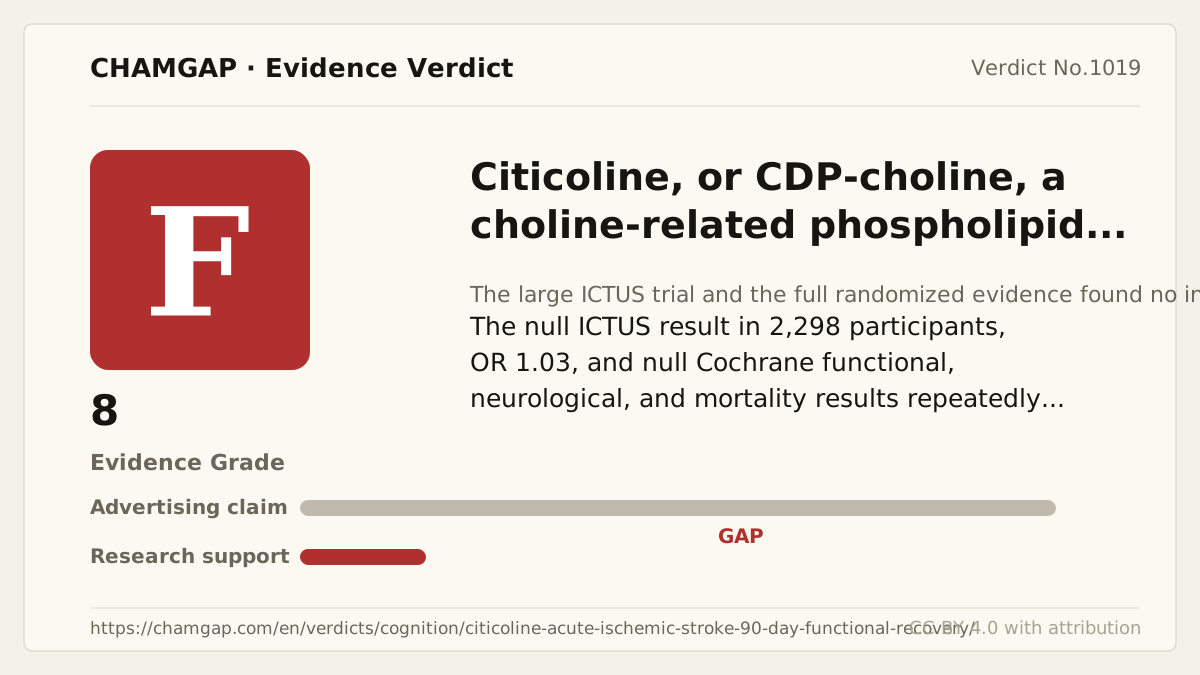
[Chamgap] Citicoline x increased 90-day recovery after moderate-to-severe acute ischemic stroke — Evidence Grade F·8. 2 cited sources checked. Source: https://chamgap.com/en/verdicts/cognition/citicoline-acute-ischemic-stroke-90-day-functional-recovery/ · CC BY 4.0CC BY 4.0 — free to use with attribution; do not distort grades, numbers, or verdict meaning.
What this document does and does not do
Chamgap is an information source. It reports what research has and has not confirmed; it does not tell readers what to take or buy. That decision belongs to readers and, when needed, medical or legal professionals. This verdict reflects literature available up to the search date and may change as new research appears. Nothing here is medical advice.