
Carbamazepine,
does it really help with Suppression of seizure recurrence and 12-month seizure remission in newly diagnosed focal epilepsy?
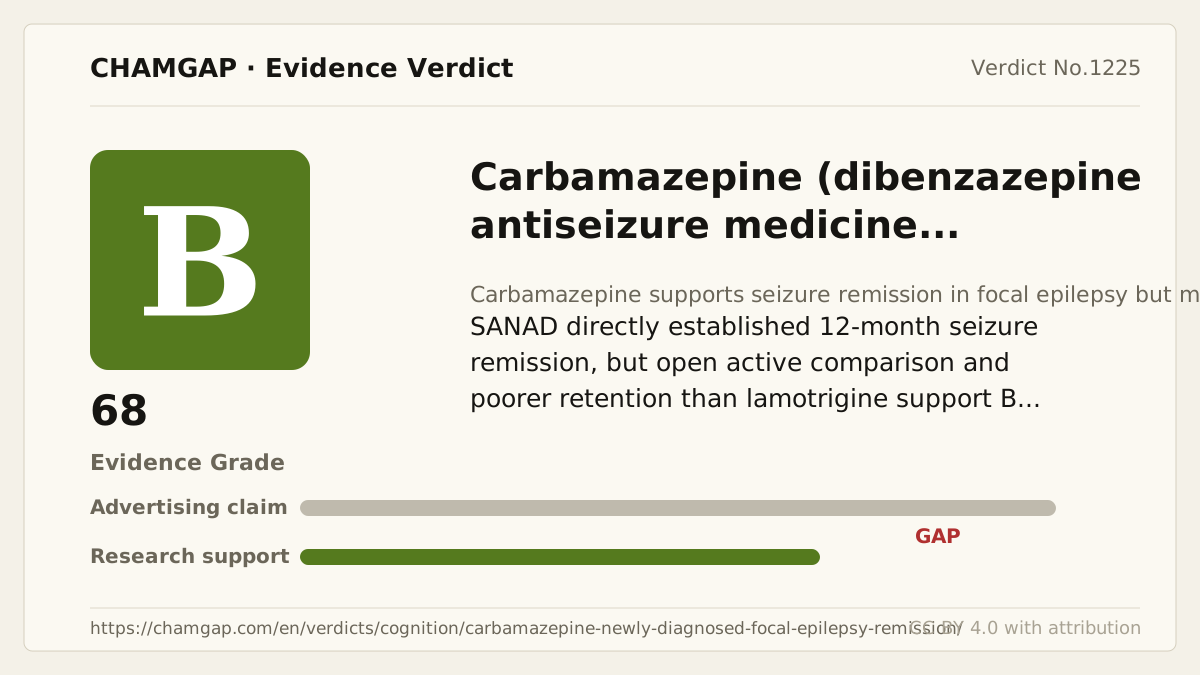
research showsCarbamazepine is rated B because it is effective monotherapy for seizure control and 12-month remission in newly diagnosed focal epilepsy. SANAD I randomized 1,721 participants eligible for focal-seizure standard treatment and compared carbamazepine with four active medicines; carbamazepine had similar 12-month remission to lamotrigine and better remission than gabapentin. The trial was open-label and active-controlled, and lamotrigine had fewer overall and tolerability-related treatment failures. Distinct from verdict 1204 on lamotrigine and SANAD II, molecule-specific carbamazepine remission evidence supports B with 68 points.
ads claimBeing a longstanding standard does not make carbamazepine superior to newer medicines in every person or better tolerated. Comparative efficacy was robust, while treatment retention was poorer than with lamotrigine.
Useful facts when choosing a product
- Carbamazepine is a prescription oral antiseizure medicine for focal seizures, started at a low dose and adjusted according to seizure response, concentrations, and adverse effects.
- Dizziness, drowsiness, diplopia, ataxia, nausea, and hyponatremia can occur, while cytopenias and liver abnormalities require clinical and laboratory monitoring.
- Severe skin-reaction risk is associated with particular HLA genotypes, and testing for HLA-B*1502 or HLA-A*3101 may be considered before treatment according to ancestry.
- It is a strong enzyme inducer that lowers exposure to contraceptives, anticoagulants, and many other medicines and also induces its own metabolism. Abrupt withdrawal can worsen seizures.
Chamgap Semantic Classification Code
Candidate index · review held
M.carbamazepine.UNK.suppression-of-seizure-recurrence-and-seizure-remission-in-newly-diagnosed-focal-epilepsy.treat.usual-careMedicinal interventions > Carbamazepine > Unknown > Suppression of seizure recurrence and seizure remission in newly diagnosed focal epilepsy > Treatment or remission claim > Usual care
An automated migration candidate, not an issued permanent code; exact claim scope remains under review. This machine-generated migration candidate helps retrieval but is not a permanent assignment. The original verdict ID and URL remain authoritative.
What the research actually shows
The 2007 SANAD Arm A trial openly randomized 1,721 participants for whom carbamazepine was considered standard treatment to five monotherapies. Primary outcomes were time to treatment failure and time to 12-month seizure remission. Lamotrigine caused fewer treatment failures and was noninferior to carbamazepine for 12-month remission. An independent Cochrane individual-participant network meta-analysis placed carbamazepine, lamotrigine, and levetiracetam among the best-balanced first-line treatments for focal seizures, finding better 12-month remission with carbamazepine than gabapentin and few other remission differences.
Why this is classified as B (68)
SANAD I and an independent individual-participant meta-analysis directly support 12-month remission and seizure control. Open active comparison, no isolation of absolute benefit versus no treatment, and more treatment failure than lamotrigine support B with 68 points. Rash, severe skin reactions, hyponatremia, and interactions remain separate safety issues.
Counterpoint. Among similarly efficacious options, rash risk, pregnancy potential, concomitant medicines, hyponatremia risk, and long-term retention can determine selection.
Rejudgment record. Cross-check applied — The large open randomized active-comparator SANAD I trial and an independent individual-participant meta-analysis directly support 12-month seizure remission with carbamazepine, but cannot isolate absolute benefit versus no treatment and show more treatment failure than lamotrigine, supporting comparative-effectiveness grade B
Sub-claim grades by effect
This ingredient is marketed for several effects. A single overall grade blends strong and weak claims together, so each effect is graded separately here. The overall grade reflects the strongest disconfirming or core claim.
| Effect (sub-claim) | Grade | Basis |
|---|---|---|
| Twelve-month seizure remission in newly diagnosed focal epilepsy | B | SANAD provides direct remission evidence comparable to lamotrigine and superior to gabapentin. |
| Suppression of seizure recurrence after treatment initiation | B | Long-term remission is supported, but no untreated control isolates absolute recurrence prevention. |
| Long-term seizure control with monotherapy for focal seizures | B | An individual-participant multitrial synthesis placed it among strong first-line options for seizure control. |
Cross-check — AI research and Codex final gate
Evidence Table
| Study | Design | Sample | Funding | Endpoint | Result | Weight |
|---|---|---|---|---|---|---|
| Marson AG et al. 2007 SANAD Arm A | Multicenter open-label pragmatic randomized active-comparator trial | 1,721 participants eligible for focal-seizure standard treatment; 378 assigned carbamazepine | Public funding from the United Kingdom NHS Research and Development HTA programme | Time to treatment failure and time to 12-month seizure remission | Carbamazepine had similar 12-month remission to lamotrigine and better remission than gabapentin, but more treatment failures than lamotrigine. | Pivotal large publicly funded comparative-effectiveness evidence |
| Nevitt SJ et al. 2022 Cochrane IPD network meta-analysis | Individual-participant-data network meta-analysis of randomized monotherapy trials | 89 randomized trials | Academic Cochrane synthesis | Treatment failure, six- and twelve-month remission, and first seizure | Carbamazepine ranked among strong first-line options for focal-seizure control and exceeded gabapentin for 12-month remission, while lamotrigine had fewer treatment failures. | Independent multitrial synthesis |
Receipt — 2 References
All 2 cited sources were verified for existence at the original page (as of 2026-07-23).
Final verification and publication gate: Codex · Evidence date: 2026-07-23 · Corrections: none
Cite this verdict
[Chamgap] Carbamazepine x suppression of seizure recurrence and 12-month remission in newly diagnosed focal epilepsy — Evidence Grade B·68. 2 cited sources checked. Source: https://chamgap.com/en/verdicts/cognition/carbamazepine-newly-diagnosed-focal-epilepsy-remission/ · CC BY 4.0CC BY 4.0 — free to use with attribution; do not distort grades, numbers, or verdict meaning.
What this document does and does not do
Chamgap is an information source. It reports what research has and has not confirmed; it does not tell readers what to take or buy. That decision belongs to readers and, when needed, medical or legal professionals. This verdict reflects literature available up to the search date and may change as new research appears. Nothing here is medical advice.