
Acupuncture,
does it really help with Preventive reduction in episodic migraine attack frequency?
research showsAcupuncture is rated C because its incremental effect over sham was small. In Zhao 2017, the true-versus-sham difference was -1.1 attacks per four weeks. The -1.4 figure was the waiting-list group's reduction from baseline, not a sham-controlled difference. Cochrane found SMD -0.18 versus sham, 50% response in 50% versus 41%, and NNT 11.
ads claimMarketing can expand a small sham-controlled incremental effect into reliable drug-free prevention.
Useful facts when choosing a product
- True acupuncture in the pivotal trial was delivered five days weekly for four weeks, totaling 20 sessions.
- The evidence concerns prevention, not immediate termination of an acute attack.
Chamgap Semantic Classification Code
Candidate index · review held
K.acupuncture-using-true-needle-treatment.UNK.preventive-reduction-in-episodic-migraine-attack-frequency.prevent.shamFolk and alternative interventions > Acupuncture using true needle treatment > Unknown > Preventive reduction in episodic migraine attack frequency > Occurrence-prevention claim > Sham procedure or device
An automated migration candidate, not an issued permanent code; exact claim scope remains under review. This machine-generated migration candidate helps retrieval but is not a permanent assignment. The original verdict ID and URL remain authoritative.
What the research actually shows
Zhao and colleagues randomized 249 participants and analyzed 245 by intention to treat. The true-versus-sham difference was -1.1 attacks per four weeks. The -1.4 figure was the waiting-list group's reduction from baseline, not a sham-controlled difference. The 2016 Cochrane review included 22 trials and 4,985 participants and found SMD -0.18 versus sham, 50% response in 50% versus 41%, and NNT 11.
Why this is classified as C (50)
The true-versus-sham difference was -1.1 attacks per four weeks, and Cochrane found SMD -0.18, response rates of 50% versus 41%, and NNT 11; this small effect supports C with 50 points.
Counterpoint. It can be a preference-sensitive adjunct for patients who understand the modest effect and visit burden.
Rejudgment record. Cross-check applied — Distinguished the Zhao true-versus-sham difference of -1.1 attacks per four weeks from the waiting-list baseline reduction of -1.4, and incorporated the small Cochrane sham-controlled effect: SMD -0.18, 50% response in 50% versus 41%, and NNT 11
Sub-claim grades by effect
This ingredient is marketed for several effects. A single overall grade blends strong and weak claims together, so each effect is graded separately here. The overall grade reflects the strongest disconfirming or core claim.
| Effect (sub-claim) | Grade | Basis |
|---|---|---|
| Reduction in migraine attack frequency at 16 weeks | C | The direct primary endpoint succeeded, but the sham-controlled difference was 1.1 attacks. |
| At least 50% migraine-frequency response | C | The small positive sham-controlled effect was 50% versus 41%. |
| Sustained long-term migraine prevention | C | Some follow-up signals exist, but independent long-term replication is limited. |
Cross-check — AI research and Codex final gate
Evidence Table
| Study | Design | Sample | Funding | Endpoint | Result | Weight |
|---|---|---|---|---|---|---|
| Zhao L et al. 2017 | Three-arm multicenter randomized clinical trial | 249 randomized; actual intention-to-treat analysis 245 (83 true, 80 sham, 82 waiting list) | Chinese government basic-research, national science, and Sichuan youth grants; no commercial manufacturer funding | Primary endpoint of change in migraine attack frequency from baseline to week 16 | Primary endpoint succeeded: -3.2 with true and -2.1 with sham; difference -1.1 attacks (95% CI -1.9 to -0.4), P=.002. | Pivotal direct trial with a small incremental effect |
| Linde K et al. 2016 Cochrane review | Systematic review of randomized trials | 22 trials and 4,985 participants; 14 sham-controlled trials and 1,825 participants | No separate commercial review funding stated in the abstract; funding of included trials was mixed | Post-treatment migraine frequency and at least 50% response | Versus sham, SMD was -0.18, 50% response was 50% versus 41%, and NNT was 11, indicating a small effect. | Synthesis confirming a limited effect size |
Receipt — 2 References
All 2 cited sources were verified for existence at the original page (as of 2026-07-24).
Final verification and publication gate: Codex · Evidence date: 2026-07-24 · Corrections: none
Cite this verdict
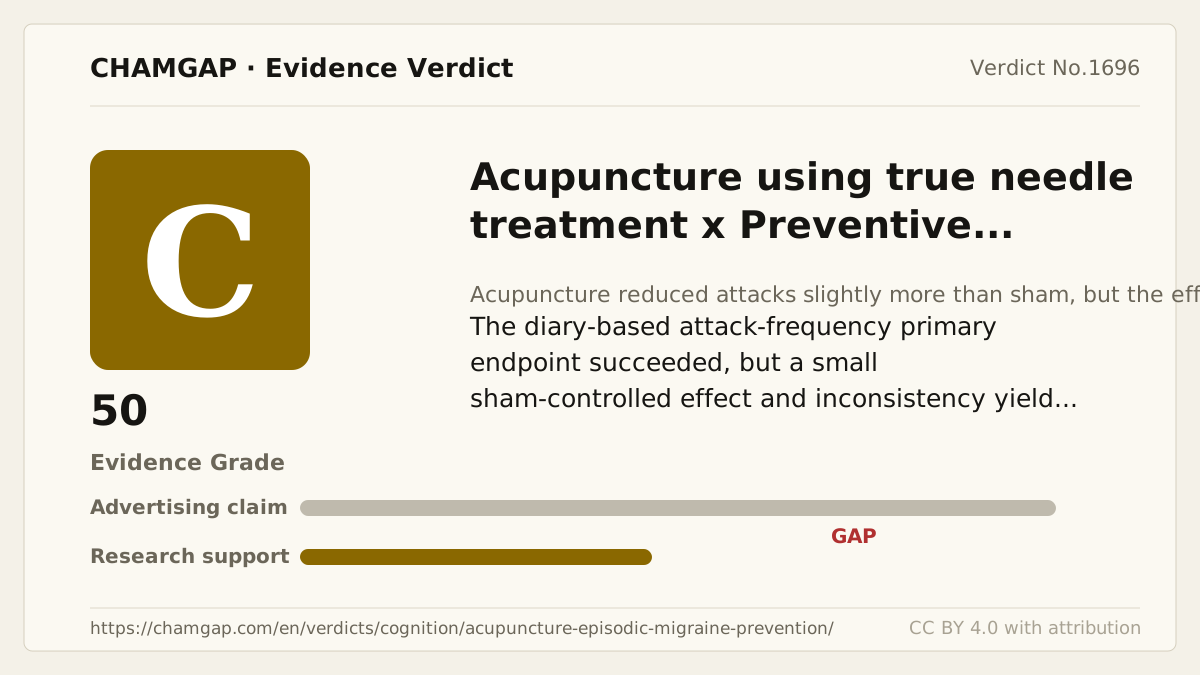
[Chamgap] Acupuncture x reduced episodic migraine attack frequency — Evidence Grade C·50. 2 cited sources checked. Source: https://chamgap.com/en/verdicts/cognition/acupuncture-episodic-migraine-prevention/ · CC BY 4.0CC BY 4.0 — free to use with attribution; do not distort grades, numbers, or verdict meaning.
What this document does and does not do
Chamgap is an information source. It reports what research has and has not confirmed; it does not tell readers what to take or buy. That decision belongs to readers and, when needed, medical or legal professionals. This verdict reflects literature available up to the search date and may change as new research appears. Nothing here is medical advice.