
Red or white wine 150 mL/day,
does it really help with Improved glycemic control in type 2 diabetes?
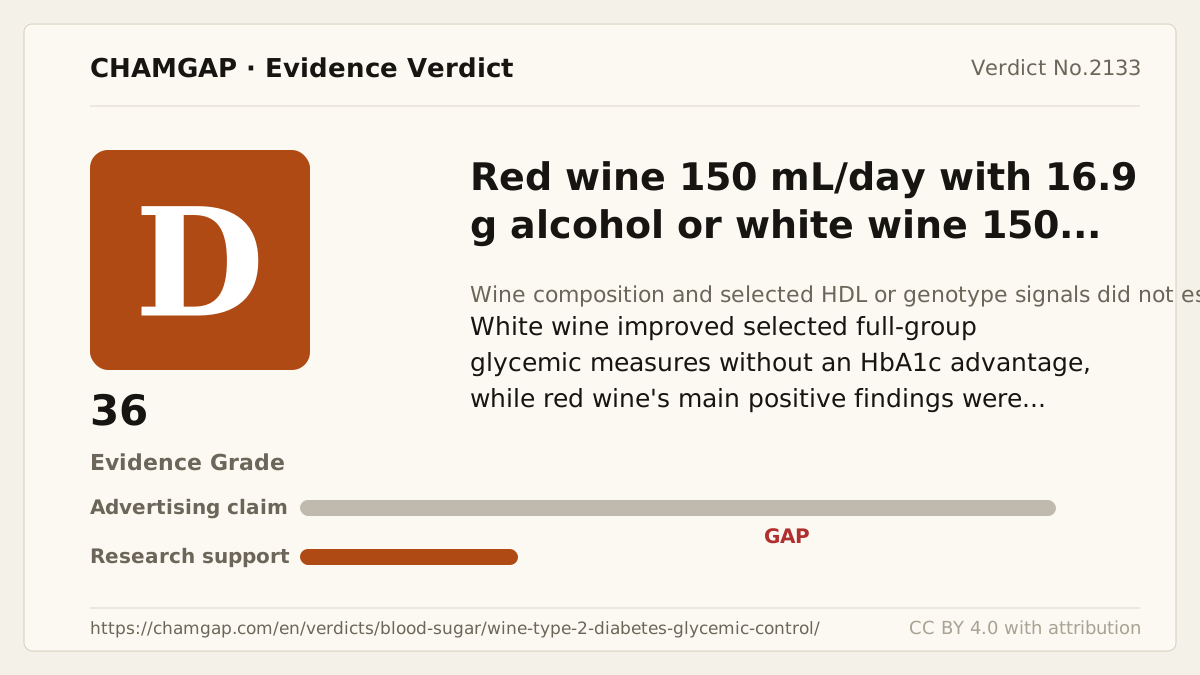
research showsThe grade is D. A two-year trial randomized 224 near-abstinent adults with type 2 diabetes to water 83, white wine 68, or red wine 73. In the full groups, white wine improved fasting glucose and an insulin-resistance measure, while red wine mainly improved lipid markers such as HDL; neither wine established an overall HbA1c advantage.
ads claimThe trial red wine contained 270.1 mg gallic-acid equivalents of total phenols per serving versus 38.5 mg in white wine; alcohol was 16.9 and 15.8 g. Those composition differences and the HDL result are real, but they do not establish better glycemic control.
Useful facts when choosing a product
- The red wine was 14.2% and 16.9 g alcohol per 150 mL; white wine was 13.3% and 15.8 g.
- Total phenols were 270.1 mg versus 38.5 mg gallic-acid equivalents per 150 mL.
- Controls were current near-abstainers, not confirmed lifetime abstainers.
Chamgap Semantic Classification Code
Candidate index · review held
F.red-wine-with-alcohol-or-white-wine-with.food.glycemic-control-in-type-2-diabetes.improve.UNKFoods and beverages > Red wine with alcohol or white wine with > Food consumption > glycemic control in type 2 diabetes > Improvement claim > Unknown
An automated migration candidate, not an issued permanent code; exact claim scope remains under review. This machine-generated migration candidate helps retrieval but is not a permanent assignment. The original verdict ID and URL remain authoritative.
What the research actually shows
The trial randomized 224 adults aged 40-75 with type 2 diabetes who drank no more than one drink weekly to water 83, white wine 68, or red wine 73, with 194 providing two-year data. NCT00784433 registered glycemic control at six months as the primary outcome, whereas the paper reported two-year lipid and glycemic results; those time points and scopes must be distinguished. Allocation was open but laboratory outcomes were objective, and suppliers reportedly had no role in design or analysis.
Why this is classified as D (30)
White wine improved selected full-group glycemic measures, but neither wine improved full-group HbA1c, red wine's positive results were mainly lipid outcomes, and genotype interactions were supplementary, giving D with 30 points.
Counterpoint. D does not mean every laboratory marker was identical. Lipid and genotype findings remain, but overall glycemic control was not established.
Rejudgment record. Cross-check applied — In the two-year water-controlled trial, white wine improved fasting glucose and insulin resistance but not full-group HbA1c, while red wine's positive findings were mainly lipid outcomes
| Endpoint | S | Surrogate marker - laboratory or imaging measures |
| Replication | R1 | Single confirmatory trial |
| Independence | I1 | Mixed funding sources |
| Effect size | E0 | Null |
| Precision | C0 | The confidence interval leaves room for benefit |
Stored derived and displayed grades match; this is not a current recalculation or validity check (D).
Sub-claim grades by effect
This ingredient is marketed for several effects. A single overall grade blends strong and weak claims together, so each effect is graded separately here. The overall grade reflects the strongest disconfirming or core claim.
| Effect (sub-claim) | Grade | Basis |
|---|---|---|
| Improved glycemic control in the overall type 2 diabetes group | D | The full randomized groups did not show consistent improvement. |
| Improvement in selected glycemic markers among slow ADH1B metabolizers | C | This genotype-subgroup signal cannot be generalized to the full population. |
Cross-check — AI research and Codex final gate
Evidence Table
| Study | Design | Sample | Funding | Endpoint | Result | Weight |
|---|---|---|---|---|---|---|
| Gepner Y et al. 2015 CASCADE | Three-arm two-year randomized controlled trial | 224 randomized (water 83, white 68, red 73); 194 with two-year data | Public and foundation grants; in-kind wine and water from Golan Heights Winery and Mey-Eden | HbA1c, fasting glucose, insulin resistance, and lipids | White wine improved fasting glucose and insulin resistance, while red wine mainly improved HDL; neither showed a full-group HbA1c advantage. | Direct long-term water-controlled trial |
Receipt — 2 References
All 2 cited sources were verified for existence at the original page (as of 2026-08-04).
Final verification and publication gate: Codex · Evidence date: 2026-08-04 · Corrections: none
Cite this verdict
[Chamgap] Red or white wine 150 mL/day x glycemic control in type 2 diabetes — Evidence Grade D·30. 2 cited sources checked. Source: https://chamgap.com/en/verdicts/blood-sugar/wine-type-2-diabetes-glycemic-control/ · CC BY 4.0CC BY 4.0 — free to use with attribution; do not distort grades, numbers, or verdict meaning.
What this document does and does not do
Chamgap is an information source. It reports what research has and has not confirmed; it does not tell readers what to take or buy. That decision belongs to readers and, when needed, medical or legal professionals. This verdict reflects literature available up to the search date and may change as new research appears. Nothing here is medical advice.