
Whey-protein preload 10-30 minutes before meals,
does it really help with Lower short-term postprandial glucose in adults with type 2 diabetes?
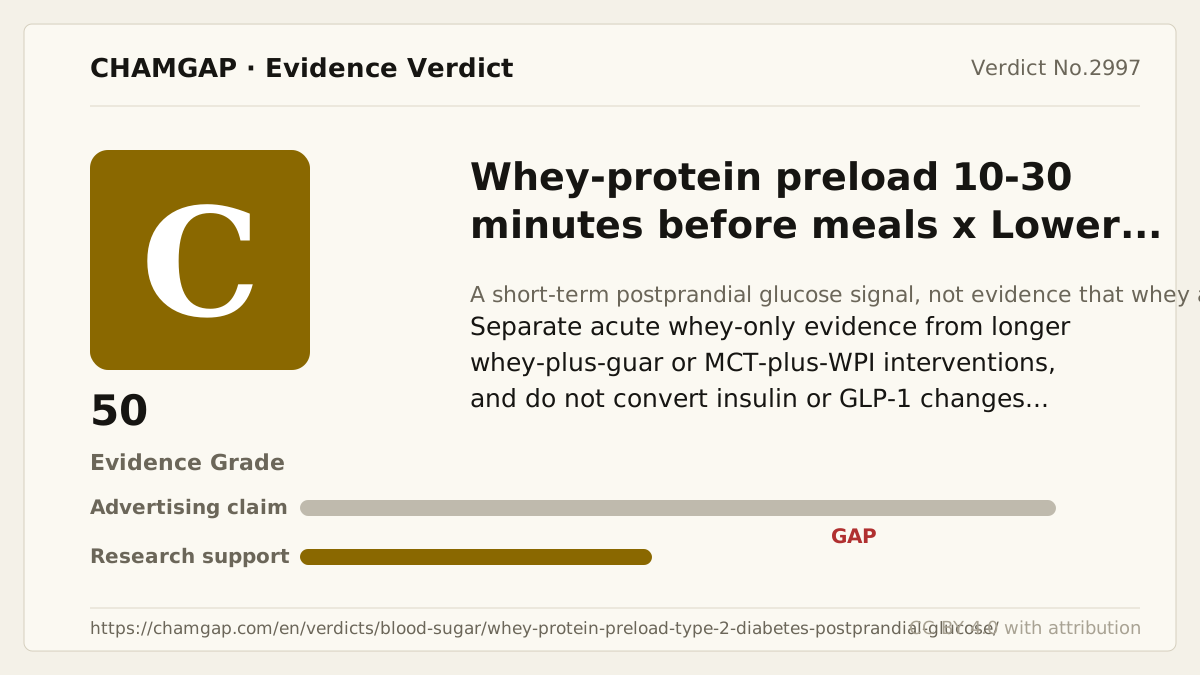
research showsGrade C with 50 points. In a 15-person acute crossover trial, 50 g whey 30 minutes before a meal lowered the 180-minute glucose response by 28% while increasing insulin and GLP-1. A seven-day 18-person free-living study also improved glycemic measures, but drinks were not isocaloric and the registered versus published primary outcomes differed.
ads claimA premeal shake is portrayed as treating diabetes or reducing medication based on acute surrogate results.
Useful facts when choosing a product
- The key acute study used 50 g whey 30 minutes before a meal.
- The seven-day test and control drinks were not isocaloric.
- Whey-plus-guar and MCT-plus-WPI are not whey alone.
Chamgap Semantic Classification Code
Permanent code issued
S.whey-protein-preload.oral.postprandial-glucose-auc.reduce.control-drinkSupplements and nutraceuticals > Whey-protein preload 10-30 minutes before meals > Oral > Lower short-term postprandial glucose in adults with type 2 diabetes > Reduction claim > Control drink
Codex retrospectively verified the principal intervention, delivery, population, endpoint, and comparator from the existing reviewed verdict and issued a permanent semantic code. Secondary outcomes on the page are not transferred as separate claims. The code identifies the intervention and claim; it never contains the evidence grade, score, or safety result.
Exact Claim Classification
These independent facets prevent evidence from different forms, routes, populations, effects, and comparators from being mixed.
| Intervention class | S · Supplement or nutraceutical |
|---|---|
| Canonical ingredient or intervention | Whey-protein preload 10-30 minutes before meals |
| Source or part used | Single supplement ingredient specified in the verdict; unreported manufacturing details remain unverified |
| Formulation or processing | Whey-protein preload 10-30 minutes before meals |
| Route | Oral |
| Dose | Whey-protein preload 10-30 minutes before meals |
| Duration | 180 minutes after a single meal |
| Population | 15 adults with type 2 diabetes |
| Effect or condition | Lower short-term postprandial glucose in adults with type 2 diabetes |
| Primary endpoint | 180-minute glucose, insulin, and GLP-1 |
| Comparator | Control drink |
| Duplicate-detection key | whey-protein-preload|oral|15 adults with type 2 diabetes|postprandial-glucose-auc|180 minutes after a single meal |
What the research actually shows
Non-insulin-treated adults received either a one-time 50-g dose or a 15.6-g protein drink before meals. Longer evidence involved whey plus guar or MCT plus WPI and therefore tested different interventions.
Why this is classified as C (50)
A sizable short-term glycemic signal is limited by surrogate outcomes, tiny trials, industry involvement, outcome-hierarchy concerns, and composite interventions, giving C with 50 points.
Counterpoint. Higher insulin and GLP-1 are mechanistic outcomes and do not establish lower complications or medication use.
Rejudgment record. Cross-check applied — Separated acute whey alone, a seven-day non-isocaloric drink study, and longer whey-plus-guar or MCT-plus-WPI combinations
| Endpoint | S | Surrogate marker - laboratory or imaging measures |
| Replication | R1 | Single confirmatory trial |
| Independence | I0 | Evidence comes only from manufacturer studies |
| Effect size | E+ | Meets the clinically important threshold |
Stored derived and displayed grades match; this is not a current recalculation or validity check (C).
Sub-claim grades by effect
This ingredient is marketed for several effects. A single overall grade blends strong and weak claims together, so each effect is graded separately here. The overall grade reflects the strongest disconfirming or core claim.
| Effect (sub-claim) | Grade | Basis |
|---|---|---|
| Lower acute or several-day postprandial glucose | C | Two small studies reported positive signals. |
| Long-term whey-only HbA1c or complication benefit | ? | Longer trials used combinations and cannot isolate whey. |
Cross-check — AI research and Codex final gate
Evidence Table
| Study | Design | Sample | Funding | Endpoint | Result | Weight |
|---|---|---|---|---|---|---|
| Jakubowicz D et al. 2014 | Acute randomized crossover trial | 15 adults with type 2 diabetes | Health-ministry and Milk Council support | 180-minute glucose, insulin, and GLP-1 | Glucose response 28% lower; insulin 105% higher | Key acute whey-only evidence |
| Smith K et al. 2022 | Seven-day free-living crossover trial | 18 participants | Product/industry support and investigator involvement | Postprandial glucose iAUC and time above range | iAUC 1.6±0.6 vs 2.1±0.9, P=.003 | Short free-living support |
| Zameer R et al. 2025 | Randomized MCT-plus-WPI crossover trial | Adults with type 2 diabetes | Mixed academic and product-related support | 24-hour and daytime glucose iAUC | Primary iAUC outcomes were null | Contrary combination-intervention evidence |
Receipt — 3 References
All 3 cited sources were verified for existence at the original page (as of 2026-09-07).
Final verification and publication gate: Codex · Evidence date: 2026-09-07 · Corrections: none
Cite this verdict
[Chamgap] Premeal Whey Protein for Postprandial Glucose in Type 2 Diabetes—Short-Term Signal, Long-Term Stand-Alone Effect Uncertain — Evidence Grade C·50. 3 cited sources checked. Source: https://chamgap.com/en/verdicts/blood-sugar/whey-protein-preload-type-2-diabetes-postprandial-glucose/ · CC BY 4.0CC BY 4.0 — free to use with attribution; do not distort grades, numbers, or verdict meaning.
What this document does and does not do
Chamgap is an information source. It reports what research has and has not confirmed; it does not tell readers what to take or buy. That decision belongs to readers and, when needed, medical or legal professionals. This verdict reflects literature available up to the search date and may change as new research appears. Nothing here is medical advice.