
Vitamin K2 MK-7,
does it really help with Improvement in fasting glucose and HbA1c in adults with type 2 diabetes or prediabetes?
research showsVitamin K2 MK-7 is rated D for improving fasting glucose and HbA1c in adults with type 2 diabetes or prediabetes. A 12-week trial in 68 participants and a six-month trial in 60 participants reported reductions in fasting glucose and HbA1c. However, a 2018 meta-analysis found no effect on fasting glucose, fasting insulin, HOMA-IR, or two-hour oral glucose tolerance, while 2025 and 2026 meta-analyses reported selected benefits amid high heterogeneity and differences in vitamin K form, dose, and population. Small trials and conflicting syntheses do not establish consistent glycemic improvement.
ads claimMarketing converts vitamin K-dependent protein and microbiome mechanisms into a simple glucose-lowering or diabetes-control claim. Actual evidence consists of small supplement trials and meta-analyses with differing conclusions.
Useful facts when choosing a product
- MK-7 is a menaquinone form of fat-soluble vitamin K2 found in fermented foods and supplements, with a relatively long circulating half-life.
- Direct diabetes trials used approximately 180 to 360 µg per day for 12 weeks to six months.
- Vitamin K2 supplements are commonly labeled in micrograms, and MK-4 and MK-7 differ in pharmacokinetics and trial doses despite belonging to the same K2 family.
- Usual supplemental amounts are generally well tolerated, but an important interaction exists with vitamin K antagonists such as warfarin because vitamin K can alter anticoagulant effect.
Chamgap Semantic Classification Code
Candidate index · review held
S.vitamin-k2-mk-7.UNK.fasting-glucose-and-hba1c-with-type-2-diabetes-or-prediabetes.improve.placeboSupplements and nutraceuticals > Vitamin K2 MK-7 > Unknown > fasting glucose and HbA1c with type 2 diabetes or prediabetes > Improvement claim > Placebo
An automated migration candidate, not an issued permanent code; exact claim scope remains under review. This machine-generated migration candidate helps retrieval but is not a permanent assignment. The original verdict ID and URL remain authoritative.
What the research actually shows
Rahimi Sakak and colleagues randomized 68 insulin-independent adults with type 2 diabetes to MK-7 at 180 µg twice daily or placebo for 12 weeks and reported between-group improvements in fasting glucose and HbA1c. Zhang and colleagues conducted a six-month randomized trial in 60 adults with type 2 diabetes and reported within-group reductions of 13.4% in fasting glucose, 28.3% in insulin, and 7.4% in HbA1c with microbiome changes, but the trial was small. Shahdadian 2018 pooled five trials and 533 participants and found no effect on fasting glucose, fasting insulin, HOMA-IR, or two-hour oral glucose tolerance. Meta-analyses published in 2025 and 2026 reported selected benefits but were limited by high heterogeneity, few trials, and mixed K1, K2, or dosing schemes.
Why this is classified as D (38)
Two small MK-7 trials and newer syntheses provide positive signals, but the 2018 pivotal meta-analysis was null for major glycemic outcomes and newer pooled estimates are highly heterogeneous. Inconsistency and the small-study base give high-D with 38 points.
Counterpoint. Positive newer meta-analyses remain relevant, but mixed vitamin K forms and high heterogeneity do not yield a stable MK-7 effect estimate.
Rejudgment record. New verdict — Small MK-7 trials and selected newer meta-analyses were positive, but the 2018 meta-analysis was null for major glycemic outcomes and newer syntheses showed high heterogeneity and mixed vitamin K forms, so rule ② for conflicting pivotal syntheses supports D
Sub-claim grades by effect
This ingredient is marketed for several effects. A single overall grade blends strong and weak claims together, so each effect is graded separately here. The overall grade reflects the strongest disconfirming or core claim.
| Effect (sub-claim) | Grade | Basis |
|---|---|---|
| Improvement in fasting glucose in type 2 diabetes or prediabetes | D | Some MK-7 trials and newer synthesis were positive, but the 2018 meta-analysis was null and heterogeneity is high. |
| Improvement in HbA1c in type 2 diabetes or prediabetes | D | Small positive trials exist, but effect magnitude and reproducibility are not stable. |
| Improvement in insulin resistance in type 2 diabetes or prediabetes | D | HOMA-IR findings are inconsistent across trials and meta-analyses and show substantial heterogeneity. |
Cross-check — AI research and Codex final gate
Evidence Table
| Study | Design | Sample | Funding | Endpoint | Result | Weight |
|---|---|---|---|---|---|---|
| Shahdadian F et al. 2018 | Systematic review and meta-analysis of clinical trials | Five trials and 533 participants | Academic research; no conflict of interest reported | Fasting glucose, fasting insulin, HOMA-IR, and two-hour oral glucose tolerance | None of the four outcomes improved significantly. | Pivotal null synthesis |
| Rahimi Sakak F et al. 2021 | Twelve-week randomized double-blind placebo-controlled trial | 68 insulin-independent adults with type 2 diabetes | Iranian academic institutional funding | Fasting glucose and insulin, HbA1c, insulin sensitivity, and lipids | MK-7 at 360 µg per day lowered fasting glucose and HbA1c versus placebo, but between-group insulin and HOMA-IR differences were not significant. | Small direct positive randomized trial |
| Ahmed SR et al. 2026 | Systematic review and meta-analysis of randomized trials in diabetes and prediabetes | Four to eight randomized trials depending on outcome | Academic research; no external funding reported | Fasting glucose, HbA1c, insulin, HOMA-IR, and HOMA-beta | Fasting glucose, HbA1c, and HOMA-IR were positive, insulin and HOMA-beta were null, and heterogeneity across outcomes was substantial. | Recent positive but heterogeneous synthesis |
Receipt — 4 References
All 4 cited sources were verified for existence at the original page (as of 2026-07-23).
Final verification and publication gate: Codex · Evidence date: 2026-07-23 · Corrections: none
Cite this verdict
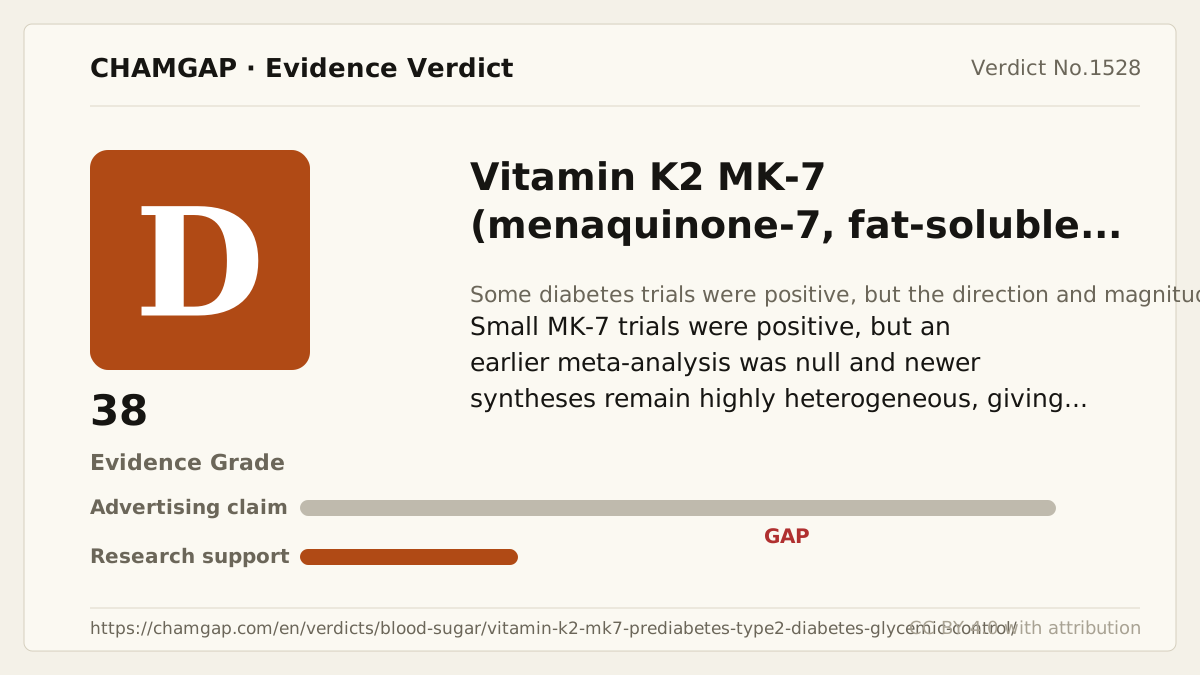
[Chamgap] Vitamin K2 MK-7 x improved fasting glucose and HbA1c in type 2 diabetes or prediabetes — Evidence Grade D·38. 4 cited sources checked. Source: https://chamgap.com/en/verdicts/blood-sugar/vitamin-k2-mk7-prediabetes-type2-diabetes-glycemic-control/ · CC BY 4.0CC BY 4.0 — free to use with attribution; do not distort grades, numbers, or verdict meaning.
What this document does and does not do
Chamgap is an information source. It reports what research has and has not confirmed; it does not tell readers what to take or buy. That decision belongs to readers and, when needed, medical or legal professionals. This verdict reflects literature available up to the search date and may change as new research appears. Nothing here is medical advice.