
Vitamin C,
does it really help with Improved glycemic control in people with type 2 diabetes?
research showsThe claim that oral vitamin C improves glycemic control in type 2 diabetes is rated C. A 2021 Diabetes Care meta-analysis reviewed 28 randomized trials and 1,574 participants overall, but its endpoint-specific analyses found HbA1c -0.54 percentage points (95% CI -0.90 to -0.17) in 16 trials and 1,133 participants and fasting glucose -0.74 mmol/L (95% CI -1.17 to -0.31) in 19 trials and 1,305 participants. Certainty for HbA1c was very low because of inconsistency, imprecision, and indirectness; individual trials were generally smaller than 100 participants and most lasted less than six months. HbA1c, fasting glucose, and postprandial glucose are surrogate markers, and no reduction in diabetic complications, cardiovascular or kidney events, or mortality has been established. The positive signal is accepted, but rule ①-ⓐ caps the grade at C.
ads claimMarketing combines lower glucose, HbA1c support, and protection from diabetic complications into one claim. The actual evidence primarily concerns short-term laboratory changes; randomized evidence has not shown fewer myocardial infarctions, strokes, kidney outcomes, retinopathy, amputations, or deaths. Claims that vitamin C replaces medication or lifestyle treatment exceed the evidence.
Useful facts when choosing a product
- Oral vitamin C doses in type 2 diabetes trials ranged from approximately 200 to 3,000 mg/day, so no standard diabetes-treatment dose has been established. No particular tablet, capsule, or formulation has proven superior.
- Vitamin C does not replace metformin, SGLT2 inhibitors, GLP-1 receptor agonists, insulin, nutrition therapy, or physical activity. Patients should not reduce or stop prescription treatment after starting a supplement.
- The United States tolerable upper intake level for adults is 2,000 mg/day. High doses can cause diarrhea, abdominal pain, and nausea and can raise urinary oxalate, especially in people with kidney disease, hyperoxaluria, or a history of stones.
- High-dose vitamin C can interfere with some glucose meters or laboratory methods and increases iron absorption. People with kidney disease, iron overload, or recurrent stones should consult a clinician before supplementation.
Chamgap Semantic Classification Code
Candidate index · review held
S.vitamin-c.oral.type-2-diabetes-glycemic-control.improve.MULTISupplements and nutraceuticals > Vitamin C > Oral > Glycemic control in type 2 diabetes > Improvement claim > Multiple: primary unresolved
An automated migration candidate, not an issued permanent code; exact claim scope remains under review. This machine-generated migration candidate helps retrieval but is not a permanent assignment. The original verdict ID and URL remain authoritative.
What the research actually shows
Mason 2021 reviewed 28 randomized trials and 1,574 participants overall through September 2020. By endpoint, HbA1c decreased by a mean 0.54 percentage points (95% CI -0.90 to -0.17) in 16 trials and 1,133 participants; fasting glucose decreased by 0.74 mmol/L (95% CI -1.17 to -0.31) in 19 trials and 1,305 participants; and postprandial glucose decreased by 0.95 mmol/L in four trials and 235 participants. Fasting insulin, HOMA-IR, and clamp insulin sensitivity were not significant. Doses ranged from 200 to 3,000 mg/day and treatment from two weeks to one year, with most trials under six months. Fong 2022 reconfirmed very-low-certainty HbA1c benefit in an umbrella review. In Nosratabadi 2023, 22 trials and 1,447 participants contributed to the fasting-glucose analysis, while the HbA1c analysis included 18 trials and 1,247 participants and found WMD -0.51 percentage points (95% CI -0.81 to -0.20), I²=90.4%, with low certainty. Hard clinical complications were not established.
Why this is classified as C (52)
The first meta-analysis found HbA1c -0.54 percentage points in 16 trials and 1,133 participants and fasting glucose -0.74 mmol/L in 19 trials and 1,305 participants. The updated HbA1c analysis in 18 trials and 1,247 participants found -0.51 percentage points, but I² was 90.4% and certainty was low. Outcomes were limited to surrogates without proven benefit for complications or mortality, so the rule ①-ⓐ ceiling supports C with 52 points.
Counterpoint. The laboratory signal makes a D verdict of demonstrated ineffectiveness inappropriate. Even if the signal is real, the responsive population, optimal dose, duration, and effect on actual complications remain unknown.
Rejudgment record. Cross-check applied — ①-ⓐ Surrogate-only evidence: improvement only in biomarkers that stand in for clinical benefit, including HbA1c, LDL, blood pressure, intraocular pressure, bone density, laboratory values, or imaging measures → maximum C. Vitamin C has positive HbA1c, fasting-glucose, and postprandial-glucose findings but no hard-outcome evidence for complications or mortality, so this ceiling applies.
Sub-claim grades by effect
This ingredient is marketed for several effects. A single overall grade blends strong and weak claims together, so each effect is graded separately here. The overall grade reflects the strongest disconfirming or core claim.
| Effect (sub-claim) | Grade | Basis |
|---|---|---|
| Improved HbA1c in type 2 diabetes | C | Across 16 randomized trials and 1,133 participants, the mean change was -0.54 percentage points, but this is a very-low-certainty surrogate. |
| Improved fasting and postprandial glucose in type 2 diabetes | C | Signals of -0.74 mmol/L fasting glucose and -0.95 mmol/L postprandial glucose come from small, short, heterogeneous trials. |
| Reduction in microvascular and macrovascular complications of type 2 diabetes | ? | Vitamin C randomized trials have not established benefit for cardiovascular, kidney, retinal, amputation, or mortality hard outcomes. |
Cross-check — AI research and Codex final gate
Evidence Table
| Study | Design | Sample | Funding | Endpoint | Result | Weight |
|---|---|---|---|---|---|---|
| Mason SA et al. 2021 | GRADE-assessed systematic review and meta-analysis of randomized trials | Overall review of 28 randomized trials and 1,574 participants; HbA1c analysis of 16 trials and 1,133 participants; fasting-glucose analysis of 19 trials and 1,305 participants | Academic research at Deakin University; authors reported no relevant conflicts | HbA1c, fasting and postprandial glucose, insulin, HOMA-IR, blood pressure, and oxidative stress | HbA1c was -0.54 percentage points (95% CI -0.90 to -0.17) in 16 trials and 1,133 participants, and fasting glucose was -0.74 mmol/L (95% CI -1.17 to -0.31) in 19 trials and 1,305 participants, but HbA1c certainty was very low. | Key direct synthesis limited to surrogate outcomes |
| Fong C et al. 2022 | Umbrella review and hierarchical evidence synthesis of nutrient-supplement meta-analyses | Twelve meta-analyses and one umbrella review, including vitamin C evidence | Australian academic and public research support associated with the NHMRC | HbA1c, fasting glucose, insulin resistance, and safety | Reconfirmed an HbA1c mean difference of -0.54 percentage points for vitamin C but rated certainty very low and found limited safety data. | Independent higher-level certainty assessment |
| Nosratabadi S et al. 2023 | Updated systematic review and meta-analysis of randomized trials | Fasting-glucose analysis of 22 randomized trials and 1,447 participants; HbA1c analysis of 18 trials and 1,247 participants | Iranian academic investigators; not a commercial product-confirmation trial | HbA1c, fasting glucose, fasting insulin, and HOMA-IR | HbA1c in 18 trials and 1,247 participants had WMD -0.51 percentage points (95% CI -0.81 to -0.20), I²=90.4%, with low certainty. The 22 trials and 1,447 participants were the fasting-glucose analysis, and complications or mortality were not evaluated. | Updated positive synthesis limited to surrogates |
Receipt — 4 References
All 4 cited sources were verified for existence at the original page (as of 2026-07-24).
Final verification and publication gate: Codex · Evidence date: 2026-07-24 · Corrections: none
Cite this verdict
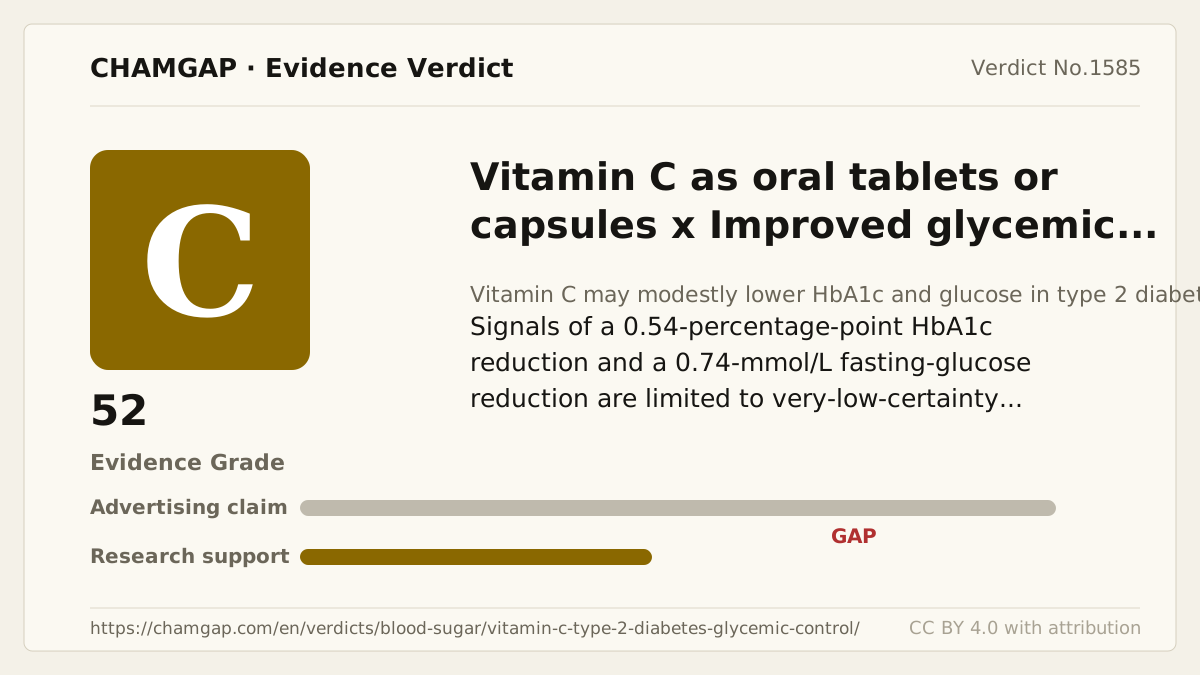
[Chamgap] Vitamin C x improved glycemic control in type 2 diabetes — Evidence Grade C·52. 4 cited sources checked. Source: https://chamgap.com/en/verdicts/blood-sugar/vitamin-c-type-2-diabetes-glycemic-control/ · CC BY 4.0CC BY 4.0 — free to use with attribution; do not distort grades, numbers, or verdict meaning.
What this document does and does not do
Chamgap is an information source. It reports what research has and has not confirmed; it does not tell readers what to take or buy. That decision belongs to readers and, when needed, medical or legal professionals. This verdict reflects literature available up to the search date and may change as new research appears. Nothing here is medical advice.