
Vegetables/protein-first meal order,
does it really help with Blunting post-meal glucose and insulin surges in adults with type 2 diabetes or prediabetes?
research showsEating vegetables and protein first and carbohydrate last is rated C because acute randomized crossover trials and syntheses show lower glucose and, in some settings, insulin excursions after the same meal in adults with type 2 diabetes or prediabetes. Trials in 16 people with type 2 diabetes and 15 with prediabetes showed large short-term differences, and a 2026 review again supported lower postprandial glucose with low certainty. Samples remain small and protocols heterogeneous, while longer-term HbA1c benefit is absent or very small and no trial shows fewer complications.
ads claimMarketing can turn blunting a glucose spike into claims of sustained diabetes control and complication prevention. The best-fitting evidence concerns glucose and insulin curves over hours after one meal, not established reductions in weight, HbA1c, cardiovascular events, or microvascular complications.
Useful facts when choosing a product
- This intervention keeps food type and quantity constant while placing vegetables and protein before carbohydrate-rich foods.
- Many trials separated food groups by about ten minutes, so the same effect size cannot be assumed for every real-world eating pattern.
- A rapid increase in fiber can cause bloating, and people with chewing or swallowing difficulty may need texture modification. Those using insulin or sulfonylureas should monitor for hypoglycemia after dietary changes.
Chamgap Semantic Classification Code
Candidate index · review held
UNK.vegetables-protein-first.UNK.blunting-post-meal-glucose-and-insulin-surges-with-type-2-diabetes-or-prediabetes.assess.UNKUnknown > Vegetables/protein-first > Unknown > Blunting post-meal glucose and insulin surges with type 2 diabetes or prediabetes > Association or change assessment > Unknown
An automated migration candidate, not an issued permanent code; exact claim scope remains under review. This machine-generated migration candidate helps retrieval but is not a permanent assignment. The original verdict ID and URL remain authoritative.
What the research actually shows
Shukla 2017 randomized 16 adults with type 2 diabetes to three orders of the same meal and found that carbohydrate last reduced three-hour glucose incremental area under the curve by 53% and the glucose peak by 54% versus carbohydrate first, with lower insulin exposure. Shukla 2019 found in 15 adults with prediabetes that protein-and-vegetables first or vegetables first reduced glucose peaks by more than 40% versus carbohydrate first. McKenzie 2026 reviewed six diabetes studies with 144 participants and supported lower postprandial glucose while identifying heterogeneity and low certainty. Okami 2022 synthesized eight trials with 230 participants and found little to no difference in HbA1c or 120-minute glucose and insulin, all with low or very low certainty.
Why this is classified as C (55)
Small randomized crossover trials and recent reviews consistently support lower acute postprandial glucose, with some evidence for lower insulin, so the reliable-surrogate rule gives C with 55 points. Longer-term HbA1c effects are absent or very small and complication outcomes are unavailable.
Counterpoint. The strategy is easy and generally safe enough to try as an adjunct to a standard diabetes meal plan. It is not a stand-alone replacement for carbohydrate quality and quantity, medication, exercise, or weight management.
Rejudgment record. New verdict — Accepted repeated positive glucose and some insulin surrogate findings from small randomized crossover trials and systematic reviews, but applied the rule ① ceiling of C because longer-term HbA1c effects are absent or very small and no complication-reduction evidence exists
Sub-claim grades by effect
This ingredient is marketed for several effects. A single overall grade blends strong and weak claims together, so each effect is graded separately here. The overall grade reflects the strongest disconfirming or core claim.
| Effect (sub-claim) | Grade | Basis |
|---|---|---|
| Blunting the post-meal glucose surge after the same meal | C | Repeatedly positive in small randomized crossover trials and a low-certainty systematic review. |
| Blunting the post-meal insulin surge after the same meal | C | Some acute trials show lower insulin exposure, but the number and size of studies are small. |
| Sustained glycemic control and fewer diabetes complications | ? | HbA1c signals are absent or very small, and no reliable trial evaluating fewer complications was identified. |
Cross-check — AI research and Codex final gate
Evidence Table
| Study | Design | Sample | Funding | Endpoint | Result | Weight |
|---|---|---|---|---|---|---|
| Shukla AP et al. 2017 | Randomized three-condition crossover trial | Sixteen adults with type 2 diabetes | Supported by the United States NIH NCATS and Weill Cornell | Three-hour glucose, insulin, GLP-1, and glucagon curves | Carbohydrate last reduced glucose incremental area under the curve by 53% and the peak by 54% versus carbohydrate first, with lower insulin exposure. | Key acute direct evidence |
| Shukla AP et al. 2019 | Randomized three-condition crossover trial | Fifteen adults with prediabetes | Limited reporting at article level | Three-hour postprandial glucose and insulin curves | Protein-and-vegetables first or vegetables first reduced glucose peaks by more than 40% versus carbohydrate first, and vegetables first also reduced insulin exposure. | Direct acute evidence in prediabetes |
| McKenzie R et al. 2026 | Systematic review | Six studies and 144 people with diabetes | No author conflicts reported; academic research | Postprandial glucose, insulin, and incretins | Most studies reported lower postprandial glucose, but design heterogeneity was substantial and GRADE certainty was low. | Recent synthesis |
| Okami Y et al. 2022 | Systematic review and meta-analysis | Eight trials and 230 participants | Japanese public and academic support; no reported industry funding | HbA1c, quality of life, and postprandial glucose and insulin | HbA1c and 120-minute glucose and insulin showed little to no difference, with low or very low certainty for all outcomes. | Long-term limitation evidence |
Receipt — 4 References
All 4 cited sources were verified for existence at the original page (as of 2026-07-23).
Final verification and publication gate: Codex · Evidence date: 2026-07-23 · Corrections: none
Cite this verdict
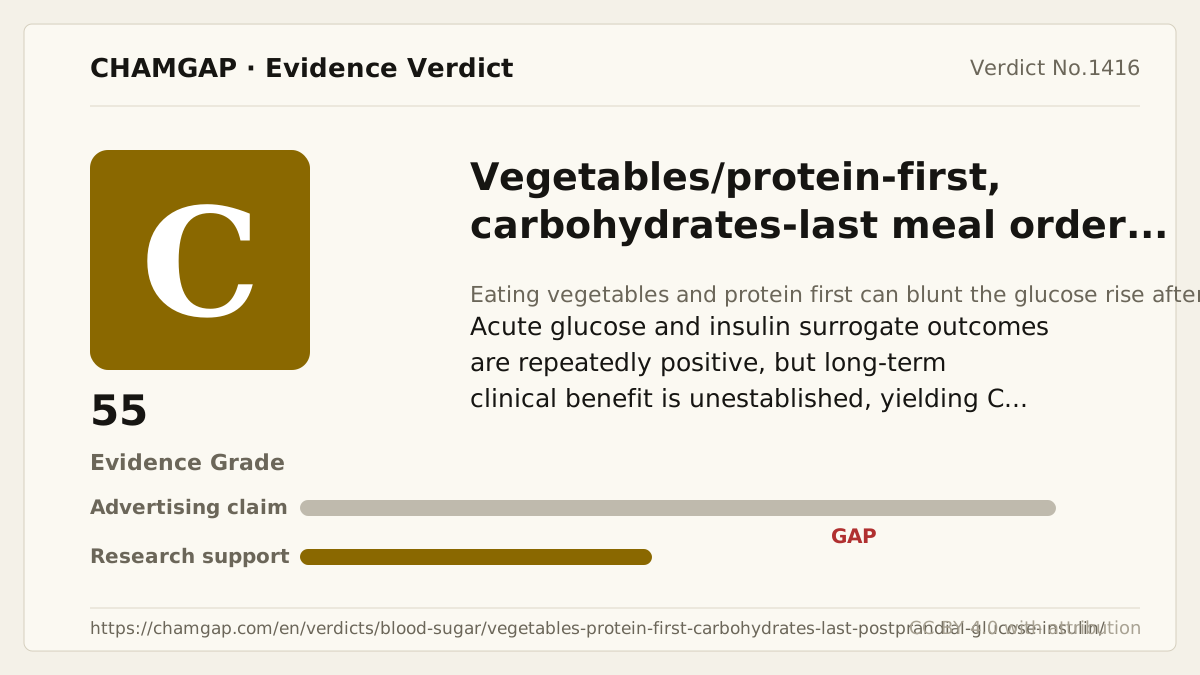
[Chamgap] Vegetables/protein-first meal order x blunted post-meal glucose and insulin surges — Evidence Grade C·55. 4 cited sources checked. Source: https://chamgap.com/en/verdicts/blood-sugar/vegetables-protein-first-carbohydrates-last-postprandial-glucose-insulin/ · CC BY 4.0CC BY 4.0 — free to use with attribution; do not distort grades, numbers, or verdict meaning.
What this document does and does not do
Chamgap is an information source. It reports what research has and has not confirmed; it does not tell readers what to take or buy. That decision belongs to readers and, when needed, medical or legal professionals. This verdict reflects literature available up to the search date and may change as new research appears. Nothing here is medical advice.