
Sucralose 48 mg,
does it really help with Worsened postprandial glucose and insulin responses?
research showsThe grade is C. In a randomized crossover trial analyzing all 17 adults with obesity who rarely used nonnutritive sweeteners, a single 48-mg sucralose dose followed ten minutes later by 75 g glucose increased the registered primary insulin AUC by 20 plus or minus 8% versus water, P<0.03. Peak glucose increment was 4.2 plus or minus 0.2 with water versus 4.8 plus or minus 0.3 mmol/L with sucralose, but total glucose AUC did not differ. The grade indicates whether the claim is supported, not whether the result is good or bad; here C means intermediate evidence for the harm claim, not intermediate danger. A single-dose surrogate study cannot establish long-term glycemic harm or diabetic complications.
ads claimPure sucralose supplies no glucose or fructose and is about 600 times sweeter than sugar, so very little is used. That does not mean it can never alter hormonal responses with glucose, while one OGTT signal also does not mean it causes diabetes.
Useful facts when choosing a product
- FDA materials describe sucralose as about 600 times sweeter than sucrose. The pure 48-mg dose supplied no glucose or fructose.
- Tabletop sucralose products may contain bulking agents such as dextrose or maltodextrin, so a packet can differ from the pure-dose study.
- The comparator was water, and both conditions were followed by 75 g glucose. This was not a meal trial replacing sugar with sucralose.
- Verdict 341 is C with 58 points for D-allulose and postprandial glucose; this verdict uses sucralose before a glucose load, so ingredient and comparison differ.
Chamgap Semantic Classification Code
Candidate index · review held
F.forty-eight-milligrams-of-pure-sucralose-in-water-taken-before-a-glucose-load.food.worsened-postprandial-glucose-and-insulin-responses.assess.UNKFoods and beverages > Forty-eight milligrams of pure sucralose in water taken before a glucose load > Food consumption > Worsened postprandial glucose and insulin responses > Association or change assessment > Unknown
An automated migration candidate, not an issued permanent code; exact claim scope remains under review. This machine-generated migration candidate helps retrieval but is not a permanent assignment. The original verdict ID and URL remain authoritative.
What the research actually shows
Pepino and colleagues randomized 17 adults with obesity who were insulin-sensitive and rarely used nonnutritive sweeteners to water-sucralose or sucralose-water sequence. Participants drank 48 mg sucralose in 60 mL water and consumed 75 g glucose ten minutes later; visits were about one week apart. The primary outcome in NCT01128829 was five-hour insulin AUC and was reported. NIH and Washington University support was verified.
Why this is classified as C (54)
The registered primary insulin AUC and peak glucose showed signals, but the evidence is limited to 17 people, one dose, and metabolic surrogates, while total glucose AUC was null, giving C with 54 points.
Counterpoint. Adding no sugar calories and being metabolically inert during a glucose load are different claims. This trial addresses one acute condition, not long-term diabetes management.
Rejudgment record. Cross-check applied — Assessed the registered primary insulin AUC, distinction between peak glucose and total AUC, approximate effect size, and the 17-person single-dose surrogate design
| Endpoint | S | Surrogate marker - laboratory or imaging measures |
| Replication | R1 | Single confirmatory trial |
| Independence | I2 | Decisive evidence is publicly or non-profit funded |
| Effect size | E+ | Meets the clinically important threshold |
Stored derived and displayed grades match; this is not a current recalculation or validity check (C).
Sub-claim grades by effect
This ingredient is marketed for several effects. A single overall grade blends strong and weak claims together, so each effect is graded separately here. The overall grade reflects the strongest disconfirming or core claim.
| Effect (sub-claim) | Grade | Basis |
|---|---|---|
| Sucralose pretreatment increases insulin AUC during a glucose load | C | A 17-person trial found a 20 plus or minus 8% increase, but this was a single-dose surrogate. |
| Sucralose worsens long-term glycemic control or diabetic complications | ? | This trial measured one OGTT and cannot answer long-term outcomes. |
Cross-check — AI research and Codex final gate
Evidence Table
| Study | Design | Sample | Funding | Endpoint | Result | Weight |
|---|---|---|---|---|---|---|
| Pepino MY et al., 2013 | Randomized open-label acute crossover trial | All 17 participants in crossover analysis | NIH and Washington University research support | Registered primary five-hour insulin AUC; glucose and hormonal responses | Insulin AUC increased 20 plus or minus 8% (P<0.03); peak glucose increment 4.8 plus or minus 0.3 versus 4.2 plus or minus 0.2 mmol/L; no total glucose AUC difference | Positive registered primary outcome, but a 17-person single-dose surrogate study |
Receipt — 3 References
All 3 cited sources were verified for existence at the original page (as of 2026-08-03).
Final verification and publication gate: Codex · Evidence date: 2026-08-03 · Corrections: none
Cite this verdict
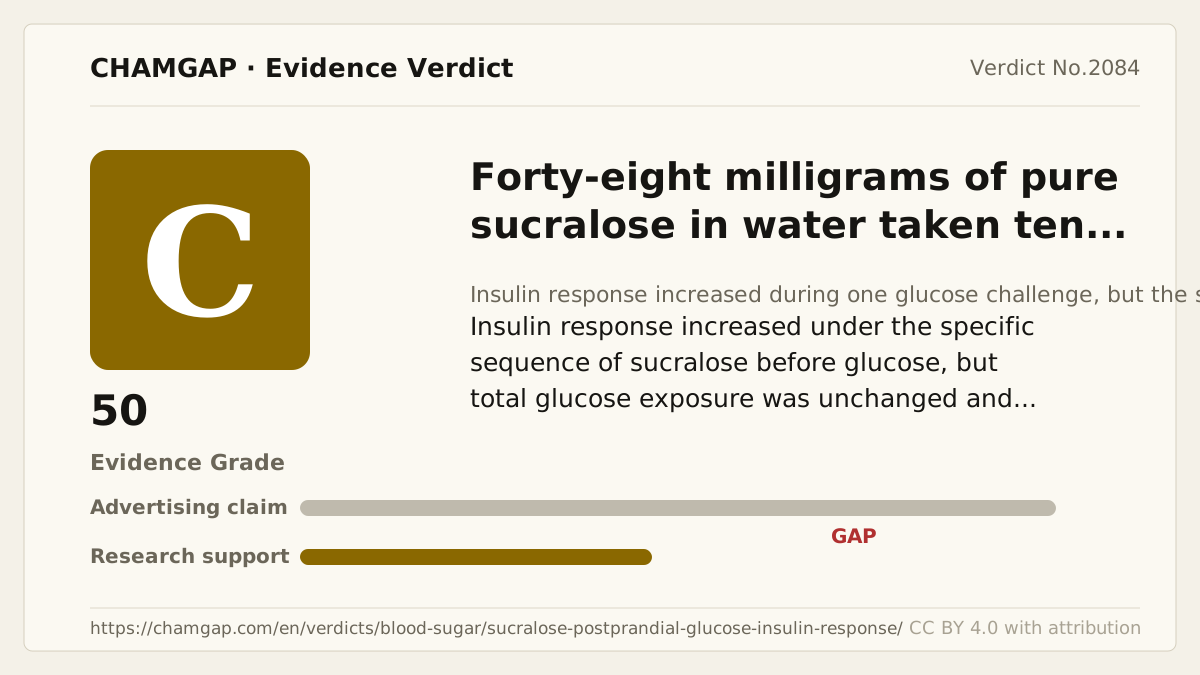
[Chamgap] Sucralose 48 mg x worsened glucose and insulin responses after a glucose load — Evidence Grade C·54. 3 cited sources checked. Source: https://chamgap.com/en/verdicts/blood-sugar/sucralose-postprandial-glucose-insulin-response/ · CC BY 4.0CC BY 4.0 — free to use with attribution; do not distort grades, numbers, or verdict meaning.
What this document does and does not do
Chamgap is an information source. It reports what research has and has not confirmed; it does not tell readers what to take or buy. That decision belongs to readers and, when needed, medical or legal professionals. This verdict reflects literature available up to the search date and may change as new research appears. Nothing here is medical advice.