
Steviol glycosides,
does it really help with Treatment-level improvement of fasting glucose and HbA1c in type 2 diabetes beyond sweetener substitution?
research showsThe claim that steviol glycosides lower fasting glucose and HbA1c at a treatment level beyond replacing sugar is graded D. A 2024 meta-analysis of 12 randomized trials and 871 participants found fasting glucose lower by 4.10 mg/dL, but certainty was low and the HbA1c difference was null at 0.01%. An eight-week type 2 diabetes trial and a 30-person single-dose crossover trial also found no treatment effect on glucose, HbA1c, or oral-glucose-tolerance response. Reducing sugar and calorie exposure by substitution, and producing little acute glycemic response, must be separated from acting as a glucose-lowering medicine.
ads claimMarketing expands a sugar-free natural sweetener function into a pharmacologic claim to lower glucose and treat diabetes. Benefit from removing sugar depends on the comparator and the whole diet and does not replace medication, diet, exercise, or monitoring.
Useful facts when choosing a product
- Steviol glycosides are high-intensity nonnutritive sweeteners that provide sweetness in small amounts. Products may include bulking ingredients such as dextrose, maltodextrin, or erythritol, so the ingredient panel matters.
- Sugar-free does not necessarily mean carbohydrate-free or glucose-lowering. Accompanying foods and blended ingredients determine total carbohydrate and calories.
- In 2024, EFSA found insufficient support to raise the current acceptable daily intake of 4 mg/kg body weight per day expressed as steviol equivalents. An intake safety assessment is not recognition of diabetes-treatment efficacy.
- A sweetener should not replace diabetes medication or justify stopping glucose monitoring or medical care. Gastrointestinal tolerance and responses to blended sweeteners can differ among products.
Chamgap Semantic Classification Code
Candidate index · review held
UNK.steviol-glycosides.UNK.treatment-level-improvement-of-fasting-glucose-and-hba1c-in-type-2-diabetes-beyond-sweetener-substitution.improve.MULTIUnknown > Steviol glycosides > Unknown > Treatment-level improvement of fasting glucose and HbA1c in type 2 diabetes beyond sweetener substitution > Improvement claim > Multiple: primary unresolved
An automated migration candidate, not an issued permanent code; exact claim scope remains under review. This machine-generated migration candidate helps retrieval but is not a permanent assignment. The original verdict ID and URL remain authoritative.
What the research actually shows
Bai 2024 synthesized 12 randomized trials and found fasting glucose -4.10 mg/dL and HbA1c 0.01%, rating the overall evidence low certainty. Anker 2019 also found no significant fasting-glucose or HbA1c improvement across nine trials and 462 participants. Ajami 2020 assigned 34 patients with type 2 diabetes to stevia- or sucralose-sweetened tea for eight weeks and found no between-group difference in fasting glucose, insulin, or HbA1c. Simoens 2022 crossed 30 patients between a single rebaudioside A dose and placebo and found no difference in oral-glucose-tolerance glucose area under the curve.
Why this is classified as D (26)
The latest 12-trial meta-analysis found only a low-certainty fasting-glucose difference of -4.10 mg/dL and a null HbA1c difference of 0.01%. Direct type 2 diabetes trials also failed to demonstrate glucose lowering, so the treatment-level claim has null direct surrogates. Sugar substitution and safety remain separate; the score is D 26.
Counterpoint. Replacing a sugar-sweetened drink or added sugar with an equally sweet nonnutritive option can aid sugar and calorie management. Its value comes from what it replaces, not from an established glucose-lowering drug effect.
Rejudgment record. New verdict — Accepted the low-certainty fasting-glucose signal of -4.10 mg/dL in the latest randomized-trial meta-analysis, but applied rule ② because HbA1c was null and direct type 2 diabetes studies did not demonstrate treatment-level efficacy
Sub-claim grades by effect
This ingredient is marketed for several effects. A single overall grade blends strong and weak claims together, so each effect is graded separately here. The overall grade reflects the strongest disconfirming or core claim.
| Effect (sub-claim) | Grade | Basis |
|---|---|---|
| Treatment-level improvement of fasting glucose in type 2 diabetes | D | A low-certainty average reduction of about 4 mg/dL is small and does not establish a treatment effect in diabetes. |
| Treatment-level improvement of HbA1c in type 2 diabetes | D | The latest meta-analysis found a null HbA1c difference of 0.01%. |
| Reduced sugar and calorie exposure when replacing sugar | B | This follows directly when sugar is actually replaced, but whole-diet impact depends on the substitution context. |
| Replacement for glucose-lowering medication | D | No HbA1c or clinical-outcome evidence supports replacing glucose-lowering medication. |
Cross-check — AI research and Codex final gate
Evidence Table
| Study | Design | Sample | Funding | Endpoint | Result | Weight |
|---|---|---|---|---|---|---|
| Bai X et al. 2024 | Systematic review and meta-analysis of randomized trials | 12 randomized trials and 871 participants | Public and academic research with no commercial sponsorship reported | Fasting blood glucose and HbA1c | Fasting glucose was -4.10 mg/dL, but HbA1c was null at 0.01% and overall certainty was low. | Key current evidence synthesis |
| Ajami M et al. 2020 | Double-blind randomized active-controlled trial | 34 patients with type 2 diabetes | Iranian academic research with no commercial sponsorship reported | Eight-week fasting and postprandial glucose, insulin, and HbA1c | Stevia-sweetened tea did not differ from sucralose in glucose, insulin, or HbA1c. | Direct null diabetes trial with longer-term surrogates |
| Simoens C et al. 2022 | Randomized placebo-controlled single-dose crossover trial | 30 patients with type 2 diabetes | Belgian public and academic institutional support | Oral-glucose-tolerance 0-to-2-hour glucose AUC and pharmacokinetics | Rebaudioside A did not lower glucose AUC versus placebo. | Direct null randomized trial of acute glycemic response |
Receipt — 5 References
All 5 cited sources were verified for existence at the original page (as of 2026-07-20).
Final verification and publication gate: Codex · Evidence date: 2026-07-20 · Corrections: none
Cite this verdict
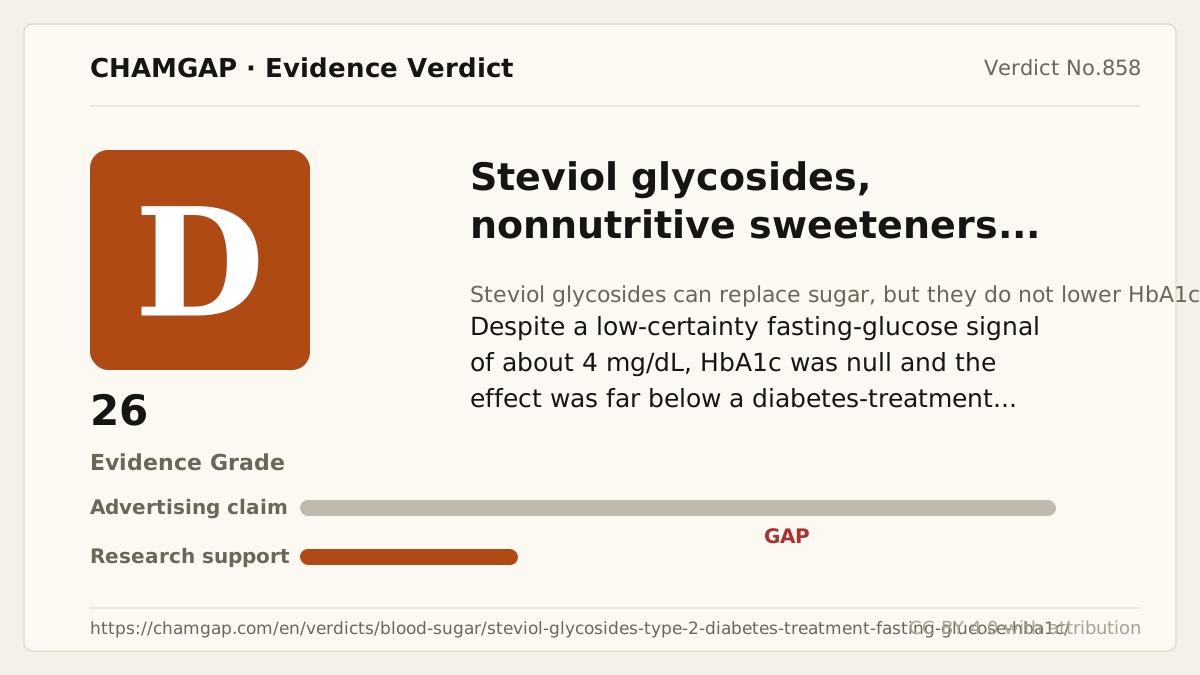
[Chamgap] Steviol glycosides x treatment-level improvement of fasting glucose and HbA1c in type 2 diabetes — Evidence Grade D·26. 5 cited sources checked. Source: https://chamgap.com/en/verdicts/blood-sugar/steviol-glycosides-type-2-diabetes-treatment-fasting-glucose-hba1c/ · CC BY 4.0CC BY 4.0 — free to use with attribution; do not distort grades, numbers, or verdict meaning.
What this document does and does not do
Chamgap is an information source. It reports what research has and has not confirmed; it does not tell readers what to take or buy. That decision belongs to readers and, when needed, medical or legal professionals. This verdict reflects literature available up to the search date and may change as new research appears. Nothing here is medical advice.