
Semaglutide,
does it really help with Lower HbA1c in type 2 diabetes and reduce major cardiovascular events in high-risk patients?
research showsSemaglutide is rated A because it consistently lowers HbA1c in type 2 diabetes and reduces major adverse cardiovascular events in high-risk patients. Three-point MACE had a hazard ratio of 0.74 among 3,297 SUSTAIN-6 participants, and the 2025 SOUL trial replicated the direct hard outcome with a hazard ratio of 0.86 among 9,650 participants receiving the oral formulation. Phase 3 meta-analysis consistently found approximately 1.0-to-1.4-percentage-point HbA1c reductions and weight loss, while FLOW reduced major kidney events in diabetic chronic kidney disease. HbA1c and weight are surrogates and the pivotal trials were industry funded, but replicated hard outcomes across distinct large programs and the empagliflozin precedent in verdict 608 support A with 84 points.
ads claimExtending glycemic and high-risk cardiovascular benefits into a universal cosmetic weight-loss or longevity drug erases indication and baseline risk. Diabetes doses of Ozempic and Rybelsus differ from obesity products and doses, and cosmetic weight loss in healthy normal-weight people is outside this verdict.
Useful facts when choosing a product
- Ozempic is a once-weekly subcutaneous prescription product, while Rybelsus is once-daily oral semaglutide. Starting, escalation, and maximum doses and administration differ, so formulations should not be substituted casually.
- Oral Rybelsus is generally swallowed in the morning on an empty stomach with a small amount of water, followed by a specified interval without food, drink, or other oral medicines to preserve absorption. The current label and prescription control exact timing and dose.
- Nausea, vomiting, diarrhea, constipation, and abdominal pain are common, and dehydration can worsen kidney function. Persistent pain suggesting pancreatitis, gallstone or cholecystitis symptoms, or severe gastrointestinal effects require prompt medical review.
- Rapid glucose improvement can accompany diabetic-retinopathy complications, so preexisting retinopathy warrants monitoring. A rodent thyroid C-cell tumor warning makes personal or family medullary thyroid carcinoma or MEN2 a contraindication, and insulin or sulfonylureas increase hypoglycemia risk.
Chamgap Semantic Classification Code
Candidate index · review held
UNK.semaglutide.UNK.hba1c-in-type-2-diabetes-and-reduce-major-cardiovascular-events.reduce.MULTIUnknown > Semaglutide > Unknown > HbA1c in type 2 diabetes and reduce major cardiovascular events > Reduction claim > Multiple: primary unresolved
An automated migration candidate, not an issued permanent code; exact claim scope remains under review. This machine-generated migration candidate helps retrieval but is not a permanent assignment. The original verdict ID and URL remain authoritative.
What the research actually shows
Marso 2016 SUSTAIN-6 randomized weekly semaglutide or placebo on top of standard care and reported a three-point MACE hazard ratio of 0.74 over 104 weeks. McGuire 2025 SOUL randomized 9,650 people with type 2 diabetes and atherosclerotic cardiovascular disease or chronic kidney disease and found a hazard ratio of 0.86 with oral semaglutide. Andreadis 2018 synthesized six placebo-controlled and seven active-controlled injection trials; 0.5 and 1 mg lowered HbA1c by 1.01 and 1.38 percentage points more than placebo. FLOW reported a hazard ratio of 0.76 for major kidney events or cardiovascular or kidney death among 3,533 participants.
Why this is classified as A (84)
HbA1c lowering is consistent across phase 3 trials, while SUSTAIN-6 with 3,297 participants and SOUL with 9,650 replicated a direct three-point MACE reduction across formulations. FLOW kidney hard outcomes further support clinical benefit. Novo Nordisk sponsorship and inclusion of HbA1c and weight surrogates lower the score to A with 84 points; gastrointestinal, pancreatitis, gallbladder, retinopathy, and hypoglycemia risks remain separate safety issues.
Counterpoint. A does not mean suitability for everyone; it means event-reduction evidence is strong in indicated high-risk patients. Retinopathy, gastrointestinal disease, concomitant medicines, pregnancy plans, cost, and supply still require individualized prescribing review.
Rejudgment record. New verdict — Assigned A in line with verdict 608 because multiple phase 3 trials consistently lower HbA1c and SUSTAIN-6 with 3,297 participants and SOUL with 9,650 replicated direct three-point MACE hard outcomes, supported by FLOW kidney events, while adjusting the score for industry sponsorship and HbA1c and weight surrogates
Sub-claim grades by effect
This ingredient is marketed for several effects. A single overall grade blends strong and weak claims together, so each effect is graded separately here. The overall grade reflects the strongest disconfirming or core claim.
| Effect (sub-claim) | Grade | Basis |
|---|---|---|
| Reduction of three-point MACE in high-risk patients with type 2 diabetes | A | The direct hard outcome was reduced in SUSTAIN-6 and replicated in the larger SOUL trial. |
| HbA1c control in type 2 diabetes | B | The effect is large and consistent across phase 3 trials, but HbA1c is a surrogate. |
| Weight reduction in patients with type 2 diabetes | B | The directly measured effect is consistent across trials but remains distinct from long-term clinical events. |
| Reduction of major kidney events in type 2 diabetes with chronic kidney disease | A | The large FLOW trial reduced a direct kidney hard outcome. |
| General weight loss in low-risk healthy people of normal weight | ? | No direct efficacy literature for this population and purpose was identified within this verdict. |
Cross-check — AI research and Codex final gate
Evidence Table
| Study | Design | Sample | Funding | Endpoint | Result | Weight |
|---|---|---|---|---|---|---|
| Marso SP et al. 2016 SUSTAIN-6 | Multinational randomized double-blind placebo-controlled cardiovascular outcome trial | 3,297 high-risk patients with type 2 diabetes | Novo Nordisk | Three-point MACE of cardiovascular death, nonfatal myocardial infarction, or nonfatal stroke | Three-point MACE occurred in 6.6% versus 8.9%, hazard ratio 0.74. | Key large direct hard-outcome randomized trial |
| McGuire DK et al. 2025 SOUL | Multinational randomized double-blind placebo-controlled cardiovascular outcome trial | 9,650 patients with type 2 diabetes and atherosclerotic cardiovascular disease or chronic kidney disease | Novo Nordisk | Three-point MACE | MACE occurred in 12.0% versus 13.8%, hazard ratio 0.86, replicating benefit with oral treatment. | Large replicating direct hard-outcome randomized trial |
| Andreadis P et al. 2018 | Systematic review and meta-analysis of semaglutide randomized trials | Six placebo-controlled and seven active-controlled injection trials plus one oral trial | Academic synthesis; included trials were predominantly industry sponsored | HbA1c, body weight, blood pressure, and adverse events | The 0.5- and 1-mg doses lowered HbA1c by 1.01 and 1.38 percentage points versus placebo, and 1 mg reduced weight by 4.11 kg. | Consistent glycemic and weight surrogate synthesis |
| Perkovic V et al. 2024 FLOW | Multinational randomized double-blind placebo-controlled kidney outcome trial | 3,533 patients with type 2 diabetes and chronic kidney disease | Novo Nordisk | Kidney failure, at least 50% eGFR decline, or kidney or cardiovascular death | The hazard ratio for the major kidney-disease composite was 0.76. | Supporting large direct kidney hard-outcome randomized trial |
Receipt — 5 References
All 5 cited sources were verified for existence at the original page (as of 2026-07-19).
Final verification and publication gate: Codex · Evidence date: 2026-07-19 · Corrections: none
Cite this verdict
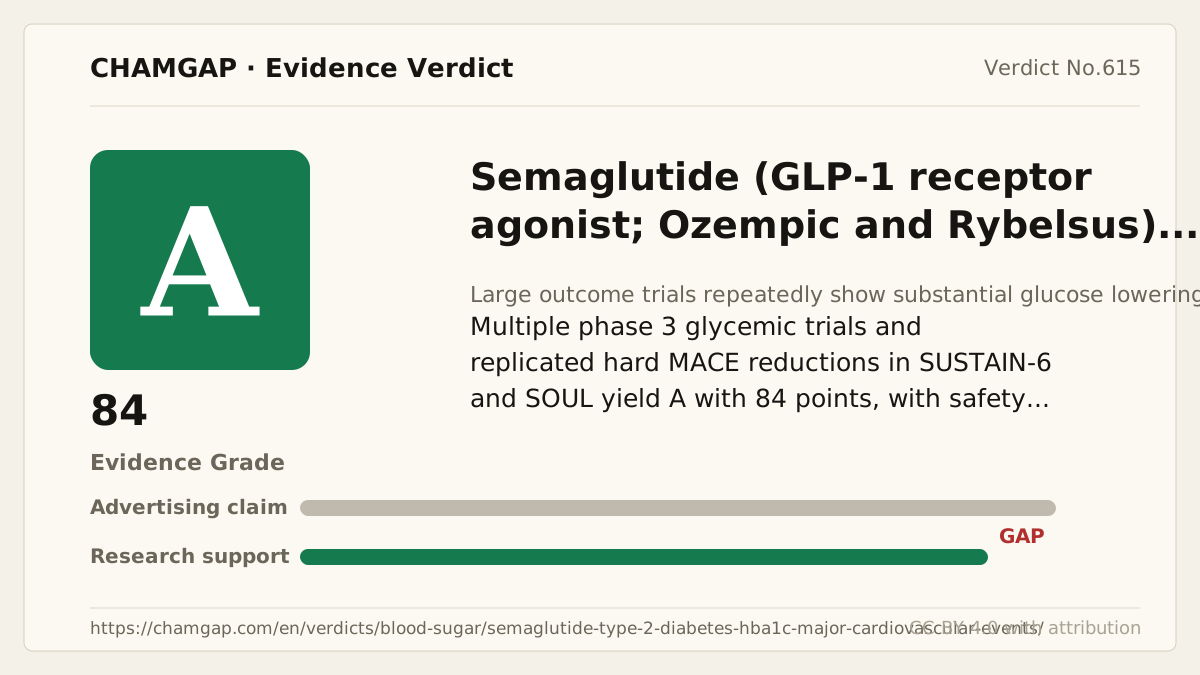
[Chamgap] Semaglutide x lower HbA1c and reduced MACE in high-risk type 2 diabetes — Evidence Grade A·84. 5 cited sources checked. Source: https://chamgap.com/en/verdicts/blood-sugar/semaglutide-type-2-diabetes-hba1c-major-cardiovascular-events/ · CC BY 4.0CC BY 4.0 — free to use with attribution; do not distort grades, numbers, or verdict meaning.
What this document does and does not do
Chamgap is an information source. It reports what research has and has not confirmed; it does not tell readers what to take or buy. That decision belongs to readers and, when needed, medical or legal professionals. This verdict reflects literature available up to the search date and may change as new research appears. Nothing here is medical advice.