
Acarbose,
does it really help with Reduced postprandial glucose and glycated hemoglobin (HbA1c)?
research showsAcarbose is rated C because it lowers postprandial glucose and HbA1c, but these are surrogate measures and hard-outcome benefit is unproven. An older Cochrane review and the latest 101-trial meta-analysis reproduce glycemic improvement, but the latest HbA1c WMD was -0.32 percentage points with low GRADE certainty and I-squared of 96.2%, indicating a modest and heterogeneous effect. The cardiovascular signal in STOP-NIDDM came from underpowered secondary endpoints without adjustment for multiple testing, while the larger, dedicated ACE trial in 6,522 participants found a null primary cardiovascular composite, HR 0.98 (p=.73). Under rule 1, unvalidated surrogate evidence alone is capped at C; reproducibility of the glycemic effect supports 54 points within that band. Cardiovascular and diabetes-complication prevention remains a D subclaim.
ads claimPromotional language can miscast acarbose as a carbohydrate blocker that erases food or replaces dietary control. It is a prescription medicine that delays carbohydrate absorption and produces a modest reduction in post-meal and average glucose; it does not cancel calories from overeating.
Useful facts when choosing a product
- Acarbose is a prescription diabetes medicine that inhibits intestinal alpha-glucosidase. It is commonly taken with the first bite of a meal, but dose and frequency must follow the prescription and label.
- HbA1c lowering is modest; the latest 101-trial meta-analysis found a pooled WMD of -0.32 percentage points. The drug directly affects postprandial glucose but does not replace diet, exercise, or other indicated diabetes medicines and does not erase carbohydrate calories.
- Flatulence, abdominal distension, pain, and diarrhea are common and dose related. Gradual titration may improve tolerability, while serious bowel disease or obstruction risk can contraindicate use.
- Hypoglycemia is uncommon with monotherapy but can occur with insulin or sulfonylureas. It should be treated with glucose rather than table sugar, and liver-enzyme monitoring may be needed during higher-dose or prolonged treatment.
Chamgap Semantic Classification Code
Candidate index · review held
M.acarbose.UNK.postprandial-glucose-and-glycated-hemoglobin-hba1c.reduce.MULTIMedicinal interventions > Acarbose > Unknown > postprandial glucose and glycated hemoglobin (HbA1c) > Reduction claim > Multiple: primary unresolved
An automated migration candidate, not an issued permanent code; exact claim scope remains under review. This machine-generated migration candidate helps retrieval but is not a permanent assignment. The original verdict ID and URL remain authoritative.
What the research actually shows
The older Cochrane review included 41 trials and 8,130 participants and reported placebo-adjusted reductions of 0.8 percentage points in HbA1c and 2.3 mmol/L in post-load glucose. The latest 101-trial meta-analysis found a smaller HbA1c WMD of -0.32 points (95% CI -0.44 to -0.20), with low GRADE certainty and I-squared of 96.2%. A 165-person Korean add-on trial and the 784-person MARCH study support the direction but add industry, regional, and open-label limitations. ACE followed 6,522 participants for a median of five years and found no reduction in the primary cardiovascular composite, HR 0.98 (95% CI 0.86-1.11, p=.73).
Why this is classified as C (54)
Reductions in postprandial glucose and HbA1c recur across randomized trials, but these are surrogate measures, and the latest 101-trial meta-analysis found a modest HbA1c WMD of -0.32 percentage points with low GRADE certainty and I-squared of 96.2%. The STOP-NIDDM cardiovascular signal was based on underpowered secondary endpoints without adjustment for multiple testing, and the larger dedicated ACE trial in 6,522 participants did not establish hard benefit: the primary cardiovascular composite was null, HR 0.98 (p=.73). Applying the rule 1 ceiling while crediting repeated glycemic improvement yields C with 54 points. Cardiovascular prevention remains a D subclaim, while flatulence, diarrhea, and liver-enzyme elevation remain separate safety issues.
Counterpoint. The drug can be useful for patients with prominent postprandial hyperglycemia who wish to avoid hypoglycemia or weight gain. Individual HbA1c goals, bowel, liver, and kidney status, and concomitant medicines must guide prescribing, and timing with the first bite plus tolerability management are important.
Rejudgment record. Consistency recalibration (rule 1 surrogate clarification) — Credited repeated improvements in postprandial glucose and HbA1c but classified them as unvalidated surrogates; applied the rule 1 ceiling of C because the STOP-NIDDM cardiovascular signal came from underpowered secondary endpoints without multiplicity adjustment and the primary cardiovascular composite was null in the 6,522-person ACE trial, while retaining cardiovascular prevention as a D subclaim
Sub-claim grades by effect
This ingredient is marketed for several effects. A single overall grade blends strong and weak claims together, so each effect is graded separately here. The overall grade reflects the strongest disconfirming or core claim.
| Effect (sub-claim) | Grade | Basis |
|---|---|---|
| Reduction in postprandial glucose and HbA1c | C | Multiple trials are directionally consistent, but the latest meta-analysis found -0.32 percentage points, low GRADE certainty, high I-squared, and industry concentration. |
| Prevention of cardiovascular and diabetic complications | D | The 6,522-person ACE trial directly found a null primary cardiovascular outcome, HR 0.98. |
| Misconception as a carbohydrate-offset supplement | ? | The evidence does not support a dietary replacement or supplement concept. |
Cross-check — AI research and Codex final gate
Evidence Table
| Study | Design | Sample | Funding | Endpoint | Result | Weight |
|---|---|---|---|---|---|---|
| Van de Laar FA et al. 2005 Cochrane review | Systematic review and meta-analysis of randomized trials | 41 trials and 8,130 participants; 30 acarbose trials | Academic independent Cochrane review; funding varied across included trials | HbA1c, fasting glucose, post-load glucose, body weight, and adverse events | Versus placebo, HbA1c fell by 0.8 percentage points, fasting glucose by 1.1 mmol/L, and post-load glucose by 2.3 mmol/L. | Key independent large synthesis |
| Raissi Dehkordi S et al. 2024 | Systematic review, meta-analysis, and dose-response analysis of randomized trials | 101 randomized trials and 107 effect sizes | Academic research; no manufacturer funding reported | Fasting glucose, insulin, HbA1c, and HOMA-IR | The HbA1c WMD was -0.32 percentage points, but GRADE certainty was low and I-squared was 96.2%, indicating a modest effect and extreme heterogeneity. | Recent large but low-certainty synthesis |
| Kim MK et al. 2019 | Korean multicenter randomized double-blind placebo-controlled add-on trial | 165 patients with type 2 diabetes | Supported by Bayer Korea | Sixteen-week HbA1c and meal-tolerance testing | Adding acarbose to metformin and sitagliptin reduced HbA1c by 0.44 percentage points, while the control change was not significant. | Direct Korean placebo-controlled replication |
| Yang W et al. 2014 MARCH trial | Multicenter open-label noninferiority randomized active-controlled trial | 784 treatment starters with newly diagnosed type 2 diabetes | Bayer Healthcare China and Double Crane Pharma | Twenty-four- and 48-week HbA1c, postprandial glucose, weight, and adverse events | At 48 weeks, HbA1c fell by 1.11 points with acarbose and 1.12 points with metformin. | Large active-controlled direct evidence |
| ACE, Holman RR et al. 2017 | Randomized double-blind placebo-controlled cardiovascular outcomes trial | 6,522 participants with coronary heart disease and impaired glucose tolerance | Supported by Bayer AG and Bayer China | Primary five-component cardiovascular composite over a median five years | The primary cardiovascular composite was null, HR 0.98 (95% CI 0.86-1.11, p=.73). | Direct large null evidence for the cardiovascular-prevention subclaim |
Receipt — 6 References
All 6 cited sources were verified for existence at the original page (as of 2026-07-23).
Final verification and publication gate: Codex · Evidence date: 2026-07-23 · Corrections: none
Cite this verdict
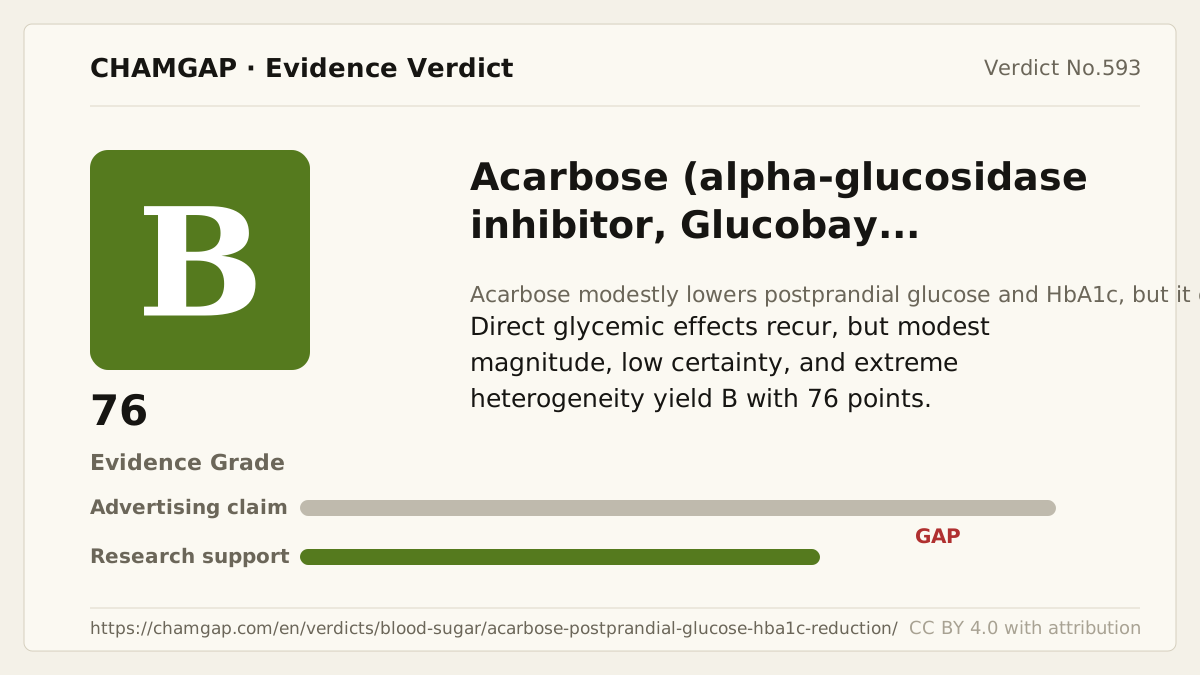
[Chamgap] Acarbose x reduced postprandial glucose and HbA1c — Evidence Grade C·54. 6 cited sources checked. Source: https://chamgap.com/en/verdicts/blood-sugar/acarbose-postprandial-glucose-hba1c-reduction/ · CC BY 4.0CC BY 4.0 — free to use with attribution; do not distort grades, numbers, or verdict meaning.
What this document does and does not do
Chamgap is an information source. It reports what research has and has not confirmed; it does not tell readers what to take or buy. That decision belongs to readers and, when needed, medical or legal professionals. This verdict reflects literature available up to the search date and may change as new research appears. Nothing here is medical advice.