
Selenium,
does it really help with Prevention of type 2 diabetes and improved glycemic control through antioxidant action?
research showsSelenium supplementation for prevention of type 2 diabetes or improved glycemic control is rated F. A meta-analysis of five randomized trials found that selenium 200 micrograms per day increased rather than reduced incident diabetes versus placebo (RR 1.11, 95% CI 1.01 to 1.22). A secondary analysis of 1,202 participants in the NPC trial also found increased diabetes after a mean 7.7 years (HR 1.55, 95% CI 1.03 to 2.33). A randomized-trial meta-analysis of glycemic markers found no significant improvement in fasting glucose, insulin, HOMA-IR, or HbA1c. Being a component of antioxidant enzymes is not prevention efficacy, while selenosis and the diabetes-risk signal remain separate safety concerns.
ads claimMarketing turns selenium's required role in antioxidant proteins such as glutathione peroxidases into a chain of claims about less oxidative stress, restored insulin sensitivity, and diabetes prevention. Physiologic essentiality of a nutrient is not clinical efficacy from additional supplementation.
Useful facts when choosing a product
- Randomized trials in the diabetes-incidence meta-analysis generally used selenium 200 micrograms per day, and this dose produced a risk increase rather than prevention.
- Selenium is an essential trace nutrient, but total intake from food, multivitamins, and single-ingredient supplements must be combined, and more is not better when deficiency is absent.
- Products use forms such as selenomethionine, selenium yeast, or sodium selenite, but no human evidence shows that changing form reverses the null diabetes-prevention result.
- Excess can cause hair loss, brittle nails, garlic odor, and skin, gastrointestinal, or neurologic symptoms, and long-term supplementation also warrants attention to the diabetes-risk signal.
Chamgap Semantic Classification Code
Candidate index · review held
S.selenium.UNK.type-2-diabetes-and-improved-glycemic-control-through-antioxidant-action.prevent.placeboSupplements and nutraceuticals > Selenium > Unknown > type 2 diabetes and improved glycemic control through antioxidant action > Occurrence-prevention claim > Placebo
An automated migration candidate, not an issued permanent code; exact claim scope remains under review. This machine-generated migration candidate helps retrieval but is not a permanent assignment. The original verdict ID and URL remain authoritative.
What the research actually shows
Stranges et al. 2007 performed a post hoc secondary analysis of incident diabetes in the NPC skin-cancer prevention trial using selenium 200 micrograms per day. Diabetes was not prevented, and increased risk appeared overall and among participants with high baseline selenium. Vinceti et al. 2018 reviewed nonexperimental evidence and five trials and found an 11% increase in experimental studies. Gorabi et al. 2019 synthesized 12 trials and 1,441 participants and found no improvement in fasting glucose, insulin, HOMA-IR, HbA1c, or adiponectin. Direct disease incidence and major glycemic markers take precedence over conflicting selected insulin surrogates.
Why this is classified as F (10)
A five-trial meta-analysis increased incident type 2 diabetes at RR 1.11, and an individual long-term trial found HR 1.55, so the prevention subclaim appropriately remains F for a harm-direction result. Major glycemic markers were null overall, but improvement signals in some glycemic measures make 10 points more balanced than 8. Selenosis remains a separate safety warning.
Counterpoint. Correction of medically confirmed selenium deficiency is a separate nutritional treatment. This verdict concerns additional supplementation for diabetes prevention or glycemic improvement without established deficiency and is a different clinical claim from prostate-cancer prevention in verdict 475.
Rejudgment record. New verdict — Prioritized the RR 1.11 increase in incident type 2 diabetes across five randomized trials, HR 1.55 in the long-term NPC analysis, and null major glycemic markers over selected surrogate signals and antioxidant mechanisms
Sub-claim grades by effect
This ingredient is marketed for several effects. A single overall grade blends strong and weak claims together, so each effect is graded separately here. The overall grade reflects the strongest disconfirming or core claim.
| Effect (sub-claim) | Grade | Basis |
|---|---|---|
| Prevention of incident type 2 diabetes | F | Five-trial synthesis gave RR 1.11 and the long-term trial gave HR 1.55, pointing toward increased risk rather than prevention. |
| Improved glycemic control including fasting glucose and HbA1c | F | A 12-trial meta-analysis found no significant improvement in fasting glucose, insulin, HOMA-IR, or HbA1c, and an antioxidant mechanism is not evidence of clinical improvement. |
Cross-check — AI research and Codex final gate
Evidence Table
| Study | Design | Sample | Funding | Endpoint | Result | Weight |
|---|---|---|---|---|---|---|
| Vinceti M et al. 2018 | Systematic review and meta-analysis | Fifty potentially eligible nonexperimental studies retrieved and five randomized trials | Academic research; no specific commercial funding stated in the public abstract | Incident type 2 diabetes | In randomized trials, selenium 200 micrograms per day increased diabetes incidence by 11% versus placebo (RR 1.11, 95% CI 1.01 to 1.22). | Decisive synthesized harm signal |
| Stranges S et al. 2007 | Post hoc secondary analysis of a randomized double-blind placebo-controlled trial | 1,202 participants without diabetes at baseline | Parent trial supported by the U.S. National Cancer Institute | Incident type 2 diabetes over a mean 7.7 years | Diabetes occurred in 58 selenium and 39 placebo recipients, yielding HR 1.55, with greater risk at the highest baseline selenium level. | Long-term direct harm signal with a secondary endpoint |
| Gorabi AM et al. 2019 | Meta-analysis of double-blind placebo-controlled randomized trials | Twelve articles, 757 intervention participants, and 684 controls | No conflict of interest reported; funding source not stated in the public abstract | Fasting glucose, insulin, HOMA-IR, HbA1c, and other glycemic markers | There was no significant improvement in fasting glucose, insulin, HOMA-IR, HbA1c, or adiponectin. | Repeated null evidence for glycemic improvement |
Receipt — 3 References
All 3 cited sources were verified for existence at the original page (as of 2026-07-20).
Final verification and publication gate: Codex · Evidence date: 2026-07-20 · Corrections: none
Cite this verdict
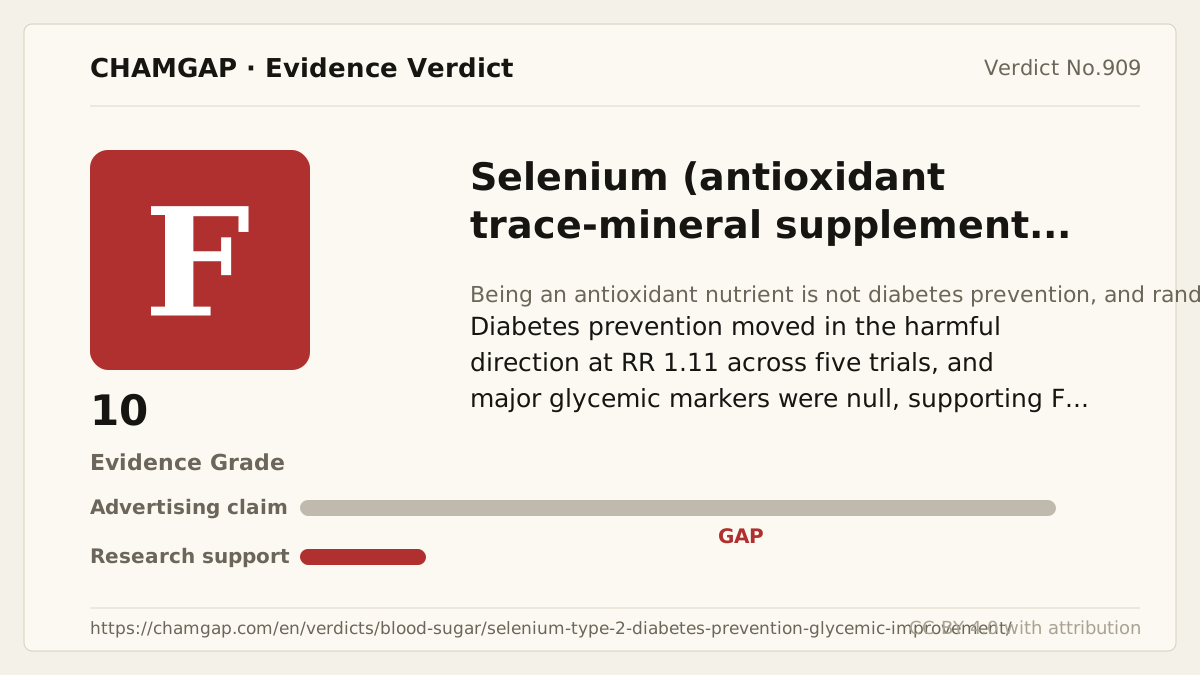
[Chamgap] Selenium x prevention of type 2 diabetes and improved glycemic control — Evidence Grade F·10. 3 cited sources checked. Source: https://chamgap.com/en/verdicts/blood-sugar/selenium-type-2-diabetes-prevention-glycemic-improvement/ · CC BY 4.0CC BY 4.0 — free to use with attribution; do not distort grades, numbers, or verdict meaning.
What this document does and does not do
Chamgap is an information source. It reports what research has and has not confirmed; it does not tell readers what to take or buy. That decision belongs to readers and, when needed, medical or legal professionals. This verdict reflects literature available up to the search date and may change as new research appears. Nothing here is medical advice.