
Saxagliptin,
does it really help with Prevention of cardiovascular death, myocardial infarction, and stroke in high-risk type 2 diabetes?
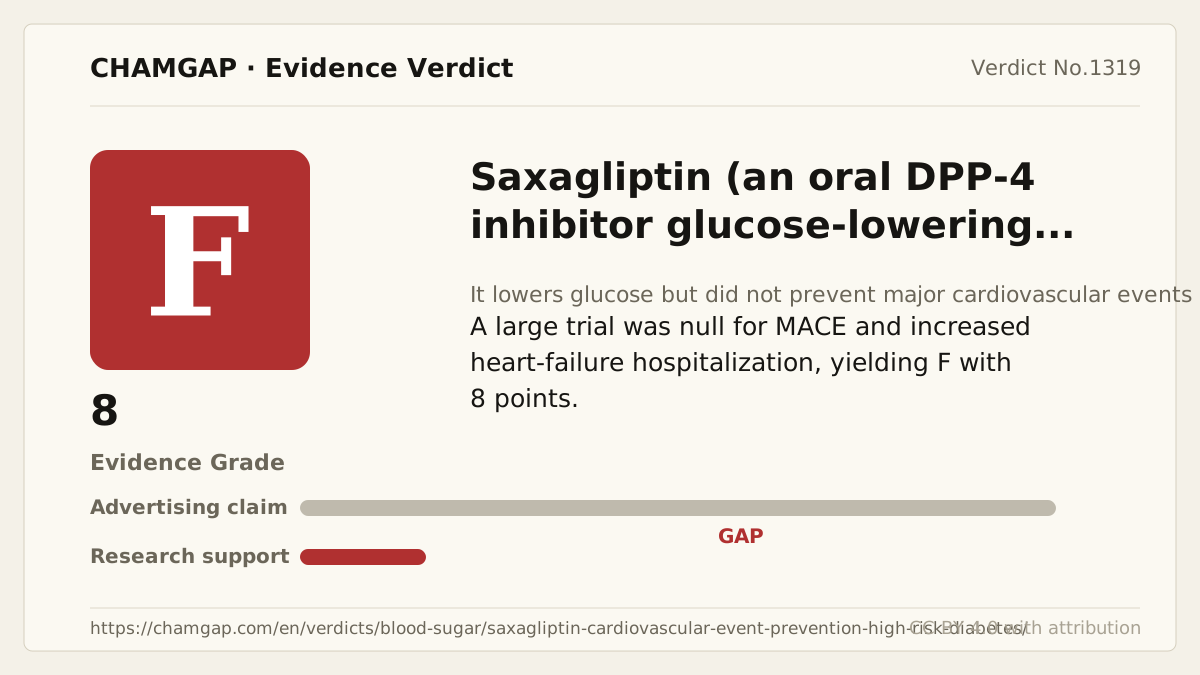
research showsThe direct cardiovascular-prevention evidence is the single SAVOR trial, with MACE HR 1.00 (95% CI 0.89 to 1.12). The lower bound of 0.89 allows an 11% relative risk reduction, and there is no repeated trial. Because clinically meaningful benefit is not excluded, the grade is D with 28 points, not F.
ads claimTurning a reduction in blood glucose into prevention of myocardial infarction, stroke, or cardiovascular death contradicts the large clinical-outcome trial.
Useful facts when choosing a product
- Saxagliptin is a prescription DPP-4 inhibitor used with diet and exercise for glycemic control in adults with type 2 diabetes.
- It is not proven as a cardiovascular-prevention drug, and prior heart failure or kidney disease requires a separate risk-benefit review.
- In addition to worsening heart failure, pancreatitis, severe joint pain, and hypersensitivity are reported, while hypoglycemia risk depends on accompanying drugs.
Chamgap Semantic Classification Code
Candidate index · review held
M.saxagliptin.oral.cardiovascular-death-myocardial-infarction-and-stroke-in-high-risk-type-2-diabetes.prevent.placeboMedicinal interventions > Saxagliptin > Oral > cardiovascular death, myocardial infarction, and stroke in high-risk type 2 diabetes > Occurrence-prevention claim > Placebo
An automated migration candidate, not an issued permanent code; exact claim scope remains under review. This machine-generated migration candidate helps retrieval but is not a permanent assignment. The original verdict ID and URL remain authoritative.
What the research actually shows
SAVOR-TIMI 53 randomized 16,492 people with type 2 diabetes and established or high cardiovascular risk. Primary MACE was 7.3% versus 7.2%, HR 1.00, failing superiority. Heart-failure hospitalization was 289 of 8,280 versus 228 of 8,212, HR 1.27, and the FDA added a label warning in 2016.
Why this is classified as D (28)
The direct cardiovascular-prevention evidence is the single SAVOR trial, with MACE HR 1.00 (95% CI 0.89 to 1.12). The lower bound of 0.89 allows an 11% relative risk reduction, and there is no repeated trial. Because clinically meaningful benefit is not excluded, the grade is D with 28 points, not F.
Counterpoint. Patients should not stop a drug prescribed for glucose control without medical advice; this verdict addresses only cardiovascular prevention. Grade-independent note: the FDA added a heart-failure warning, and increased heart-failure hospitalization is a safety signal. Regulatory action and safety are not used to determine the MACE-prevention efficacy grade.
Rejudgment record. Cross-check applied — The direct cardiovascular-prevention evidence is the single SAVOR trial, with MACE HR 1.00 (95% CI 0.89 to 1.12). The lower bound of 0.89 allows an 11% relative risk reduction, and there is no repeated trial. Because clinically meaningful benefit is not excluded, the grade is D with 28 points, not F.
Sub-claim grades by effect
This ingredient is marketed for several effects. A single overall grade blends strong and weak claims together, so each effect is graded separately here. The overall grade reflects the strongest disconfirming or core claim.
| Effect (sub-claim) | Grade | Basis |
|---|---|---|
| Prevention of the composite of cardiovascular death, myocardial infarction, and stroke | D | MACE in the large randomized trial was HR 1.00 (95% CI 0.89 to 1.12), failing superiority but not excluding an 11% relative risk reduction. |
| Prevention of cardiovascular death | D | No cardiovascular protective benefit was demonstrated, and glucose lowering is a separate surrogate endpoint. |
| Prevention of myocardial infarction and stroke | D | No preventive effect was established for the primary composite or individual ischemic events, but SAVOR was the single direct outcomes trial. |
Cross-check — AI research and Codex final gate
Evidence Table
| Study | Design | Sample | Funding | Endpoint | Result | Weight |
|---|---|---|---|---|---|---|
| SAVOR-TIMI 53, Scirica BM et al. 2013 | Multicenter randomized double-blind placebo-controlled cardiovascular outcomes trial | 16,492 participants; median 2.1 years | AstraZeneca and Bristol-Myers Squibb | Cardiovascular death, myocardial infarction, ischemic stroke, and heart-failure hospitalization | MACE was null at HR 1.00, while heart-failure hospitalization increased, 3.5% versus 2.8%, HR 1.27. | Decisive large direct evidence |
| U.S. FDA Drug Safety Communication 2016 | Regulatory safety review of large trials | Data from 16,492 SAVOR participants | United States federal regulator | Heart-failure hospitalization | Confirmed increased heart-failure risk and added a warning to saxagliptin labeling. | Regulatory confirmation of harm |
Receipt — 2 References
All 2 cited sources were verified for existence at the original page (as of 2026-07-23).
Final verification and publication gate: Codex · Evidence date: 2026-07-23 · Corrections: none
Cite this verdict
[Chamgap] Saxagliptin x prevention of major cardiovascular events in high-risk type 2 diabetes — Evidence Grade D·28. 2 cited sources checked. Source: https://chamgap.com/en/verdicts/blood-sugar/saxagliptin-cardiovascular-event-prevention-high-risk-diabetes/ · CC BY 4.0CC BY 4.0 — free to use with attribution; do not distort grades, numbers, or verdict meaning.
What this document does and does not do
Chamgap is an information source. It reports what research has and has not confirmed; it does not tell readers what to take or buy. That decision belongs to readers and, when needed, medical or legal professionals. This verdict reflects literature available up to the search date and may change as new research appears. Nothing here is medical advice.