
Rigid rocker-sole therapeutic footwear,
does it really help with Prevention of recurrent healed plantar ulcer?
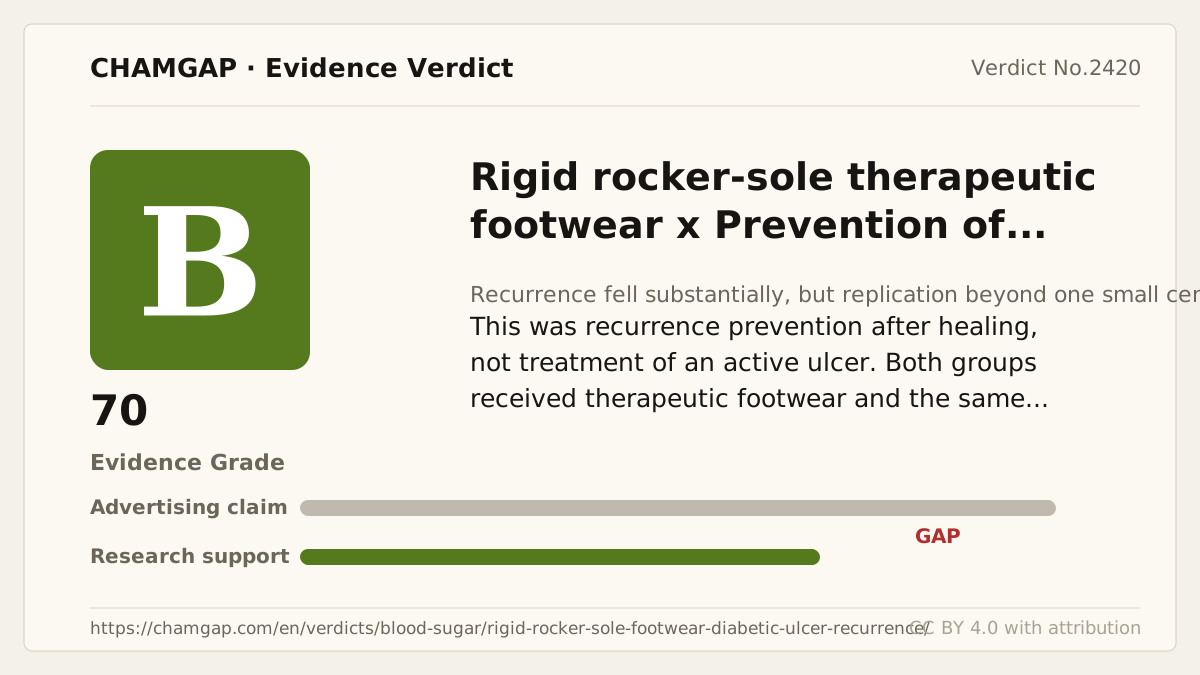
research showsThe grade is B with 70 points. In 51 people with diabetes, neuropathy, and a recently healed plantar ulcer, six-month recurrence was 6/26 (23%) with a rigid rocker sole and 16/25 (64%) with a semi-rigid rocker sole, an absolute reduction of 41 percentage points and NNT about 2.43.
ads claimNot every diabetic shoe or insole sold in Korea reproduces the tested 20° rocker, rigid composite outsole, rocker position, and custom off-loading insole. Fitting, pressure checks, adherence education, and daily foot inspection matter. Verdict 1933 is B with 76 points and verdict 1936 is C with 54 points for healing active ulcers; this verdict concerns prevention after healing.
Useful facts when choosing a product
- Participants had a recently healed ulcer and confirmed neuropathy.
- The control also used semi-rigid rocker footwear and the same custom insole.
- Rocker geometry and insoles were matched while outsole rigidity differed.
- Adherence was assessed at each visit; 46/51 exceeded 60%.
- The paper reported no specific funding.
- The paper declared no competing interests.
- Free footwear provision was not stated.
Chamgap Semantic Classification Code
Candidate index · review held
P.rigid-rocker-sole-therapeutic-footwear.UNK.recurrent-healed-plantar-ulcer.prevent.UNKProcedures, devices and tests > Rigid rocker-sole therapeutic footwear > Unknown > recurrent healed plantar ulcer > Occurrence-prevention claim > Unknown
An automated migration candidate, not an issued permanent code; exact claim scope remains under review. This machine-generated migration candidate helps retrieval but is not a permanent assignment. The original verdict ID and URL remain authoritative.
What the research actually shows
López-Moral 2019 randomized 51 people with a recently healed plantar ulcer and loss of protective sensation confirmed by 10-g monofilament or vibration threshold, 26 to rigid and 25 to semi-rigid soles. Both shoes shared extra depth and width, secure fastening, minimal seams, a 20° anterior-posterior rocker, and propulsion beginning behind the metatarsal heads. Both used custom multilayer insoles with 40-Shore EVA, Poron, and a cutout beneath the previously ulcerated metatarsal head. The rigid outsole used composite fiber; the control used semi-rigid Wellwalk/Vibram. Visits occurred every 30±2 days for six months or recurrence, and all attended scheduled follow-up. Recurrence was a full-thickness wound involving foot or ankle, diagnosed by two clinicians masked to assignment. Median follow-up was 26 weeks. The funding statement was “The authors received no specific funding for this work.” The competing-interest statement was “The authors have declared that no competing interests exist.” Free footwear provision was not stated.
Why this is classified as B (70)
A large reduction in blindedly adjudicated recurrence occurred in intention-to-treat analysis, but evidence is one small randomized trial.
Counterpoint. One 51-person specialist-center trial over six months may not generalize to other footwear designs, severe deformity, ischemia, or higher activity.
Rejudgment record. Cross-check applied — Population, shoe construction, comparator, adherence, intention-to-treat outcome, adjudication, funding, and product-supply reporting were checked in the original article.
| Endpoint | H | Hard endpoint - actual events such as death |
| Replication | R1 | Single confirmatory trial |
| Independence | I1 | Mixed funding sources |
| Effect size | E+ | Meets the clinically important threshold |
Stored derived and displayed grades match; this is not a current recalculation or validity check (B).
Sub-claim grades by effect
This ingredient is marketed for several effects. A single overall grade blends strong and weak claims together, so each effect is graded separately here. The overall grade reflects the strongest disconfirming or core claim.
| Effect (sub-claim) | Grade | Basis |
|---|---|---|
| Rigid rocker-sole footwear reduces recurrence after a diabetic plantar ulcer has healed | B | A large intention-to-treat reduction came from one small trial. |
Cross-check — AI research and Codex final gate
Evidence Table
| Study | Design | Sample | Funding | Endpoint | Result | Weight |
|---|---|---|---|---|---|---|
| López-Moral et al. 2019 | Parallel randomized controlled trial, six months | 51 randomized and analyzed by intention to treat; rigid 26, semi-rigid 25 | The authors received no specific funding for this work. | Recurrent full-thickness plantar ulcer confirmed by two masked clinicians | 6/26 (23%) vs 16/25 (64%); ARR 41 percentage points; NNT 2.43; P=.003 | Pivotal evidence |
Receipt — 1 References
All 1 cited sources were verified for existence at the original page (as of 2026-08-07).
Final verification and publication gate: Codex · Evidence date: 2026-08-07 · Corrections: none
Cite this verdict
[Chamgap] Rigid rocker-sole footwear × recurrent diabetic plantar-ulcer prevention — Evidence Grade B·70. 1 cited sources checked. Source: https://chamgap.com/en/verdicts/blood-sugar/rigid-rocker-sole-footwear-diabetic-ulcer-recurrence/ · CC BY 4.0CC BY 4.0 — free to use with attribution; do not distort grades, numbers, or verdict meaning.
What this document does and does not do
Chamgap is an information source. It reports what research has and has not confirmed; it does not tell readers what to take or buy. That decision belongs to readers and, when needed, medical or legal professionals. This verdict reflects literature available up to the search date and may change as new research appears. Nothing here is medical advice.