
Repaglinide,
does it really help with Lower postprandial glucose and HbA1c in type 2 diabetes inadequately controlled by diet?
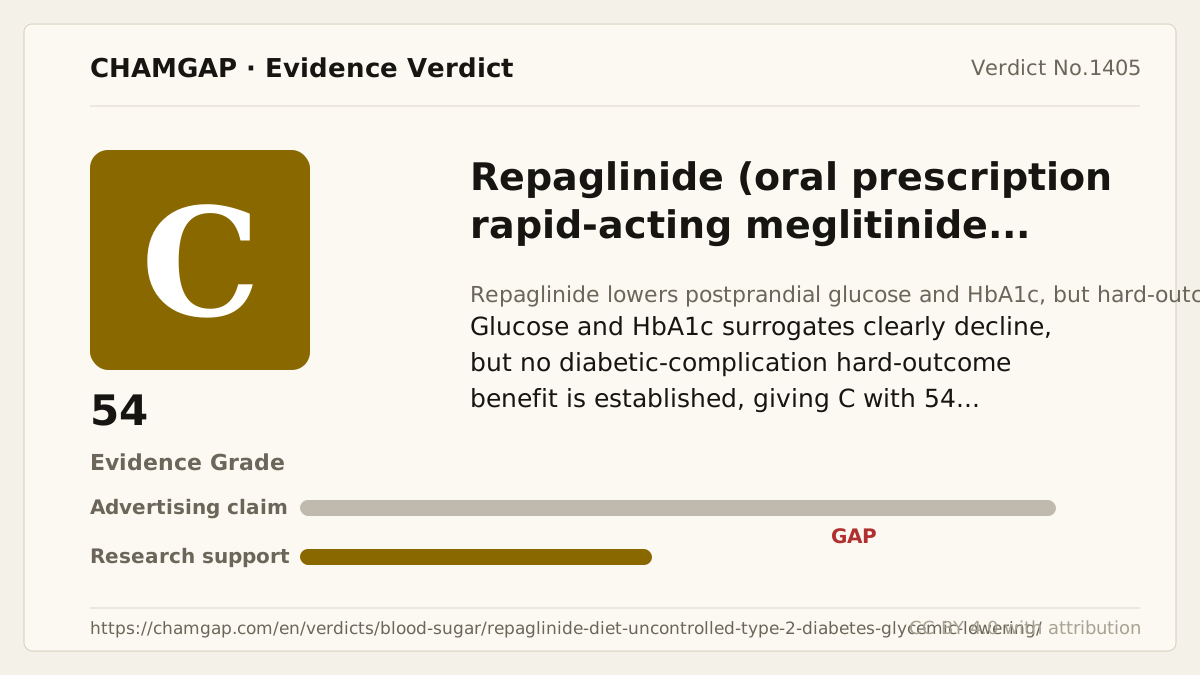
research showsRepaglinide is rated C because it lowers HbA1c and postprandial glucose in type 2 diabetes inadequately controlled by diet, but the evidence remains surrogate-only. In a 16-week placebo-controlled trial of 408 treatment-naive participants, HbA1c fell 1.14 percentage points from baseline and fasting glucose also improved. Separate placebo-controlled data reported an approximately 5.8 mmol/L greater reduction in two-hour postprandial glucose. No dedicated hard-outcome trial demonstrating fewer cardiovascular events, microvascular complications, or deaths was identified, yielding 54 points.
ads claimPromotion may turn rapid postprandial glucose lowering into prevention of cardiovascular, kidney, or eye complications or superior long-term protection over other drugs. The directly established scope is short-term glucose and HbA1c reduction.
Useful facts when choosing a product
- Repaglinide is a short-acting oral prescription meglitinide that rapidly stimulates pancreatic beta-cell insulin release and is marketed under names including NovoNorm.
- It is commonly taken 15 to 30 minutes before a meal, with the corresponding dose omitted when a meal is skipped; starting and maximum doses must follow the label and patient factors.
- Hypoglycemia and weight gain are important risks, and reduced food intake, alcohol, strenuous exercise, and changes in kidney or liver function can increase risk.
- Gemfibrozil strongly inhibits CYP2C8, markedly increases repaglinide exposure, and raises severe hypoglycemia risk, making the combination contraindicated or one to avoid.
Chamgap Semantic Classification Code
Candidate index · review held
M.repaglinide.oral.postprandial-glucose-and-hba1c-in-type-2-diabetes-inadequately-controlled-by-diet.reduce.placeboMedicinal interventions > Repaglinide > Oral > postprandial glucose and HbA1c in type 2 diabetes inadequately controlled by diet > Reduction claim > Placebo
An automated migration candidate, not an issued permanent code; exact claim scope remains under review. This machine-generated migration candidate helps retrieval but is not a permanent assignment. The original verdict ID and URL remain authoritative.
What the research actually shows
Moses and colleagues randomized 408 patients with type 2 diabetes inadequately controlled by diet and no prior glucose-lowering drug treatment to repaglinide or placebo for 16 weeks. Repaglinide began at 0.5 mg before meals and could increase to 1 mg according to response, following one meal, one dose and no meal, no dose. HbA1c declined 1.14 percentage points and fasting glucose 1.8 mmol/L from baseline. Placebo-controlled monotherapy data reported by Gomis showed placebo-adjusted decreases of 3.4 mmol/L in fasting and 5.8 mmol/L in two-hour postprandial glucose, with improved HbA1c. The identified trials focused on glycemic surrogates; no long-term outcomes trial established cardiovascular or microvascular prevention.
Why this is classified as C (54)
A 408-participant placebo-controlled trial and additional monotherapy data clearly show lower HbA1c, fasting glucose, and postprandial glucose. All are short-term surrogates, and no repaglinide-specific cardiovascular or microvascular hard-outcome benefit is established, supporting C with 54 points.
Counterpoint. Rapid meal-linked control may be useful for selected patients, but hypoglycemia, weight gain, and the hard-outcome evidence gap should be weighed against other options.
Rejudgment record. New verdict — Applied C under the surrogate-only rule because placebo-controlled trials demonstrate lower HbA1c and fasting and postprandial glucose, but no ingredient-specific evidence establishes fewer cardiovascular or microvascular complications or deaths
Sub-claim grades by effect
This ingredient is marketed for several effects. A single overall grade blends strong and weak claims together, so each effect is graded separately here. The overall grade reflects the strongest disconfirming or core claim.
| Effect (sub-claim) | Grade | Basis |
|---|---|---|
| Lower postprandial glucose in type 2 diabetes inadequately controlled by diet | C | Placebo-controlled data showed an approximately 5.8 mmol/L greater reduction in two-hour postprandial glucose, but this is a surrogate. |
| Lower HbA1c in type 2 diabetes inadequately controlled by diet | C | A 408-participant 16-week trial showed a 1.14-percentage-point decline from baseline, but this is a short-term surrogate. |
| Prevention of cardiovascular and microvascular complications in type 2 diabetes | D | No long-term outcomes trial establishing a repaglinide-specific hard-outcome benefit was identified. |
Cross-check — AI research and Codex final gate
Evidence Table
| Study | Design | Sample | Funding | Endpoint | Result | Weight |
|---|---|---|---|---|---|---|
| Moses RG et al. 2001 | Randomized double-blind placebo-controlled 16-week parallel-group trial | 408 drug-naive patients with type 2 diabetes inadequately controlled by diet | Novo Nordisk-associated product-development trial | HbA1c, fasting glucose, hypoglycemia, and weight | HbA1c decreased 1.14 percentage points and fasting glucose 1.8 mmol/L from baseline. | Pivotal surrogate-endpoint trial |
| Gomis R. 1999 | Report of placebo-controlled dose and efficacy studies of repaglinide monotherapy | Patients with type 2 diabetes receiving diet and exercise; report included multiple short trials | Novo Nordisk product-development context | Fasting glucose, two-hour postprandial glucose, and HbA1c | Fasting glucose decreased 3.4 mmol/L and two-hour postprandial glucose 5.8 mmol/L versus placebo; HbA1c also improved. | Supportive postprandial surrogate evidence |
Receipt — 2 References
All 2 cited sources were verified for existence at the original page (as of 2026-07-23).
Final verification and publication gate: Codex · Evidence date: 2026-07-23 · Corrections: none
Cite this verdict
[Chamgap] Repaglinide x lower postprandial glucose and HbA1c in diet-inadequately-controlled type 2 diabetes — Evidence Grade C·54. 2 cited sources checked. Source: https://chamgap.com/en/verdicts/blood-sugar/repaglinide-diet-uncontrolled-type-2-diabetes-glycemic-lowering/ · CC BY 4.0CC BY 4.0 — free to use with attribution; do not distort grades, numbers, or verdict meaning.
What this document does and does not do
Chamgap is an information source. It reports what research has and has not confirmed; it does not tell readers what to take or buy. That decision belongs to readers and, when needed, medical or legal professionals. This verdict reflects literature available up to the search date and may change as new research appears. Nothing here is medical advice.