
Recombinant glucagon,
does it really help with Emergency restoration of blood glucose in severe diabetic hypoglycemia when the person cannot swallow and requires help from another person?
research showsThis claim is rated B. Recombinant glucagon is a direct and essential emergency treatment that rapidly restores blood glucose and consciousness in severe diabetic hypoglycemia when the person cannot swallow and needs another person's help. The 98.7% versus 100% recovery result, however, came from a controlled 75-person trial of insulin-induced hypoglycemia using a glucose-recovery surrogate endpoint. CADTH also stated that none of the four comparative trials tested recovery from actual severe hypoglycemia. The randomized trial in actual hypoglycemic coma included only 29 patients: median recovery of normal consciousness with intramuscular glucagon was nine minutes, and two patients required additional intravenous dextrose. The immediate lifesaving effect is compelling, but the evidence does not meet the A requirement for independent large randomized trials with actual severe clinical endpoints, placing the verdict at the top of B.
ads claimPossessing an emergency kit can be presented as if it guarantees successful rescue. Real-world effectiveness also depends on storage, expiration, correct reconstitution and administration, hepatic glycogen, and a prepared helper, followed by emergency contact and evaluation to prevent recurrence.
Useful facts when choosing a product
- Lyophilized recombinant glucagon injections such as GlucaGen HypoKit are prescription rescue medicines that are reconstituted with their supplied diluent immediately before intramuscular or subcutaneous administration. Users should learn the product-specific dose and instructions in advance.
- If a person is unconscious or cannot swallow, nothing should be given by mouth. After glucagon is administered, emergency services should be contacted and the person should be placed on their side to reduce aspiration risk if vomiting occurs.
- Once consciousness returns and swallowing is safe, fast carbohydrate followed by a snack or meal helps prevent recurrence. The cause and diabetes-medicine dose should then be reviewed with the clinical team.
- Nausea and vomiting are common, and effectiveness can be limited after prolonged fasting, starvation, adrenal insufficiency, chronic hypoglycemia, or hepatic glycogen depletion. Product labeling governs contraindications and special situations such as pheochromocytoma or insulinoma.
Chamgap Semantic Classification Code
Candidate index · review held
M.recombinant-glucagon.UNK.emergency-restoration-of-blood-glucose-in-severe-diabetic-hypoglycemia-when-the-person-cannot-swallow-and-requires-help-from-another-person.assess.activeMedicinal interventions > Recombinant glucagon > Unknown > Emergency restoration of blood glucose in severe diabetic hypoglycemia when the person cannot swallow and requires help from another person > Association or change assessment > Active comparator
An automated migration candidate, not an issued permanent code; exact claim scope remains under review. This machine-generated migration candidate helps retrieval but is not a permanent assignment. The original verdict ID and URL remain authoritative.
What the research actually shows
Patrick and colleagues randomized 29 adults with hypoglycemic coma to intravenous dextrose 25 g or intramuscular glucagon 1 mg. Normal consciousness returned in nine minutes with glucagon versus three minutes with dextrose, and two glucagon patients required additional intravenous dextrose, while the study demonstrated direct efficacy without initial intravenous access. In the 1991 Vukmir prehospital study, 49 of 50 patients with hypoglycemia and decreased consciousness, syncope, or seizure had a glucose rise, and 41 met two consciousness-response criteria in a mean of 8.8 minutes. Namba and colleagues administered recombinant biosynthetic glucagon during spontaneous hypoglycemia in 38 people with diabetes and found that mean glucose in the intramuscular group nearly doubled by 20 minutes. Rickels and colleagues compared nasal and intramuscular glucagon during insulin-induced hypoglycemia in 75 adults with type 1 diabetes and reported 30-minute success rates of 98.7% and 100%.
Why this is classified as B (79)
Emergency recovery from severe hypoglycemia is direct and essential, and an actual coma randomized trial plus prehospital evidence supports glucose and consciousness recovery. The actual coma trial enrolled only 29 patients and required additional intravenous dextrose in two, while the 98.7% versus 100% result in 75 participants was a glucose-recovery surrogate endpoint in controlled insulin-induced hypoglycemia. CADTH likewise found that four comparative trials did not test recovery from actual severe hypoglycemia. The evidence therefore misses the A requirement for independent large randomized trials with actual severe clinical endpoints and yields B with 79 points. The tie with oral D-glucose verdict 925 at B79 is coincidental because the two evidence structures happen to share the same ceiling.
Counterpoint. Family members and coworkers should practice use of a reconstitution kit and check its expiration date. Failure to recover requires additional emergency treatment, often including intravenous dextrose, and the person should not be left alone after initial recovery.
Rejudgment record. Cross-check revision — Emergency recovery from severe hypoglycemia is direct and essential, but the evidence consists of a glucose endpoint in a controlled 75-person induced-hypoglycemia trial and a 29-person randomized trial in actual coma; this misses the A requirements and places the verdict at the top of B. The tie with D-glucose verdict 925 at B79 is coincidental because the evidence structures happen to have the same ceiling
Sub-claim grades by effect
This ingredient is marketed for several effects. A single overall grade blends strong and weak claims together, so each effect is graded separately here. The overall grade reflects the strongest disconfirming or core claim.
| Effect (sub-claim) | Grade | Basis |
|---|---|---|
| Emergency glucose restoration in severe diabetic hypoglycemia when swallowing is unsafe | B | Field data support rapid glucose elevation, but the 98% to 100% comparative result used a glucose surrogate endpoint in controlled induced hypoglycemia. |
| Recovery of consciousness from hypoglycemic impairment or coma | B | The actual-coma randomized trial showed recovery within minutes but enrolled only 29 patients, and two required additional intravenous dextrose. |
| Parenteral rescue by a nonprofessional helper before emergency care arrives | B | The direct rescue effect without intravenous access is accepted, but no large randomized trial has tested actual rescue by nonprofessional helpers. |
Cross-check — AI research and Codex final gate
Evidence Table
| Study | Design | Sample | Funding | Endpoint | Result | Weight |
|---|---|---|---|---|---|---|
| Patrick AW et al. 1990 | Randomized active-controlled trial in hypoglycemic coma | Twenty-nine insulin-treated adults with hypoglycemic coma | Specific funding not stated in the indexed abstract | Time to restoration of normal consciousness and need for additional rescue | Intramuscular glucagon restored normal consciousness in nine minutes versus three minutes with intravenous dextrose, and two patients required additional dextrose. | Direct randomized clinical endpoint in actual coma |
| Vukmir RB et al. 1991 | Prospective prehospital clinical trial | Fifty patients with hypoglycemia and decreased consciousness, syncope, or seizure | Specific funding not stated in the indexed abstract | Rise in blood glucose and level-of-consciousness response | Glucose rose in 49 patients, or 98%, and 41 patients, or 82%, met both consciousness-response criteria in a mean of 8.8 minutes. | Direct field evidence for glucose and consciousness recovery |
| Namba M et al.; GL-G Hypoglycemia Study Group. 1993 | Clinical evaluation of recombinant glucagon during spontaneous hypoglycemia | Thirty-eight people with diabetes treated with insulin or oral glucose-lowering medicines | Product-evaluation context; specific funding not stated in the indexed abstract | Twenty-minute plasma glucose and hypoglycemic symptoms | Mean glucose in the intramuscular group rose from 58.1 to 113.2 mg/dL and symptoms subsided promptly. | Direct clinical evidence for the recombinant formulation |
| Rickels MR et al.; T1D Exchange Intranasal Glucagon Investigators. 2016 | Eight-center randomized crossover noninferiority trial | Seventy-five adults with type 1 diabetes | Supported by the Leona M. and Harry B. Helmsley Charitable Trust, United States NIH NCRR and NCATS grants, and Locemia Solutions ULC | Glucose at least 70 mg/dL or an increase of at least 20 mg/dL from nadir within 30 minutes | Success was 98.7% with nasal and 100% with intramuscular glucagon, with mean times of 16 and 13 minutes. | Modern randomized glucose-recovery evidence with an induced-model limitation |
Receipt — 4 References
All 4 cited sources were verified for existence at the original page (as of 2026-07-21).
Final verification and publication gate: Codex · Evidence date: 2026-07-21 · Corrections: none
Cite this verdict
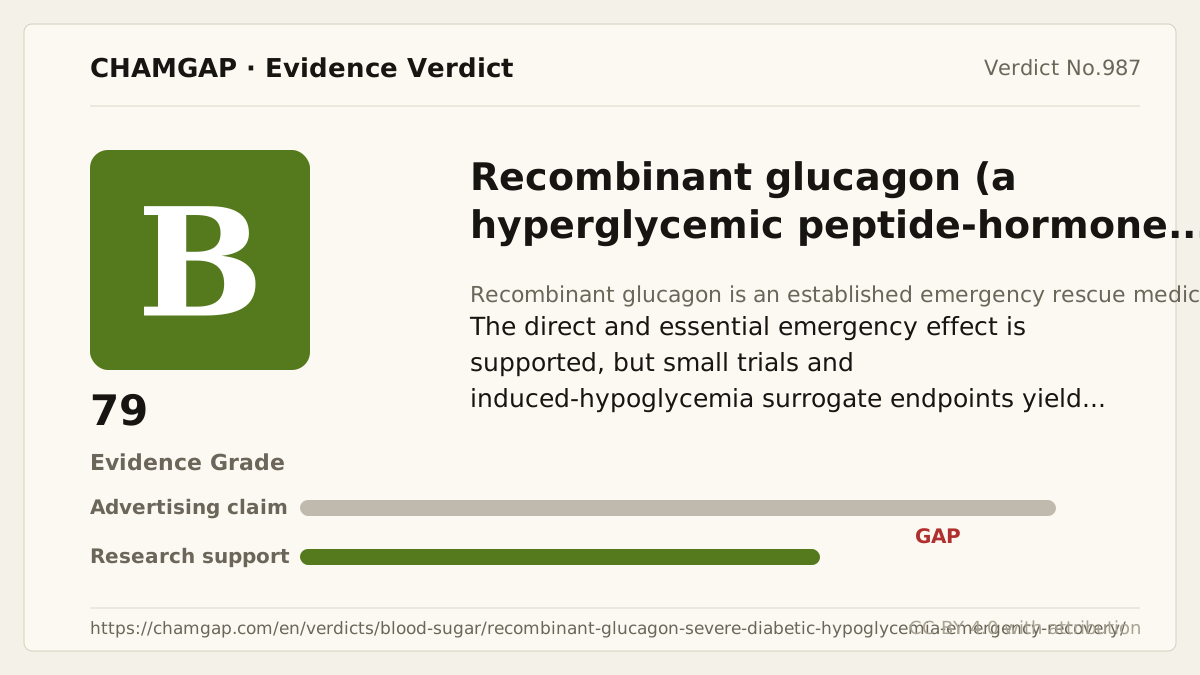
[Chamgap] Recombinant glucagon x emergency recovery from severe diabetic hypoglycemia — Evidence Grade B·79. 4 cited sources checked. Source: https://chamgap.com/en/verdicts/blood-sugar/recombinant-glucagon-severe-diabetic-hypoglycemia-emergency-recovery/ · CC BY 4.0CC BY 4.0 — free to use with attribution; do not distort grades, numbers, or verdict meaning.
What this document does and does not do
Chamgap is an information source. It reports what research has and has not confirmed; it does not tell readers what to take or buy. That decision belongs to readers and, when needed, medical or legal professionals. This verdict reflects literature available up to the search date and may change as new research appears. Nothing here is medical advice.