
100% fruit juice,
does it really help with Increased incidence of type 2 diabetes?
research showsThe grade is D. EPIC-NL followed 36,147 people for a mean 14.6 years and analyzed 1,477 type 2 diabetes cases. Model 2 HRs versus nonconsumers ranged from 0.92 (95% CI 0.79 to 1.09) to 1.03 (0.83 to 1.26). The four final diet-quality-adjusted Model 4 HRs were 1.00 (0.85 to 1.17), 0.98 (0.84 to 1.14), 0.97 (0.84 to 1.14), and 0.98 (0.80 to 1.21). No model showed significant harm.
ads claim100% means no added sugar, not zero sugar. That composition fact neither proves increased long-term diabetes incidence nor establishes complete safety.
Useful facts when choosing a product
- The cohort did not report brand-specific sodium, total sugar, saturated fat, fiber, or protein per serving. Juice type, concentrate status, and pulp vary.
- NL6939 was a retrospective registration of an analysis using an existing cohort, not trial registration before exposure assignment.
- Verdict 1975 is D with 30 points for 100% watermelon juice and vascular function; this verdict concerns general pure juice and long-term diabetes incidence.
Chamgap Semantic Classification Code
Candidate index · review held
F.commercial-pure-fruit-juice-with-no-added-sugar.food.incidence-of-type-2-diabetes.increase.UNKFoods and beverages > Commercial pure fruit juice with no added sugar > Food consumption > incidence of type 2 diabetes > Increase claim > Unknown
An automated migration candidate, not an issued permanent code; exact claim scope remains under review. This machine-generated migration candidate helps retrieval but is not a permanent assignment. The original verdict ID and URL remain authoritative.
What the research actually shows
Scheffers and colleagues analyzed 36,147 EPIC-NL participants. The baseline food-frequency questionnaire asked about apple, orange/grapefruit, and other pure juice; self-reported diabetes was verified through general-practice and pharmacy records. Models adjusted for education, activity, smoking, BMI, calories, and the Dutch Healthy Diet index. Validity against 24-hour recalls was 0.68 in men and 0.56 in women for total fruit, but no item-specific coefficient was reported for pure juice. Multiple intake categories and fruit analyses were conducted without multiplicity correction, and exposure was measured once at baseline. Public and nonprofit funding was verified.
Why this is classified as D (34)
A publicly funded large prospective cohort found no harm association, but a single baseline questionnaire and wide intervals leave room for increased risk, giving D with 34 points.
Counterpoint. D does not mean pure juice prevents diabetes; it means this cohort did not support the increase claim.
Rejudgment record. Cross-check applied — Cross-checked the analytic population, cases, adjusted HRs, questionnaire items and validity, confounder adjustment, and funding
| Endpoint | H | Hard endpoint - actual events such as death |
| Replication | R1 | Single confirmatory trial |
| Independence | I2 | Decisive evidence is publicly or non-profit funded |
| Effect size | E0 | Null |
| Precision | C0 | The confidence interval leaves room for benefit |
Stored derived and displayed grades match; this is not a current recalculation or validity check (D).
Sub-claim grades by effect
This ingredient is marketed for several effects. A single overall grade blends strong and weak claims together, so each effect is graded separately here. The overall grade reflects the strongest disconfirming or core claim.
| Effect (sub-claim) | Grade | Basis |
|---|---|---|
| Pure fruit juice intake and increased type 2 diabetes incidence | D | All adjusted HR intervals included 1, but increased risk was not excluded. |
Cross-check — AI research and Codex final gate
Evidence Table
| Study | Design | Sample | Funding | Endpoint | Result | Weight |
|---|---|---|---|---|---|---|
| Scheffers FR et al., 2020 EPIC-NL | Prospective cohort analysis | 36,147 participants, mean 14.6 years, and 1,477 type 2 diabetes cases | NWO, EU, Dutch government, ZonMW, WCRF, and other public/nonprofit support | Medically verified incident type 2 diabetes | Model 2 HRs ranged from 0.92 (0.79 to 1.09) to 1.03 (0.83 to 1.26); Model 4 HRs were 1.00 (0.85 to 1.17), 0.98 (0.84 to 1.14), 0.97 (0.84 to 1.14), and 0.98 (0.80 to 1.21) | Large long-term hard-outcome evidence, but single-FFQ observational exposure |
Receipt — 2 References
All 2 cited sources were verified for existence at the original page (as of 2026-08-03).
Final verification and publication gate: Codex · Evidence date: 2026-08-03 · Corrections: none
Cite this verdict
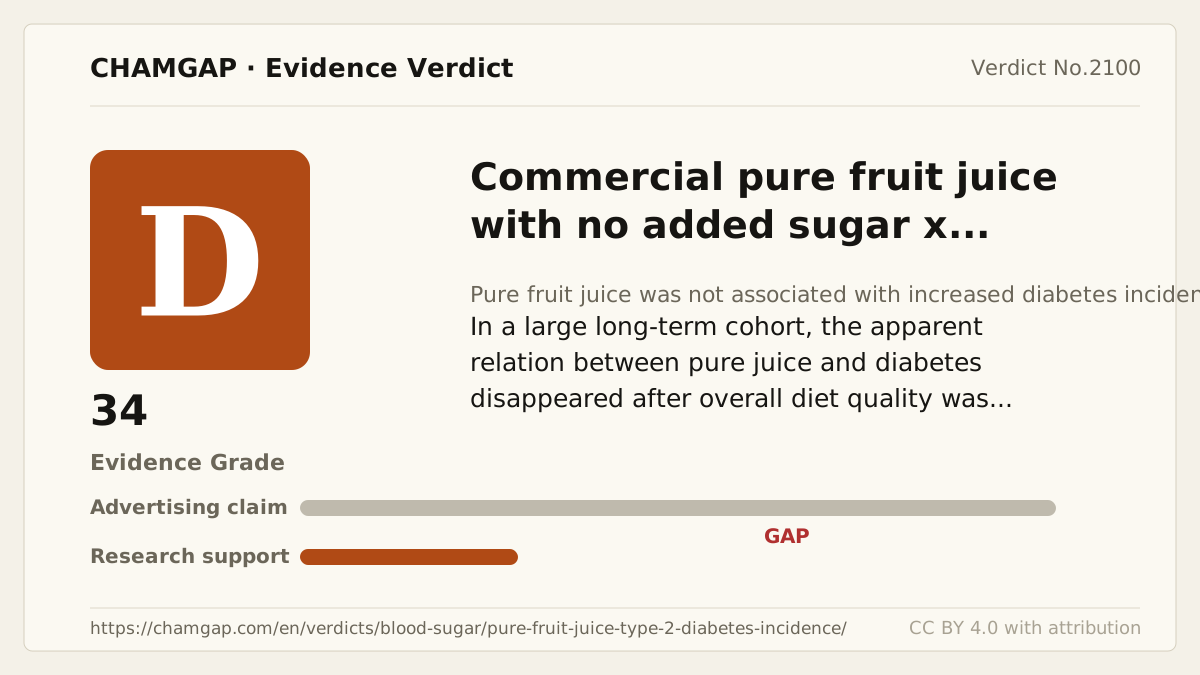
[Chamgap] 100% fruit juice x increased type 2 diabetes incidence — Evidence Grade D·34. 2 cited sources checked. Source: https://chamgap.com/en/verdicts/blood-sugar/pure-fruit-juice-type-2-diabetes-incidence/ · CC BY 4.0CC BY 4.0 — free to use with attribution; do not distort grades, numbers, or verdict meaning.
What this document does and does not do
Chamgap is an information source. It reports what research has and has not confirmed; it does not tell readers what to take or buy. That decision belongs to readers and, when needed, medical or legal professionals. This verdict reflects literature available up to the search date and may change as new research appears. Nothing here is medical advice.