
Pemafibrate,
does it really help with Prevention of cardiovascular death, myocardial infarction, and stroke in type 2 diabetes with hypertriglyceridemia?
research showsPemafibrate is rated F because it did not prevent cardiovascular events in type 2 diabetes with hypertriglyceridemia and low HDL. In 10,497 participants in PROMINENT, the composite of cardiovascular death, nonfatal myocardial infarction, ischemic stroke, or coronary revascularization occurred in 572 versus 560 participants, hazard ratio 1.03 (95% CI 0.91 to 1.15). Triglycerides fell by about 26%, but this did not produce clinical benefit, while renal adverse events and venous thromboembolism increased, with hazard ratios of 1.12 and 2.05. The large-null-plus-harm rule yields F with 5 points.
ads claimMarketing can convert a lower triglyceride number into prevention of heart attack and stroke. PROMINENT directly demonstrates the gap between the surrogate and the clinical outcome.
Useful facts when choosing a product
- Pemafibrate is a prescription selective PPAR-alpha modulator used for dyslipidemia in Japan and some other jurisdictions; this does not establish cardiovascular-event prevention.
- PROMINENT tested 0.2 mg twice daily in patients largely receiving standard LDL-lowering therapy.
- Renal dysfunction, gallstones or biliary problems, hepatic dysfunction, and muscle symptoms require monitoring, particularly with other lipid-lowering drugs.
- A documented triglyceride reduction should not be interpreted as a reduction in cardiovascular death, myocardial infarction, or stroke.
Chamgap Semantic Classification Code
Candidate index · review held
M.pemafibrate.UNK.cardiovascular-death-myocardial-infarction-and-stroke-in-type-2-diabetes-with-hypertriglyceridemia.prevent.placeboMedicinal interventions > Pemafibrate > Unknown > cardiovascular death, myocardial infarction, and stroke in type 2 diabetes with hypertriglyceridemia > Occurrence-prevention claim > Placebo
An automated migration candidate, not an issued permanent code; exact claim scope remains under review. This machine-generated migration candidate helps retrieval but is not a permanent assignment. The original verdict ID and URL remain authoritative.
What the research actually shows
The PROMINENT Investigators randomized 10,497 patients with type 2 diabetes, triglycerides of 200 to 499 mg/dL, and HDL cholesterol of 40 mg/dL or less to pemafibrate 0.2 mg twice daily or placebo. The primary composite occurred in 572 versus 560 participants, hazard ratio 1.03, and the trial stopped for futility. Triglycerides fell by about 26% after placebo correction, but apoB increased. Renal adverse events had a hazard ratio of 1.12 and venous thromboembolism a hazard ratio of 2.05; eGFR tended to return toward baseline after discontinuation.
Why this is classified as F (5)
PROMINENT found a null primary endpoint with a hazard ratio of 1.03 in 10,497 participants, while renal adverse events and venous thromboembolism increased with hazard ratios of 1.12 and 2.05. The combination of a large direct null result and harm gives F with 5 points; triglyceride lowering is a separate surrogate.
Counterpoint. Management of hypertriglyceridemia should be individualized around pancreatitis risk, total lipid risk, and kidney and liver function. This verdict concerns pemafibrate in PROMINENT, not fenofibrate.
Rejudgment record. Cross-check applied — Applied F under the large-null-plus-harm rule because PROMINENT directly found a null cardiovascular composite with a hazard ratio of 1.03 in 10,497 participants and significantly more renal adverse events and venous thromboembolism; triglyceride lowering was separated as a surrogate
Sub-claim grades by effect
This ingredient is marketed for several effects. A single overall grade blends strong and weak claims together, so each effect is graded separately here. The overall grade reflects the strongest disconfirming or core claim.
| Effect (sub-claim) | Grade | Basis |
|---|---|---|
| Prevention of cardiovascular death, myocardial infarction, ischemic stroke, or coronary revascularization | F | The PROMINENT primary composite was directly null with a hazard ratio of 1.03. |
| Reduced cardiovascular risk through triglyceride lowering | F | Triglycerides fell by about 26%, but the change did not translate into fewer cardiovascular events. |
| Net cardiovascular benefit | F | Efficacy was null while renal adverse events and venous thromboembolism increased, opposing a net-benefit claim. |
Cross-check — AI research and Codex final gate
Evidence Table
| Study | Design | Sample | Funding | Endpoint | Result | Weight |
|---|---|---|---|---|---|---|
| Pradhan AD et al.; PROMINENT Investigators. 2022 PROMINENT | Multinational randomized double-blind placebo-controlled event-driven outcomes trial | 10,497 patients with type 2 diabetes, hypertriglyceridemia, and low HDL | Sponsored by Kowa Research Institute | Composite of cardiovascular death, nonfatal myocardial infarction, ischemic stroke, or coronary revascularization | Events occurred in 572 versus 560 participants, hazard ratio 1.03 (95% CI 0.91 to 1.15), showing no benefit. | Decisive large null hard-outcome evidence |
| PROMINENT prespecified safety analysis | Randomized-trial safety-event comparison | The same 10,497 participants | Sponsored by Kowa Research Institute | Renal adverse events and venous thromboembolism | Renal adverse events increased from 1,347 to 1,463 (hazard ratio 1.12), and venous thromboembolism from 35 to 71 (hazard ratio 2.05). | Harm accompanying the large null result |
Receipt — 2 References
All 2 cited sources were verified for existence at the original page (as of 2026-07-23).
Final verification and publication gate: Codex · Evidence date: 2026-07-23 · Corrections: none
Cite this verdict
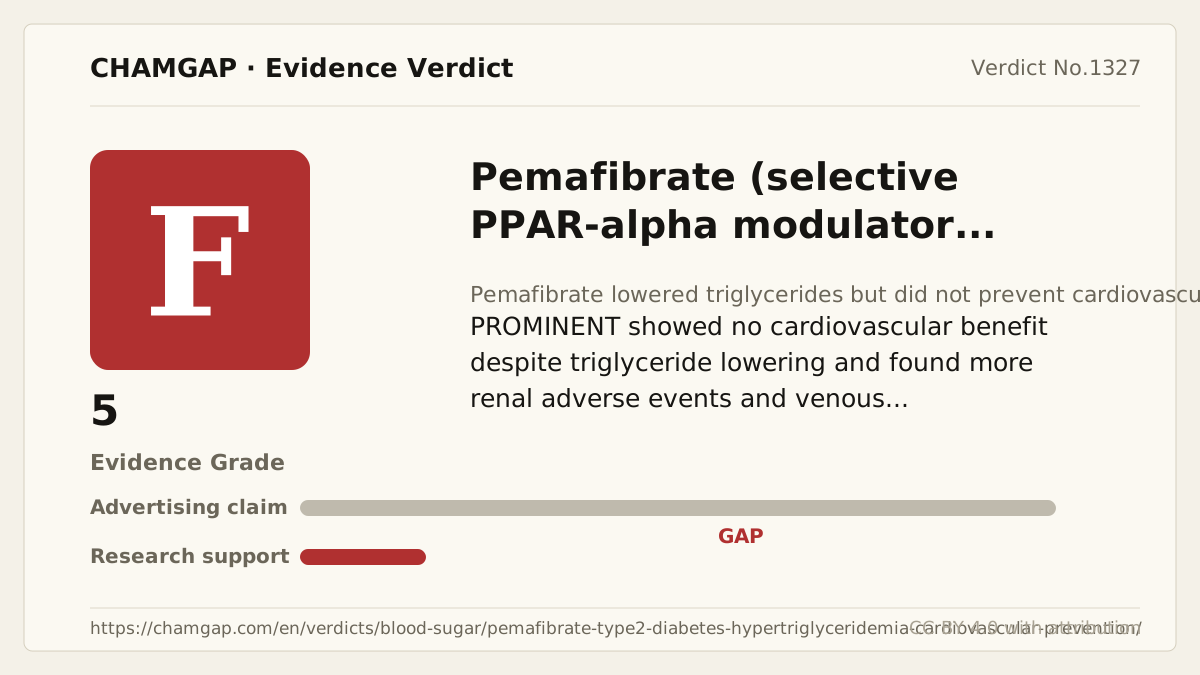
[Chamgap] Pemafibrate x prevention of cardiovascular death, myocardial infarction, and stroke in type 2 diabetes — Evidence Grade F·5. 2 cited sources checked. Source: https://chamgap.com/en/verdicts/blood-sugar/pemafibrate-type2-diabetes-hypertriglyceridemia-cardiovascular-prevention/ · CC BY 4.0CC BY 4.0 — free to use with attribution; do not distort grades, numbers, or verdict meaning.
What this document does and does not do
Chamgap is an information source. It reports what research has and has not confirmed; it does not tell readers what to take or buy. That decision belongs to readers and, when needed, medical or legal professionals. This verdict reflects literature available up to the search date and may change as new research appears. Nothing here is medical advice.