
Orforglipron,
does it really help with Reduction of glycated hemoglobin in early type 2 diabetes?
research showsOrforglipron is rated C despite reducing glycated hemoglobin in early type 2 diabetes. The peer-reviewed phase 3 ACHIEVE-1 original article randomized 559 adults inadequately controlled by diet and exercise for 40 weeks; changes in glycated hemoglobin were −1.24, −1.47, and −1.48 percentage points with 3, 12, and 36 mg, respectively, versus −0.41 with placebo. Every dose met the primary endpoint, and a 2023 phase 2 trial was directionally consistent, but glycated hemoglobin is a surrogate marker for clinical benefit. No orforglipron-specific cardiovascular, kidney-failure, or mortality outcome has been demonstrated, so boundary rule ①-ⓐ yields C with 55 points.
ads claimMarketing can expand the result into injection-free resolution of diabetes, heart and kidney protection, or a gastrointestinal-effect-free oral GLP-1 therapy. ACHIEVE-1 directly demonstrated 40-week changes in glycated hemoglobin and weight; cardiovascular and kidney event reduction and long-term safety require separate molecule-specific trials.
Useful facts when choosing a product
- Orforglipron is an oral small-molecule nonpeptide GLP-1 receptor agonist developed for once-daily dosing without timing the dose around food or water.
- ACHIEVE-1 evaluated investigational doses of 3 mg, 12 mg, and 36 mg in early type 2 diabetes and used stepwise escalation from a lower dose to improve gastrointestinal tolerability.
- The 2026 United States approval of FOUNDAYO is for weight management in obesity or overweight with a weight-related condition and is not the same indication or dosing schedule as this early type 2 diabetes glycated-hemoglobin verdict.
- Nausea, diarrhea, vomiting, constipation, and dyspepsia are common, while dehydration-related kidney injury, pancreatitis, gallbladder disease, severe gastroparesis, hypoglycemia with interacting therapies, and the medullary-thyroid-carcinoma or MEN2 contraindications require review.
Chamgap Semantic Classification Code
Candidate index · review held
S.orforglipron.oral.glycated-hemoglobin-in-early-type-2-diabetes.reduce.MULTISupplements and nutraceuticals > Orforglipron > Oral > glycated hemoglobin in early type 2 diabetes > Reduction claim > Multiple: primary unresolved
An automated migration candidate, not an issued permanent code; exact claim scope remains under review. This machine-generated migration candidate helps retrieval but is not a permanent assignment. The original verdict ID and URL remain authoritative.
What the research actually shows
The 2025 peer-reviewed New England Journal of Medicine original article by Julio Rosenstock and colleagues, for the ACHIEVE-1 Trial Investigators, reported a 40-week randomized double-blind placebo-controlled phase 3 trial in 559 adults with early type 2 diabetes. Glycated hemoglobin and weight fell dose dependently, and common adverse events were mild-to-moderate gastrointestinal events concentrated during dose escalation. Frias and colleagues 2023 was a peer-reviewed Lancet original article reporting a 26-week dose-response phase 2 trial in 383 adults with type 2 diabetes; doses of at least 12 mg supported reductions in glycated hemoglobin and weight but remained centered on surrogate and intermediate outcomes. The FDA FOUNDAYO label is non-peer-reviewed regulatory material defining commercial doses and safety for the 2026 obesity and overweight weight-management approval; it does not convert early-diabetes glycated-hemoglobin efficacy into hard clinical outcomes.
Why this is classified as C (55)
In ACHIEVE-1, 559 adults had 40-week glycated-hemoglobin changes of −1.24 to −1.48 percentage points versus −0.41 with placebo, and phase 2 evidence was consistent. Glycated hemoglobin is nevertheless a surrogate explicitly covered by boundary rule ①-ⓐ, with no orforglipron-specific cardiovascular, kidney, or mortality benefit. Manufacturer-program concentration and 40-week follow-up also limit certainty, yielding C with 55 points.
Counterpoint. The drug clearly offers a meaningful glycated-hemoglobin-lowering option, but cardiovascular results from other GLP-1 drugs should not be assigned to orforglipron as an automatic class effect. A positive outcome trial would require a separate reassessment of that hard endpoint.
Rejudgment record. Cross-check applied — Accepted the positive 40-week glycated-hemoglobin primary endpoint in 559 ACHIEVE-1 participants and consistent phase 2 results, but applied the maximum grade of C because glycated hemoglobin is an explicit surrogate under boundary rule ①-ⓐ and no orforglipron-specific cardiovascular, kidney, or mortality hard outcome has been demonstrated
Sub-claim grades by effect
This ingredient is marketed for several effects. A single overall grade blends strong and weak claims together, so each effect is graded separately here. The overall grade reflects the strongest disconfirming or core claim.
| Effect (sub-claim) | Grade | Basis |
|---|---|---|
| Reduction of glycated hemoglobin in early type 2 diabetes | C | In ACHIEVE-1, 40-week glycated hemoglobin changed by −1.24 to −1.48 percentage points versus −0.41 with placebo, but rule ①-ⓐ caps this surrogate outcome at C. |
| Weight reduction in early type 2 diabetes | C | Forty-week weight changed by −4.5% to −7.6% versus −1.7% with placebo, but this is an intermediate result from a short, manufacturer-concentrated program. |
| Reduction in cardiovascular and kidney events and mortality | ? | No human efficacy literature is available to judge these hard outcomes for orforglipron itself. |
Cross-check — AI research and Codex final gate
Evidence Table
| Study | Design | Sample | Funding | Endpoint | Result | Weight |
|---|---|---|---|---|---|---|
| Rosenstock J et al., for the ACHIEVE-1 Trial Investigators. 2025 | Multinational randomized double-blind placebo-controlled 40-week phase 3 original trial | 559 adults with early type 2 diabetes | Supported by Eli Lilly with multiple company authors | Forty-week glycated-hemoglobin primary endpoint, body weight, and adverse events | Glycated hemoglobin changed by −1.24, −1.47, and −1.48 percentage points with 3, 12, and 36 mg versus −0.41 with placebo; weight changed by −4.5%, −5.8%, and −7.6% versus −1.7%. | Pivotal phase 3 evidence centered on a surrogate endpoint |
| Frias JP et al. 2023 | Multicenter randomized double-blind placebo- and dulaglutide-controlled 26-week dose-response phase 2 original trial | 383 adults with type 2 diabetes | Funded by Eli Lilly with company authors | Twenty-six-week glycated hemoglobin, body weight, and safety | Doses of at least 12 mg significantly reduced glycated hemoglobin and weight versus placebo and dulaglutide, but hard clinical outcomes were not assessed. | Directionally supportive phase 2 evidence from the same manufacturer program |
| FDA FOUNDAYO prescribing information. 2026 | United States obesity and overweight weight-management regulatory label; not peer reviewed | Integrated safety data from the approval program | Regulatory submission data | Commercial dose escalation, contraindications, and gastrointestinal, pancreatic, biliary, and kidney safety | The label specifies once-daily stepwise escalation for weight management and warnings for medullary thyroid carcinoma or MEN2, severe gastrointestinal effects, pancreatic and gallbladder events, and dehydration-related kidney injury. | Current safe-use context not counted toward the diabetes efficacy grade |
Receipt — 3 References
All 3 cited sources were verified for existence at the original page (as of 2026-07-24).
Final verification and publication gate: Codex · Evidence date: 2026-07-24 · Corrections: none
Cite this verdict
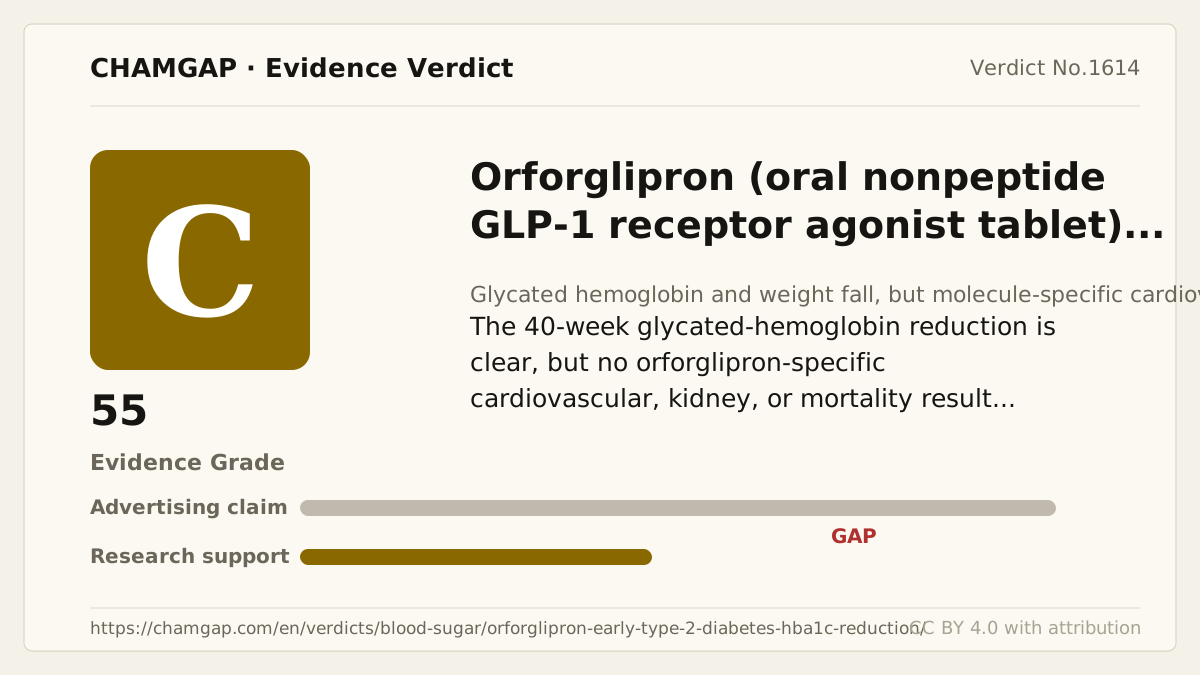
[Chamgap] Orforglipron x reduction of glycated hemoglobin in early type 2 diabetes — Evidence Grade C·55. 3 cited sources checked. Source: https://chamgap.com/en/verdicts/blood-sugar/orforglipron-early-type-2-diabetes-hba1c-reduction/ · CC BY 4.0CC BY 4.0 — free to use with attribution; do not distort grades, numbers, or verdict meaning.
What this document does and does not do
Chamgap is an information source. It reports what research has and has not confirmed; it does not tell readers what to take or buy. That decision belongs to readers and, when needed, medical or legal professionals. This verdict reflects literature available up to the search date and may change as new research appears. Nothing here is medical advice.