
Oral single-ingredient NR and HbA1c in type 2 diabetes: a reduction is not established
research showsWithin the declared search and primary-source access scope, no directly extractable between-group estimate established that oral single-ingredient nicotinamide riboside (NR) lowers HbA1c in adults with type 2 diabetes. Human HbA1c studies exist, but the verified numerical data concern nondiabetic obese men, prediabetic cancer survivors and a mixed Werner syndrome cohort, so they cannot be pooled into a target-population reduction. This is not a finding of zero effect, equivalence or no human research.
ads claimNAD increases, animal diabetes improvement, insulin sensitivity and intravenous HbA1c changes do not substitute for the oral single-ingredient NR effect on HbA1c in type 2 diabetes.
Four separate assessment dimensions
| Effect direction and size | Within the declared search and primary-source access scope, no directly extractable between-group estimate established that oral single-ingredient nicotinamide riboside (NR) lowers HbA1c in adults with type 2 diabetes. Human HbA1c studies exist, but the verified numerical data concern nondiabetic obese men, prediabetic cancer survivors and a mixed Werner syndrome cohort, so they cannot be pooled into a target-population reduction. This is not a finding of zero effect, equivalence or no human research. |
|---|---|
| Evidence certainty | Human HbA1c measurements were verified, but efficacy in conventional type 2 diabetes is uncertain. Different populations, comparators and durations are not counted as replication/refutation; complete-case missingness and exploratory multiplicity are disclosed. |
| Applicability | The page targets adults with type 2 diabetes. Nondiabetic, prediabetic and mixed Werner findings remain indirect; an add-on effect with common exercise is separated from placebo comparisons. NR salt/active mass is recorded only to the verified study-specific level; combinations, intravenous administration and other NAD precursors are excluded. |
| Safety | Mild adverse events occurred in small short-term trials; the Werner trial included increased AST, skin symptoms and hypotension. These data do not establish safety with diabetes medications or dose changes, hypoglycemia risk, long-term use, pregnancy, children or severe hepatic/renal disease. The studied 1,000-2,000 mg/day doses are not personal dosing advice or instructions to replace or reduce diabetes treatment. NR-specific HbA1c assay interference was not established in this review; red-cell-related interpretation limits are separately disclosed. [S01-S03, S07] |
The supplied rules give S/R1/I1/EX/B1/CX -> C; zero strength flags give the fixed anchor of 46. This expresses the present evidentiary support for the target claim, not a treatment-success probability, an official GRADE score or a probability of no effect. Document quality A is separate from efficacy.
Useful facts when choosing a product
- This is a single-ingredient oral NR question; NR plus pterostilbene and combined metabolic activators are excluded.
- Nicotinic acid, nicotinamide, NMN, NAD+ and NRH are not merged as equivalent interventions.
- Reported doses and verification status for salt/active mass are recorded separately by study in study_extraction.json.
Chamgap Semantic Classification Code
Permanent code issued
S.nicotinamide-riboside.oral.adult-type-2-diabetes-hba1c.reduce.placebo-or-matched-careSupplements and nutraceuticals > Nicotinamide riboside > Oral > HbA1c in adults with type 2 diabetes > Reduction claim > Placebo or study-specific matched care
Technical binding of unchanged ChatGPT C/46, Caution and declared study-specific boundaries. The code identifies the intervention and claim; it never contains the evidence grade, score, or safety result.
Exact Claim Classification
These independent facets prevent evidence from different forms, routes, populations, effects, and comparators from being mixed.
| Intervention class | S · Supplement or nutraceutical |
|---|---|
| Canonical ingredient or intervention | Nicotinamide riboside |
| Source or part used | Purified ingredient; plant part not applicable |
| Formulation or processing | Single-ingredient oral NR capsules; study-specific salt/active-mass limits recorded |
| Route | Oral |
| Dose | No established target type 2 diabetes efficacy dose; indirect studies reported 1,000-2,000 mg/day |
| Duration | No established target duration; indirect studies of 6 weeks, 12 weeks and 26-week crossover periods |
| Population | Adults with type 2 diabetes (question); actually studied populations listed separately |
| Effect or condition | HbA1c reduction |
| Primary endpoint | Page endpoint: absolute between-group HbA1c percentage points, distinct from registered primary endpoints |
| Comparator | Study-specific placebo or NR added to exercise common to both groups |
| Duplicate-detection key | S|nicotinamide-riboside|single-ingredient|oral|adult-type-2-diabetes|hba1c|actual-study-comparator |
What the research actually shows
# Oral single-ingredient NR and HbA1c in adults with type 2 diabetes
TASK-1024 / R01-064 | NUT / R01 | 2026-09-17
Status: content completed with declared uncertainty. Efficacy C / 46; safety Caution; document quality A under same-author checking. New publication ID, URLs and first publication date remain unassigned.
## Thirty-second answer
Within the declared search and primary-source access scope, no directly extractable between-group estimate established that oral single-ingredient nicotinamide riboside (NR) lowers HbA1c in adults with type 2 diabetes. Human HbA1c studies exist, but the verified numerical data concern nondiabetic obese men, prediabetic cancer survivors and a mixed Werner syndrome cohort, so they cannot be pooled into a target-population reduction. This is not a finding of zero effect, equivalence or no human research.
Key primary sources: [S01](https://onlinelibrary.wiley.com/doi/full/10.1111/acel.70093), [S02](https://www.brennerlab.net/files/dollerup18.pdf), [S03](https://www.brennerlab.net/files/Bhandari25.pdf).
## The question is distinct from the actual studies
The question is **adults with type 2 diabetes x single-ingredient oral NR x absolute between-group HbA1c percentage points against the actual comparator**. Planned dose, duration and comparator were not promoted into study facts. With no separately verified target estimate, no personal dose or treatment change is proposed. The three cohorts below provide verified indirect HbA1c numbers; they are not three eligible type 2 diabetes trials.
## Professional evidence table
| Study / scope | Denominator, duration, comparator | Reported HbA1c result | Target applicability | |---|---|---|---| | Shoji 2025 - Werner syndrome [S01](https://onlinelibrary.wiley.com/doi/full/10.1111/acel.70093) | Eleven enrolled, nine randomized/in the safety set, and six in the FAS/PPS. The complete-case sequences were five NR-first and one placebo-first. HbA1c contains six paired participants, not independent groups of six plus six; a missing value in either period led to exclusion. Randomized double-blind crossover: 26 weeks per period, 52 weeks total, with no washout. Methods visits were at weeks 0, 26 and 52. The discussion mentions 28 weeks and NAD reporting mentions 24 weeks; these are not silently substituted for the HbA1c period definition in Methods/Table 2. | Table 2 period changes, mean +/- SD: NR -0.300 +/- 0.961 percentage points; placebo -0.217 +/- 0.893; six pairs; P=0.517. Median (IQR) changes were -0.000 (-0.200, 0.100) with NR and 0.050 (-0.100, 0.300) with placebo. These are absolute percentage-point changes, not relative percent changes or endpoint HbA1c levels. | Genetically confirmed Werner syndrome. Diabetes was present in 6 of 9 safety participants, but only 3 of the 6 HbA1c complete cases. Diabetes subtype and diagnostic criteria were not separately established in the main text; this is not classified as a conventional type 2 diabetes cohort. | | Dollerup 2018 - nondiabetic obese men [S02](https://www.brennerlab.net/files/dollerup18.pdf) | Twenty per arm and 40 completed. Table 3 gives an outcome-specific denominator range of 19-20 for placebo and 20 for NR without separately specifying the exact HbA1c denominator. Two technically missing clamp measurements are not automatically treated as missing HbA1c. Twelve-week randomized double-blind placebo-controlled parallel trial; the actual concurrent comparator was placebo. | Table 3 estimated mean +/- SEM: placebo 39.8 +/- 0.9 to 40.3 +/- 0.9 mmol/mol; NR 37.7 +/- 0.9 to 38.2 +/- 0.9. Rounded NGSP values were 5.8 +/- 0.1 to 5.8 +/- 0.1% with placebo and 5.6 +/- 0.1 to 5.6 +/- 0.1% with NR. Treatment-by-time P=0.92. | Healthy nondiabetic, obese, sedentary men aged 40-70 years, BMI >30 kg/m2. Insulin resistance is not relabeled as type 2 diabetes. | | Bhandari 2025 - prediabetic cancer survivors [S03](https://www.brennerlab.net/files/Bhandari25.pdf) | Twenty randomized (10/10); 17 completed and were analyzed (exercise 8, exercise plus NR 9). Two exercise and one NR participant withdrew. The safety narrative referring to nine NR participants is not used to overwrite the randomized allocation of ten. Six-week randomized pilot: exercise plus NR versus exercise alone, without placebo. It did not test sustained long-term HbA1c benefit or addition to conventional diabetes therapy. | Table 2 median (range) changes: exercise -0.1 (-0.4, 0.4) percentage points, within-group P=0.75; exercise plus NR 0 (-0.2, 0.2), within-group P=0.89. The between-arm comparison of median change had P=0.49. | Adult survivors of childhood/adolescent cancer were selected using a recent HbA1c of 5.7-6.4% and/or fasting glucose of 100-125 mg/dL. The official NCI summary excludes current diabetes, HbA1c >6.4% or fasting glucose >125. Some measured baseline values were below the eligibility range; eligibility history and measurement timing are kept distinct. |
## Study-level extraction: verified facts and reasons for uncertainty
### Shoji 2025 - Werner syndrome [S01](https://onlinelibrary.wiley.com/doi/full/10.1111/acel.70093)
**Diagnosis and population boundary — confirmed.** Genetically confirmed Werner syndrome. Diabetes was present in 6 of 9 safety participants, but only 3 of the 6 HbA1c complete cases. Diabetes subtype and diagnostic criteria were not separately established in the main text; this is not classified as a conventional type 2 diabetes cohort. (Table 1; Section 2.1; [S01](https://onlinelibrary.wiley.com/doi/full/10.1111/acel.70093)).
**Baseline HbA1c — confirmed.** Baseline HbA1c was 5.97 +/- 1.26% (mean +/- SD) in the six-person FAS/PPS and 6.26 +/- 1.15% in the nine-person safety set. A diabetes-only baseline was not reported. (Table 1; [S01](https://onlinelibrary.wiley.com/doi/full/10.1111/acel.70093)).
**Diabetes duration — not_reported.** Diabetes onset and duration were not reported in the main text. Age with Werner syndrome is not substituted for diabetes duration. (Table 1; main-text eligibility; [S01](https://onlinelibrary.wiley.com/doi/full/10.1111/acel.70093)).
**Glucose-lowering drugs, insulin and changes — inaccessible.** The supplementary medication table could not be opened, so individual glucose-lowering drugs, insulin doses and changes across periods were not verified. Medication stability is not inferred from the main text. (Supplementary tables link; main Methods; [S01](https://onlinelibrary.wiley.com/doi/full/10.1111/acel.70093)).
**Common care, diet and lifestyle intervention — not_reported.** The main text does not adequately specify a common diabetes-care regimen, standardized diet/exercise, or changes in these cointerventions across NR and placebo periods. (Methods; [S01](https://onlinelibrary.wiley.com/doi/full/10.1111/acel.70093)).
**Nutrition, deficiency and concurrent supplementation — not_reported.** FAS mean BMI was 16.4 +/- 3.40 kg/m2, but a diagnostic test for vitamin B3 deficiency, total dietary B3 intake and doses of concurrent vitamins were not verified. Low NAD is not a confirmed nutritional-deficiency diagnosis. (Table 1; Methods; [S01](https://onlinelibrary.wiley.com/doi/full/10.1111/acel.70093)).
**Formulation, salt, active mass, route and dose — confirmed.** Single-ingredient NR capsules supplied by ChromaDex, 1,000 mg/day orally once daily, versus microcrystalline-cellulose placebo. The main text did not establish the batch salt/purity or whether reported milligrams represented free NR or salt mass; no conversion was made. (Sections 5.1-5.3; [S01](https://onlinelibrary.wiley.com/doi/full/10.1111/acel.70093)).
**Duration and actual comparator — confirmed.** Randomized double-blind crossover: 26 weeks per period, 52 weeks total, with no washout. Methods visits were at weeks 0, 26 and 52. The discussion mentions 28 weeks and NAD reporting mentions 24 weeks; these are not silently substituted for the HbA1c period definition in Methods/Table 2. (Abstract; Sections 5.1-5.6; discussion timing; [S01](https://onlinelibrary.wiley.com/doi/full/10.1111/acel.70093)).
**Allocation, completion and analysis denominators — confirmed.** Eleven enrolled, nine randomized/in the safety set, and six in the FAS/PPS. The complete-case sequences were five NR-first and one placebo-first. HbA1c contains six paired participants, not independent groups of six plus six; a missing value in either period led to exclusion. (Table 1; Table 2; Section 5.6; [S01](https://onlinelibrary.wiley.com/doi/full/10.1111/acel.70093)).
**Reported HbA1c values and tests — confirmed.** Table 2 period changes, mean +/- SD: NR -0.300 +/- 0.961 percentage points; placebo -0.217 +/- 0.893; six pairs; P=0.517. Median (IQR) changes were -0.000 (-0.200, 0.100) with NR and 0.050 (-0.100, 0.300) with placebo. These are absolute percentage-point changes, not relative percent changes or endpoint HbA1c levels. (Table 2 HbA1c row; [S01](https://onlinelibrary.wiley.com/doi/full/10.1111/acel.70093)).
**Between-group estimand, CI and interpretation — not_reported.** A diabetes-only adjusted contrast and confidence interval were not reported. The difference between rounded mixed-cohort mean changes, -0.083 percentage points, is our arithmetic, not a diabetes-subgroup or period/sequence-adjusted effect. A conditional mixed-cohort CI reconstruction is separately labeled in the calculation file. (Table 2; Section 5.6; calculations.json; [S01](https://onlinelibrary.wiley.com/doi/full/10.1111/acel.70093)).
**Endpoint hierarchy, subgroups and multiplicity — confirmed.** The publication primary endpoint was safety; HbA1c falls within secondary blood examinations. Methods specify a paired two-tailed t-test and variable-wise complete-case analysis. An HbA1c-specific multiplicity adjustment, registry version history and full SAP were not independently verified. Renal, vascular and NAD findings are not transferred to HbA1c. (Abstract; Section 5.6; S14 registry access audit; [S01](https://onlinelibrary.wiley.com/doi/full/10.1111/acel.70093)).
**Red-cell and assay interpretation limits — not_reported.** FAS baseline hemoglobin was 13.2 +/- 1.3 g/dL and RBC count 427 +/- 40 x 10^4/microliter. Individual anemia causes, iron/B12/folate status, transfusion/blood loss, red-cell lifespan, hemoglobin variants and assay-specific interference controls were not verified. Mean hemoglobin alone does not establish unrestricted HbA1c interpretability. (Table 1; Methods; general interpretation S07; [S01](https://onlinelibrary.wiley.com/doi/full/10.1111/acel.70093)).
**Adverse events and safety — confirmed.** The safety set comprised nine participants with planned 26-week exposures per period. Seven mild adverse events occurred during NR and 12 events during placebo; these are event counts, not participant counts. No moderate or severe event was reported during NR. Period-specific exposure denominators are not assumed, and rates of 7/9 versus 12/9 are not calculated. Events included increased AST, skin symptoms and hypotension, so this is not summarized as no side effects. (Section 2.2; supplementary table inaccessible; [S01](https://onlinelibrary.wiley.com/doi/full/10.1111/acel.70093)).
**Funding, product provision and conflicts — confirmed.** Supported by JSPS KAKENHI, the Japanese MHLW, AMED and NordForsk; ChromaDex supplied NR and placebo under a Chiba University agreement. Authors stated that the company had no role in design, conduct, analysis, writing or publication decisions and declared no competing interests. Product provision remains separately disclosed. (Funding; Acknowledgements; Conflicts of Interest; [S01](https://onlinelibrary.wiley.com/doi/full/10.1111/acel.70093)).
### Dollerup 2018 - nondiabetic obese men [S02](https://www.brennerlab.net/files/dollerup18.pdf)
**Diagnosis and population boundary — confirmed.** Healthy nondiabetic, obese, sedentary men aged 40-70 years, BMI >30 kg/m2. Insulin resistance is not relabeled as type 2 diabetes. (Eligibility; Table 1; [S02](https://www.brennerlab.net/files/dollerup18.pdf)).
**Baseline HbA1c — confirmed.** Table 1 mean +/- SEM: placebo 39.8 +/- 0.8 mmol/mol (5.8 +/- 0.1%) and NR 37.7 +/- 1.0 (5.6 +/- 0.1%). These SEMs are not interchanged with the 0.9 SEM of the Table 3 estimated means. (Table 1; [S02](https://www.brennerlab.net/files/dollerup18.pdf)).
**Diabetes duration — not_applicable.** Diabetes duration is not applicable to this nondiabetic recruitment population; no measured duration of zero years is invented. (Eligibility; [S02](https://www.brennerlab.net/files/dollerup18.pdf)).
**Glucose-lowering drugs, insulin and changes — confirmed.** Prescription medication use was excluded. This is therefore not an add-on trial to standard diabetes medication. An individual glucose-medication change table during follow-up was not reported. (Eligibility; Methods; [S02](https://www.brennerlab.net/files/dollerup18.pdf)).
**Common care, diet and lifestyle intervention — confirmed.** NR versus placebo while participants were instructed to maintain usual diet and activity, with three-day diet records. Common diabetes treatment is not applicable. (Study design; dietary procedures; [S02](https://www.brennerlab.net/files/dollerup18.pdf)).
**Nutrition, deficiency and concurrent supplementation — not_reported.** The instruction to stop other vitamin/supplement use was reused from the prior primary-text extraction. Total dietary B3 intake and diagnostic deficiency criteria were not verified; this is not classified as either confirmed sufficiency or a deficiency-correction trial. (Prior extraction; dietary Methods; [S02](https://www.brennerlab.net/files/dollerup18.pdf)).
**Formulation, salt, active mass, route and dose — confirmed.** ChromaDex NIAGEN single-ingredient NR capsules, 1,000 mg twice daily (reported total 2,000 mg/day), orally. Batch salt/purity and free-active-dose conversion are not established from the verified main text alone. (Intervention; [S02](https://www.brennerlab.net/files/dollerup18.pdf)).
**Duration and actual comparator — confirmed.** Twelve-week randomized double-blind placebo-controlled parallel trial; the actual concurrent comparator was placebo. (Methods; [S02](https://www.brennerlab.net/files/dollerup18.pdf)).
**Allocation, completion and analysis denominators — confirmed.** Twenty per arm and 40 completed. Table 3 gives an outcome-specific denominator range of 19-20 for placebo and 20 for NR without separately specifying the exact HbA1c denominator. Two technically missing clamp measurements are not automatically treated as missing HbA1c. (Flow; Table 3 footnote; [S02](https://www.brennerlab.net/files/dollerup18.pdf)).
**Reported HbA1c values and tests — confirmed.** Table 3 estimated mean +/- SEM: placebo 39.8 +/- 0.9 to 40.3 +/- 0.9 mmol/mol; NR 37.7 +/- 0.9 to 38.2 +/- 0.9. Rounded NGSP values were 5.8 +/- 0.1 to 5.8 +/- 0.1% with placebo and 5.6 +/- 0.1 to 5.6 +/- 0.1% with NR. Treatment-by-time P=0.92. (Table 3 HbA1c row and footnote; [S02](https://www.brennerlab.net/files/dollerup18.pdf)).
**Between-group estimand, CI and interpretation — not_reported.** The numerical mixed-model contrast coefficient and CI were not reported in that table. Rounded changes are +0.5 mmol/mol in each arm and a rounded difference of 0.0, not proof of an exactly zero effect. The -2.1 mmol/mol endpoint contrast equals the baseline contrast and is not an NR-induced reduction. (Table 3; calculations.json; [S02](https://www.brennerlab.net/files/dollerup18.pdf)).
**Endpoint hierarchy, subgroups and multiplicity — confirmed.** The principal efficacy objective was clamp insulin sensitivity, not a dedicated confirmatory HbA1c trial. HbA1c used a treatment-by-time repeated-measures mixed model. The paper registration identifier was checked, but full registry inspection and independent verification of a prespecified HbA1c analysis/multiplicity adjustment were access-limited. (Methods; Table 3; S15; [S02](https://www.brennerlab.net/files/dollerup18.pdf)).
**Red-cell and assay interpretation limits — not_reported.** Health screening and blood safety testing do not establish individual exclusion of hemoglobin variants, transfusion, blood loss, iron/B12/folate deficiency, hemolysis or assay interference. Item-specific controls relevant to HbA1c interpretation were not verified. (Safety Methods; S07 context; [S02](https://www.brennerlab.net/files/dollerup18.pdf)).
**Adverse events and safety — confirmed.** Over 12 weeks, minor adverse events were reported by 4/20 NR and 2/20 placebo participants, with no serious adverse event reported. Symptoms such as sweating are not relabeled as verified hypoglycemic events. This population does not establish safety with diabetes medication or long-term use. (Safety results; [S02](https://www.brennerlab.net/files/dollerup18.pdf)).
**Funding, product provision and conflicts — confirmed.** Support included the Novo Nordisk Foundation, Danish Council for Independent Research and Danish Diabetes Academy; ChromaDex supplied NR and placebo. Brenner disclosed ChromaDex scientific-adviser, stock and research-grant relationships. (Funding; conflicts; [S02](https://www.brennerlab.net/files/dollerup18.pdf)).
### Bhandari 2025 - prediabetic cancer survivors [S03](https://www.brennerlab.net/files/Bhandari25.pdf)
**Diagnosis and population boundary — confirmed.** Adult survivors of childhood/adolescent cancer were selected using a recent HbA1c of 5.7-6.4% and/or fasting glucose of 100-125 mg/dL. The official NCI summary excludes current diabetes, HbA1c >6.4% or fasting glucose >125. Some measured baseline values were below the eligibility range; eligibility history and measurement timing are kept distinct. (Eligibility; Section 3.3; S04 official summary; [S03](https://www.brennerlab.net/files/Bhandari25.pdf)).
**Baseline HbA1c — confirmed.** Median (range) baseline to endpoint: exercise alone 6.0 (5.5-6.4)% to 6.0 (5.2-6.7)%; exercise plus NR 5.8 (5.6-6.3)% to 5.8 (5.7-6.4)%. These are ranges, not SDs or CIs. (Section 3.3; [S03](https://www.brennerlab.net/files/Bhandari25.pdf)).
**Diabetes duration — not_applicable.** Type 2 diabetes duration is not applicable because current diabetes was excluded. Duration of prediabetes was not reported. (Eligibility; S04; [S03](https://www.brennerlab.net/files/Bhandari25.pdf)).
**Glucose-lowering drugs, insulin and changes — confirmed.** Baseline glucose-lowering medication was excluded, as was NAD-precursor use in the preceding two weeks. A participant-level table verifying new glucose drugs or dose changes during follow-up was not reported. (Eligibility; S04; [S03](https://www.brennerlab.net/files/Bhandari25.pdf)).
**Common care, diet and lifestyle intervention — confirmed.** Both groups received telehealth resistance exercise for about 30 minutes, three times weekly for six weeks. This estimates the addition of NR to exercise, not a no-treatment/placebo comparison. A detailed common diet prescription and other care changes were not adequately reported. (Intervention; [S03](https://www.brennerlab.net/files/Bhandari25.pdf)).
**Nutrition, deficiency and concurrent supplementation — not_reported.** Total B3 intake, a diagnostic deficiency assessment and doses of other vitamins were not verified. Cancer survivorship or a history of hematopoietic cell transplantation alone does not establish nutritional deficiency. (Eligibility; Methods; [S03](https://www.brennerlab.net/files/Bhandari25.pdf)).
**Formulation, salt, active mass, route and dose — confirmed.** Four 250-mg NIAGEN capsules, reported NR 1,000 mg/day orally for six weeks. The product is single-ingredient NR; exercise is a common cointervention. Batch salt, purity and free-NR equivalent were not verified. (Intervention; [S03](https://www.brennerlab.net/files/Bhandari25.pdf)).
**Duration and actual comparator — confirmed.** Six-week randomized pilot: exercise plus NR versus exercise alone, without placebo. It did not test sustained long-term HbA1c benefit or addition to conventional diabetes therapy. (Methods; [S03](https://www.brennerlab.net/files/Bhandari25.pdf)).
**Allocation, completion and analysis denominators — confirmed.** Twenty randomized (10/10); 17 completed and were analyzed (exercise 8, exercise plus NR 9). Two exercise and one NR participant withdrew. The safety narrative referring to nine NR participants is not used to overwrite the randomized allocation of ten. (Flow; Table 1; Table 2; safety narrative; [S03](https://www.brennerlab.net/files/Bhandari25.pdf)).
**Reported HbA1c values and tests — confirmed.** Table 2 median (range) changes: exercise -0.1 (-0.4, 0.4) percentage points, within-group P=0.75; exercise plus NR 0 (-0.2, 0.2), within-group P=0.89. The between-arm comparison of median change had P=0.49. (Table 2 HbA1c row and footnotes; [S03](https://www.brennerlab.net/files/Bhandari25.pdf)).
**Between-group estimand, CI and interpretation — not_reported.** An adjusted mean contrast and CI were not reported. The arithmetic difference of median changes, 0 - (-0.1) = +0.1 percentage points, is neither a mean effect nor a median of individual treatment effects. Ranges were not converted into SDs. (Table 2; calculations.json; [S03](https://www.brennerlab.net/files/Bhandari25.pdf)).
**Endpoint hierarchy, subgroups and multiplicity — confirmed.** The primary objective was feasibility; HbA1c was exploratory. Within-arm Wilcoxon signed-rank and between-arm independent-samples median tests are distinguished. Dedicated HbA1c power and multiplicity correction were not verified. NCI objectives were cross-checked, but full registry version history remained access-limited. (Section 2.4; Table 2 footnotes; S04; S16; [S03](https://www.brennerlab.net/files/Bhandari25.pdf)).
**Red-cell and assay interpretation limits — not_reported.** There was a history of cancer and, in some participants, hematopoietic cell transplantation, but individual anemia, transfusion, blood loss, red-cell recovery, iron/B12/folate status, hemoglobin variants and assay details at HbA1c measurement were not verified. Prior transplantation alone does not prove an invalid HbA1c result. (Table 1; Methods; S07 context; [S03](https://www.brennerlab.net/files/Bhandari25.pdf)).
**Adverse events and safety — confirmed.** Over six weeks, one exercise participant reported mild muscle pain; among the nine evaluated NR participants, one reported mild fatigue and another mild nausea/rash. No serious adverse event attributed to NR was reported. The 20 randomized and 17 evaluable denominators are distinguished, and withdrawals are not all classified as NR adverse effects. (Safety results; flow; [S03](https://www.brennerlab.net/files/Bhandari25.pdf)).
**Funding, product provision and conflicts — confirmed.** NCI/NIH K12CA001727 and TREC R25CA203650 support, NR supplied by ChromaDex, and Brenner as ChromaDex scientific adviser. Stock or grant disclosures from other trials are not copied into this study. (Acknowledgments; conflicts; [S03](https://www.brennerlab.net/files/Bhandari25.pdf)).
## Other leads, counterevidence and exclusions
**S05 — ClinicalTrials.gov. Nicotinamide Riboside for Diabetic Neuropathy (NiRiD).** A diabetes/impaired-glucose-tolerance registry lead exists, but an HbA1c results table was not accessible in this session. [S05](https://clinicaltrials.gov/study/NCT03685253) (official_indexed_record_limited).
**S06 — Reyna et al. 2026. Intravenous infusion of nicotinamide riboside and nicotinamide adenine dinucleotide.** The retrospective intravenous NR versus intravenous NAD+ comparison is excluded from the oral single-ingredient NR question. [S06](https://www.frontiersin.org/journals/aging/articles/10.3389/fragi.2026.1652582/full) (full_text_html).
**S09 — Remie et al. 2020. Nicotinamide riboside supplementation in overweight and obese humans.** The existing extraction of a healthy overweight/obese crossover trial was reused; no target-population HbA1c contrast was verified. [S09](https://pure.amsterdamumc.nl/ws/files/107460914/nqaa072.pdf) (full_text_pdf_focused_reuse).
**S10 — Lapatto et al. 2023. Nicotinamide riboside in twins.** Twin-cohort distinctions were reused from the supplied prior extraction. A security page prevented additional HbA1c verification in this session. [S10](https://pmc.ncbi.nlm.nih.gov/articles/PMC9839336/) (provided_prior_extraction_current_page_inaccessible).
**S11 — Dellinger et al. 2023. Nicotinamide riboside plus pterostilbene in NAFLD.** NR plus pterostilbene is a combination intervention, not an estimate of single-ingredient NR. [S11](https://doi.org/10.1002/hep.32778) (provided_prior_primary_extraction).
**S12 — Zeybel et al. 2021. Combined metabolic activators in NAFLD.** The NR, N-acetylcysteine, serine and carnitine combination is a separate intervention. [S12](https://doi.org/10.15252/msb.202110459) (provided_prior_primary_extraction).
**S13 — Trammell et al. 2016. Nicotinamide Riboside Opposes Type 2 Diabetes and Neuropathy in Mice.** Despite type 2 diabetes in the title, this is a mouse study. [S13](https://www.nature.com/articles/srep26933) (primary_indexed_title).
**S14 — jRCT registration access audit.** The registration identifier was verified in the paper, but a registry response error prevented comparison with its version history. [S14](https://jrct.mhlw.go.jp/en-latest-detail/jRCTs031190141) (inaccessible).
**S15 — ClinicalTrials.gov NCT02303483 access audit.** Verification of the identifier in the paper is distinguished from successful independent registry inspection. [S15](https://clinicaltrials.gov/study/NCT02303483) (inaccessible_js_shell).
**S16 — ClinicalTrials.gov NCT05023993 access audit.** The full registry was access-limited; only objectives and eligibility were cross-checked with the official NCI summary. [S16](https://clinicaltrials.gov/study/NCT05023993) (inaccessible_js_shell).
**S17 — Thomas et al. 2026. Evaluation of Nicotinamide Riboside in Prevention of Small Nerve Fiber Axon Degeneration and Promotion of Nerve Regeneration.** An oral NR human nerve-regeneration trial was verified at abstract level. The search hit mentioned HbA1c, but the accessible abstract provides no HbA1c treatment estimate; the full-text link returned the abstract. [S17](https://onlinelibrary.wiley.com/doi/10.1111/jns.70101) (publisher_abstract).
**S18 — Chandra et al. 2026. Nicotinamide Adenine Dinucleotide Augmentation in Diabetic Kidney Disease: Randomized Trial Study Protocol.** A 2026 diabetic kidney disease study-protocol lead was identified. No completed oral NR HbA1c result was obtained from accessible primary material. [S18](https://www.sciencedirect.com/science/article/pii/S2468024926029323) (publisher_indexed_title_fulltext_inaccessible).
**S19 — ClinicalTrials.gov. Nicotinamide Riboside in Systolic Heart Failure.** A glycosylated-hemoglobin laboratory lead was found for a heart-failure trial, but no type 2 diabetes subgroup result table was verified. [S19](https://clinicaltrials.gov/study/NCT03423342) (official_indexed_record_limited).
P values of 0.517, 0.92 and 0.49 in indirect studies do not establish benefit in those designs, but they do not establish zero effect or equivalence in eligible type 2 diabetes. Registry existence or failure to access a result table is not converted into absence of all human research. Favorable findings for different molecules/routes or animal mechanisms do not override population and endpoint boundaries. [S01](https://onlinelibrary.wiley.com/doi/full/10.1111/acel.70093), [S02](https://www.brennerlab.net/files/dollerup18.pdf), [S03](https://www.brennerlab.net/files/Bhandari25.pdf), [S05](https://clinicaltrials.gov/study/NCT03685253), [S06](https://www.frontiersin.org/journals/aging/articles/10.3389/fragi.2026.1652582/full), [S13](https://www.nature.com/articles/srep26933).
## Units, calculations and clinical interpretation
A change from HbA1c 6.0% to 5.9% is -0.1 percentage points, not a relative -0.1%. No relative effect was computed here. For levels, NGSP%=0.09148 x IFCC(mmol/mol)+2.152; **the intercept is not added to a change**. Original SDs, SEMs, ranges and model means are kept distinct. [S08](https://ngsp.org/ifccngsp.asp).
The Werner arithmetic contrast of -0.083 percentage points applies to six mixed diabetes/non-diabetes cases and is not an original reported adjusted contrast. Dollerup changes of +0.5 mmol/mol in each arm and a rounded 0.0 contrast do not establish a zero model effect. The Bhandari difference of median changes of +0.1 percentage points is not a mean treatment effect. A conditional mixed-cohort reconstructed CI is confined to calculations.json and verification_report.md with its assumptions; it is not a target effect/CI or evidence of no effect. [S01](https://onlinelibrary.wiley.com/doi/full/10.1111/acel.70093), [S02](https://www.brennerlab.net/files/dollerup18.pdf), [S03](https://www.brennerlab.net/files/Bhandari25.pdf).
No missing MCID, target CI, relative percentage, ARR or NNT was invented. Glucose, OGTT, CGM, HOMA, insulin sensitivity, NAD, weight and animal mechanisms do not substitute for HbA1c. Durations of 6 weeks, 12 weeks and 26-week periods are not pooled.
## Safety and assay interpretation
Mild adverse events occurred in small short-term trials; the Werner trial included increased AST, skin symptoms and hypotension. These data do not establish safety with diabetes medications or dose changes, hypoglycemia risk, long-term use, pregnancy, children or severe hepatic/renal disease. The studied 1,000-2,000 mg/day doses are not personal dosing advice or instructions to replace or reduce diabetes treatment. NR-specific HbA1c assay interference was not established in this review; red-cell-related interpretation limits are separately disclosed. [S01-S03, S07]
[S01](https://onlinelibrary.wiley.com/doi/full/10.1111/acel.70093), [S02](https://www.brennerlab.net/files/dollerup18.pdf), [S03](https://www.brennerlab.net/files/Bhandari25.pdf).
Shortened red-cell survival, hemolysis and recovery from blood loss can lower HbA1c relative to glycemia; iron deficiency can increase it. Transfusion, renal disease/erythropoietin and hemoglobin variants require context- and assay-specific interpretation. These are general NGSP limitations, not evidence that NR directly interfered with the HbA1c assay. Verified and unverified study-specific factors are distinguished above. [S07](https://ngsp.org/factors.asp).
## Classification, grade and score decision
Kind S, site category blood-sugar, research field R01 and base module NUT. R01 is not a new top-level category. Only supplied candidate vocabulary tokens were referenced; no new semantic code, site ID, slug or URL was issued.
The supplied rules give S/R1/I1/EX/B1/CX -> C; zero strength flags give the fixed anchor of 46. This expresses the present evidentiary support for the target claim, not a treatment-success probability, an official GRADE score or a probability of no effect. Document quality A is separate from efficacy.
**claim_type.** B: This is a clinical efficacy question.
**endpoint.** S: HbA1c is a surrogate endpoint, not a directly measured clinical-event outcome.
**replication.** R1 follows the supplied comparability precedent 31. Mixed Werner syndrome, nondiabetic obesity and prediabetic cancer survivorship differ in population, duration, comparator and estimand; they are not replications or repeated refutations of the same type 2 diabetes HbA1c effect. Here R1 is the supplied notation for limited noncomparable human evidence, not a claim that a direct confirmatory trial exists.
**independence.** I1: The main indirect evidence combines public/nonprofit support with ChromaDex product provision or investigator relationships. Unverified funding is not treated as independence.
**effect.** EX: Mixed-cohort arithmetic and descriptive standardization were actually computed, but a type 2 diabetes-specific effect cannot be isolated. EX is not assigned merely because an MCID is absent, and nonsignificance is not converted to E0.
**bias.** B1: The nearest Werner trial analyzed six complete cases out of nine, excluded any participant missing either period, and did not provide a verified missing-data sensitivity analysis. This single avoidable missing-data limitation is counted; rarity and a small sample are not counted as additional avoidable defects.
**precision.** CX: No target type 2 diabetes adjusted contrast CI was verified. A conditional mixed-cohort reconstructed CI is not transferred to the target, and neither C1 nor equivalence is declared.
Rule reproduction: grading_audit.json. Zero strengths maps to the supplied C-band anchor of 46. This is not official GRADE or an individual treatment-success probability. Document quality A separately denotes same-author completeness of traceability, boundaries, bilingual content and format, not external peer review, journal certification or a guarantee of no errors.
## Reuse, revision triggers and technical handoff
The full 3,139-record index and IDs 314/929/1068/3093/3094/3135/3136/3137/3138/3139 were checked. They concern different independent NR endpoints, so this operation is new; no completed verdict was regraded or rewritten. Prior extractions/searches/source maps were reused. IDs 3135-3139 are already published according to supplied deployment receipts, distinct from this task's unassigned new identity.
Diabetes subtype/duration, medication stability, nutritional deficiency and red-cell/assay information are incomplete by study. Werner supplements and registry histories, NiRiD results and full texts for some 2026 leads were access-limited. The target type 2 diabetes adjusted contrast, CI and clinically important reduction therefore remain unverified.
Publication of eligible oral single-ingredient NR HbA1c contrasts/CIs with confirmed type 2 diabetes and medication-change data.
Availability of Werner diabetes-subgroup/supplementary data or NiRiD and other registry results.
A correction/retraction, numerical/translation/unit error or classification-boundary change is verified.
Clinical content, grade and bilingual verification are complete. Subsequent work is limited to technical identity assignment, path/collision/completeness checks, backup, build, deployment and display. No clinical re-verification or new-value decision is delegated. No server access, build, deployment or next task was performed in this chat.
## Sources and access levels
**S01** Shoji et al. 2025. Nicotinamide Riboside Supplementation Benefits in Patients With Werner Syndrome: A Double-Blind Randomized Crossover Placebo-Controlled Trial. [S01](https://onlinelibrary.wiley.com/doi/full/10.1111/acel.70093). DOI: 10.1111/acel.70093; access: full_text_html; Table 1; Table 2 HbA1c row; Sections 2.1, 2.2, 5.1-5.6; Funding; Acknowledgements; Conflicts of Interest.
**S02** Dollerup et al. 2018. A randomized placebo-controlled clinical trial of nicotinamide riboside in obese men. [S02](https://www.brennerlab.net/files/dollerup18.pdf). DOI: 10.1093/ajcn/nqy132; access: full_text_author_pdf; PDF pp. 1-2 funding, eligibility and Table 1; PDF p. 8 Table 3 and safety; PDF p. 10 conflicts; Methods statistical model.
**S03** Bhandari et al. 2025. Feasibility of telehealth exercise and nicotinamide riboside supplementation in survivors of childhood cancer at risk for diabetes: A pilot randomized controlled trial. [S03](https://www.brennerlab.net/files/Bhandari25.pdf). DOI: 10.1002/pbc.31369; access: full_text_author_pdf; PDF pp. 2-3 eligibility, intervention and statistics; PDF p. 4 flow, safety and HbA1c baseline/end values; PDF p. 6 Table 2; PDF p. 7 funding and conflicts.
**S04** National Cancer Institute. Exercise and Nicotinamide Riboside in Childhood Cancer Survivors at Risk for Diabetes. [S04](https://www.cancer.gov/research/participate/clinical-trials-search/v?id=NCI-2021-02807). DOI: not verified / not applicable; access: official_trial_summary; Eligibility criteria; Primary and exploratory objectives; Outline.
**S05** ClinicalTrials.gov. Nicotinamide Riboside for Diabetic Neuropathy (NiRiD). [S05](https://clinicaltrials.gov/study/NCT03685253). DOI: not verified / not applicable; access: official_indexed_record_limited; Indexed title and population description; direct page and API attempted.
**S06** Reyna et al. 2026. Intravenous infusion of nicotinamide riboside and nicotinamide adenine dinucleotide. [S06](https://www.frontiersin.org/journals/aging/articles/10.3389/fragi.2026.1652582/full). DOI: 10.3389/fragi.2026.1652582; access: full_text_html; Methods and Table 2; Conflict of interest.
**S07** NGSP. Factors that Interfere with HbA1c Test Results. [S07](https://ngsp.org/factors.asp). DOI: not verified / not applicable; access: official_methodology_html; Factors that affect interpretation of HbA1c results.
**S08** NGSP. IFCC Standardization of HbA1c. [S08](https://ngsp.org/ifccngsp.asp). DOI: not verified / not applicable; access: official_methodology_html; NGSP-IFCC master equation.
**S09** Remie et al. 2020. Nicotinamide riboside supplementation in overweight and obese humans. [S09](https://pure.amsterdamumc.nl/ws/files/107460914/nqaa072.pdf). DOI: 10.1093/ajcn/nqaa072; access: full_text_pdf_focused_reuse; Eligibility and study design; focused HbA1c/glycated search; funding.
**S10** Lapatto et al. 2023. Nicotinamide riboside in twins. [S10](https://pmc.ncbi.nlm.nih.gov/articles/PMC9839336/). DOI: 10.1126/sciadv.add5163; access: provided_prior_extraction_current_page_inaccessible; Prior TASK-1019 and TASK-1023 source maps; current PMC access attempt.
**S11** Dellinger et al. 2023. Nicotinamide riboside plus pterostilbene in NAFLD. [S11](https://doi.org/10.1002/hep.32778). DOI: 10.1002/hep.32778; access: provided_prior_primary_extraction; TASK-1023 sources and research report.
**S12** Zeybel et al. 2021. Combined metabolic activators in NAFLD. [S12](https://doi.org/10.15252/msb.202110459). DOI: 10.15252/msb.202110459; access: provided_prior_primary_extraction; TASK-1023 sources and research report.
**S13** Trammell et al. 2016. Nicotinamide Riboside Opposes Type 2 Diabetes and Neuropathy in Mice. [S13](https://www.nature.com/articles/srep26933). DOI: 10.1038/srep26933; access: primary_indexed_title; Title and species identification.
**S14** jRCT registration access audit. [S14](https://jrct.mhlw.go.jp/en-latest-detail/jRCTs031190141). DOI: not verified / not applicable; access: inaccessible; Direct registry attempt.
**S15** ClinicalTrials.gov NCT02303483 access audit. [S15](https://clinicaltrials.gov/study/NCT02303483). DOI: not verified / not applicable; access: inaccessible_js_shell; Direct registry attempt.
**S16** ClinicalTrials.gov NCT05023993 access audit. [S16](https://clinicaltrials.gov/study/NCT05023993). DOI: not verified / not applicable; access: inaccessible_js_shell; Direct registry attempt.
**S17** Thomas et al. 2026. Evaluation of Nicotinamide Riboside in Prevention of Small Nerve Fiber Axon Degeneration and Promotion of Nerve Regeneration. [S17](https://onlinelibrary.wiley.com/doi/10.1111/jns.70101). DOI: 10.1111/jns.70101; access: publisher_abstract; Abstract; Conflicts of Interest; full-text link redirects to abstract.
**S18** Chandra et al. 2026. Nicotinamide Adenine Dinucleotide Augmentation in Diabetic Kidney Disease: Randomized Trial Study Protocol. [S18](https://www.sciencedirect.com/science/article/pii/S2468024926029323). DOI: not verified / not applicable; access: publisher_indexed_title_fulltext_inaccessible; Indexed title identifies a study protocol; publisher full-text 403.
**S19** ClinicalTrials.gov. Nicotinamide Riboside in Systolic Heart Failure. [S19](https://clinicaltrials.gov/study/NCT03423342). DOI: not verified / not applicable; access: official_indexed_record_limited; Indexed laboratory description includes glycosylated hemoglobin; direct page JavaScript shell.
Why this is classified as C (46)
The supplied rules give S/R1/I1/EX/B1/CX -> C; zero strength flags give the fixed anchor of 46. This expresses the present evidentiary support for the target claim, not a treatment-success probability, an official GRADE score or a probability of no effect. Document quality A is separate from efficacy.
Counterpoint. Diabetes subtype/duration, medication stability, nutritional deficiency and red-cell/assay information are incomplete by study. Werner supplements and registry histories, NiRiD results and full texts for some 2026 leads were access-limited. The target type 2 diabetes adjusted contrast, CI and clinically important reduction therefore remain unverified.
Rejudgment record. The target direct estimate remains uncertain; indirect nonsignificance is not converted into no effect. — Supplied rubric, grading calculator, comparability precedent 31 and fixed score anchor.
| Endpoint | S | Surrogate marker - laboratory or imaging measures Case application: S: HbA1c is a surrogate endpoint, not a directly measured clinical-event outcome. |
| Replication | R1 | Single confirmatory trial Case application: R1 follows the supplied comparability precedent 31. Mixed Werner syndrome, nondiabetic obesity and prediabetic cancer survivorship differ in population, duration, comparator and estimand; they are not replications or repeated refutations of the same type 2 diabetes HbA1c effect. Here R1 is the supplied notation for limited noncomparable human evidence, not a claim that a direct confirmatory trial exists. |
| Independence | I1 | Mixed funding sources |
| Effect size | EX | The clinical size of the effect could not be judged |
| Precision | CX | No pooled confidence interval could be confirmed Case application: CX: No target type 2 diabetes adjusted contrast CI was verified. A conditional mixed-cohort reconstructed CI is not transferred to the target, and neither C1 nor equivalence is declared. |
Stored derived and displayed grades match; this is not a current recalculation or validity check (C).
Review performed and remaining limitations
Diabetes subtype/duration, medication stability, nutritional deficiency and red-cell/assay information are incomplete by study. Werner supplements and registry histories, NiRiD results and full texts for some 2026 leads were access-limited. The target type 2 diabetes adjusted contrast, CI and clinically important reduction therefore remain unverified.
Preliminary RoB 2-informed review — not a complete formal assessment
| Randomization | Randomized double-blind designs verified for Werner and Dollerup; unverified registry/concealment details retained. |
|---|---|
| Deviations from assigned interventions | Common exercise is separated from uncertainty about diabetes medication stability. |
| Missing outcome data | Werner: six complete cases from nine, excluding missing values in either period by variable. Bhandari: 17 evaluable from 20 randomized. |
| Outcome measurement | HbA1c units, SD/SEM and medians distinguished; red-cell and assay limitations disclosed by study. |
| Selection of the reported result | HbA1c is not promoted to a successful primary efficacy endpoint. Registry histories and multiplicity details remain limited. |
Reasons for the certainty judgment — not formal GRADE
| Risk of bias | B1: The nearest Werner trial analyzed six complete cases out of nine, excluded any participant missing either period, and did not provide a verified missing-data sensitivity analysis. This single avoidable missing-data limitation is counted; rarity and a small sample are not counted as additional avoidable defects. |
|---|---|
| Inconsistency | R1 follows the supplied comparability precedent 31. Mixed Werner syndrome, nondiabetic obesity and prediabetic cancer survivorship differ in population, duration, comparator and estimand; they are not replications or repeated refutations of the same type 2 diabetes HbA1c effect. Here R1 is the supplied notation for limited noncomparable human evidence, not a claim that a direct confirmatory trial exists. |
| Indirectness | The page targets adults with type 2 diabetes. Nondiabetic, prediabetic and mixed Werner findings remain indirect; an add-on effect with common exercise is separated from placebo comparisons. NR salt/active mass is recorded only to the verified study-specific level; combinations, intravenous administration and other NAD precursors are excluded. |
| Imprecision | CX: No target type 2 diabetes adjusted contrast CI was verified. A conditional mixed-cohort reconstructed CI is not transferred to the target, and neither C1 nor equivalence is declared. |
| Publication bias | Registry results and 2026 leads were sought; access limits prevent assurance that unpublished or selectively reported results are absent. |
Search scope and limitations. Searched 2026-09-17; reused prior NR extractions and focused web searching on HbA1c, type 2 diabetes, registries and corrections. Exact executed queries and access failures are in search_log.json. No licensed Embase/CENTRAL search was performed.
Evidence Table
| Study | Design | Sample | Funding | Endpoint | Result | Weight |
|---|---|---|---|---|---|---|
| Shoji 2025 - Werner syndrome | Randomized double-blind crossover: 26 weeks per period, 52 weeks total, with no washout. Methods visits were at weeks 0, 26 and 52. The discussion mentions 28 weeks and NAD reporting mentions 24 weeks; these are not silently substituted for the HbA1c period definition in Methods/Table 2. | Eleven enrolled, nine randomized/in the safety set, and six in the FAS/PPS. The complete-case sequences were five NR-first and one placebo-first. HbA1c contains six paired participants, not independent groups of six plus six; a missing value in either period led to exclusion. | Supported by JSPS KAKENHI, the Japanese MHLW, AMED and NordForsk; ChromaDex supplied NR and placebo under a Chiba University agreement. Authors stated that the company had no role in design, conduct, analysis, writing or publication decisions and declared no competing interests. Product provision remains separately disclosed. | The publication primary endpoint was safety; HbA1c falls within secondary blood examinations. Methods specify a paired two-tailed t-test and variable-wise complete-case analysis. An HbA1c-specific multiplicity adjustment, registry version history and full SAP were not independently verified. Renal, vascular and NAD findings are not transferred to HbA1c. | Table 2 period changes, mean +/- SD: NR -0.300 +/- 0.961 percentage points; placebo -0.217 +/- 0.893; six pairs; P=0.517. Median (IQR) changes were -0.000 (-0.200, 0.100) with NR and 0.050 (-0.100, 0.300) with placebo. These are absolute percentage-point changes, not relative percent changes or endpoint HbA1c levels. | Indirect evidence only: Genetically confirmed Werner syndrome. Diabetes was present in 6 of 9 safety participants, but only 3 of the 6 HbA1c complete cases. Diabetes subtype and diagnostic criteria were not separately established in the main text; this is not classified as a conventional type 2 diabetes cohort. |
| Dollerup 2018 - nondiabetic obese men | Twelve-week randomized double-blind placebo-controlled parallel trial; the actual concurrent comparator was placebo. | Twenty per arm and 40 completed. Table 3 gives an outcome-specific denominator range of 19-20 for placebo and 20 for NR without separately specifying the exact HbA1c denominator. Two technically missing clamp measurements are not automatically treated as missing HbA1c. | Support included the Novo Nordisk Foundation, Danish Council for Independent Research and Danish Diabetes Academy; ChromaDex supplied NR and placebo. Brenner disclosed ChromaDex scientific-adviser, stock and research-grant relationships. | The principal efficacy objective was clamp insulin sensitivity, not a dedicated confirmatory HbA1c trial. HbA1c used a treatment-by-time repeated-measures mixed model. The paper registration identifier was checked, but full registry inspection and independent verification of a prespecified HbA1c analysis/multiplicity adjustment were access-limited. | Table 3 estimated mean +/- SEM: placebo 39.8 +/- 0.9 to 40.3 +/- 0.9 mmol/mol; NR 37.7 +/- 0.9 to 38.2 +/- 0.9. Rounded NGSP values were 5.8 +/- 0.1 to 5.8 +/- 0.1% with placebo and 5.6 +/- 0.1 to 5.6 +/- 0.1% with NR. Treatment-by-time P=0.92. | Indirect evidence only: Healthy nondiabetic, obese, sedentary men aged 40-70 years, BMI >30 kg/m2. Insulin resistance is not relabeled as type 2 diabetes. |
| Bhandari 2025 - prediabetic cancer survivors | Six-week randomized pilot: exercise plus NR versus exercise alone, without placebo. It did not test sustained long-term HbA1c benefit or addition to conventional diabetes therapy. | Twenty randomized (10/10); 17 completed and were analyzed (exercise 8, exercise plus NR 9). Two exercise and one NR participant withdrew. The safety narrative referring to nine NR participants is not used to overwrite the randomized allocation of ten. | NCI/NIH K12CA001727 and TREC R25CA203650 support, NR supplied by ChromaDex, and Brenner as ChromaDex scientific adviser. Stock or grant disclosures from other trials are not copied into this study. | The primary objective was feasibility; HbA1c was exploratory. Within-arm Wilcoxon signed-rank and between-arm independent-samples median tests are distinguished. Dedicated HbA1c power and multiplicity correction were not verified. NCI objectives were cross-checked, but full registry version history remained access-limited. | Table 2 median (range) changes: exercise -0.1 (-0.4, 0.4) percentage points, within-group P=0.75; exercise plus NR 0 (-0.2, 0.2), within-group P=0.89. The between-arm comparison of median change had P=0.49. | Indirect evidence only: Adult survivors of childhood/adolescent cancer were selected using a recent HbA1c of 5.7-6.4% and/or fasting glucose of 100-125 mg/dL. The official NCI summary excludes current diabetes, HbA1c >6.4% or fasting glucose >125. Some measured baseline values were below the eligibility range; eligibility history and measurement timing are kept distinct. |
| NiRiD registry lead | Diabetic-neuropathy registration; direct access limited to a JavaScript shell | Actual enrollment and analysis denominators were not verified | The official index identifies the University of Maryland, Baltimore as sponsor. Funding and product-provision details were not verified because the registry body was inaccessible. | HbA1c results, hierarchy and time points were not verified | Registration existence is neither a treatment estimate nor evidence of no human research | Excluded from numerical synthesis; access limitation retained |
| Reyna 2026 - intravenous NR | Retrospective intravenous NR versus intravenous NAD+ comparison; not an oral or placebo-controlled trial | Biomarker analysis included 8 NR and 6 NAD+ clients; not established as a selected type 2 diabetes cohort | Authors disclosed employment by Restore Hyper Wellness. A separate funding amount was not reported in the verified scope. | Thirty-day HbA1c signal; route and actual comparator differ from the question | The direction of the intravenous finding is not transferred into an oral NR HbA1c estimate | Excluded by route, comparator and population boundaries |
| Thomas 2026 - nerve regeneration | Oral NR placebo-controlled double-blind phase 2 study, accessible at abstract level | No HbA1c analysis denominator was verified in the accessible abstract | A no-conflict statement was verified; funding and product provision were unavailable in the accessible abstract | Nerve-fiber degeneration/regeneration; no HbA1c treatment estimate reported in the abstract | Nerve-regeneration findings are not converted into HbA1c results; the full-text link returned the abstract | Endpoint mismatch and full-text access limitation |
| Chandra 2026 - kidney disease study protocol | Bibliographic lead explicitly identifies a study protocol; full text returned 403 | No completed-trial denominator verified | Funding and product provision were not verified from accessible primary bibliographic material; disclosures from other NR trials are not copied | Diabetic kidney disease; no completed oral NR HbA1c result verified | NAD augmentation is not assumed to be NR, and a protocol is not treated as an efficacy report | Excluded from completed HbA1c efficacy synthesis |
| NR systolic heart-failure registry lead | Laboratory-panel lead for a heart-failure NR trial linked to prior NR literature; direct registry access returned a JavaScript shell | Type 2 diabetes HbA1c subgroup denominator not verified | Funding and product provision cannot be established from the laboratory-panel entry accessible in this session | An indexed glycosylated-hemoglobin test is a lead, not a verified independent HbA1c treatment effect | Heart-failure/NAD results and the existence of a laboratory test are not converted into type 2 diabetes HbA1c improvement | Retained only as a registry/subgroup access limitation |
Receipt — 19 References
Evidence access cutoff: 2026-09-17. Each citation states its actual access level (full-text transcription, abstract, index, or other) and remaining limitations. Bibliographic checking does not certify the study results or treatment efficacy.
Technical integration by: Codex · Evidence date: 2026-09-17 · Corrections: none
Cite this verdict
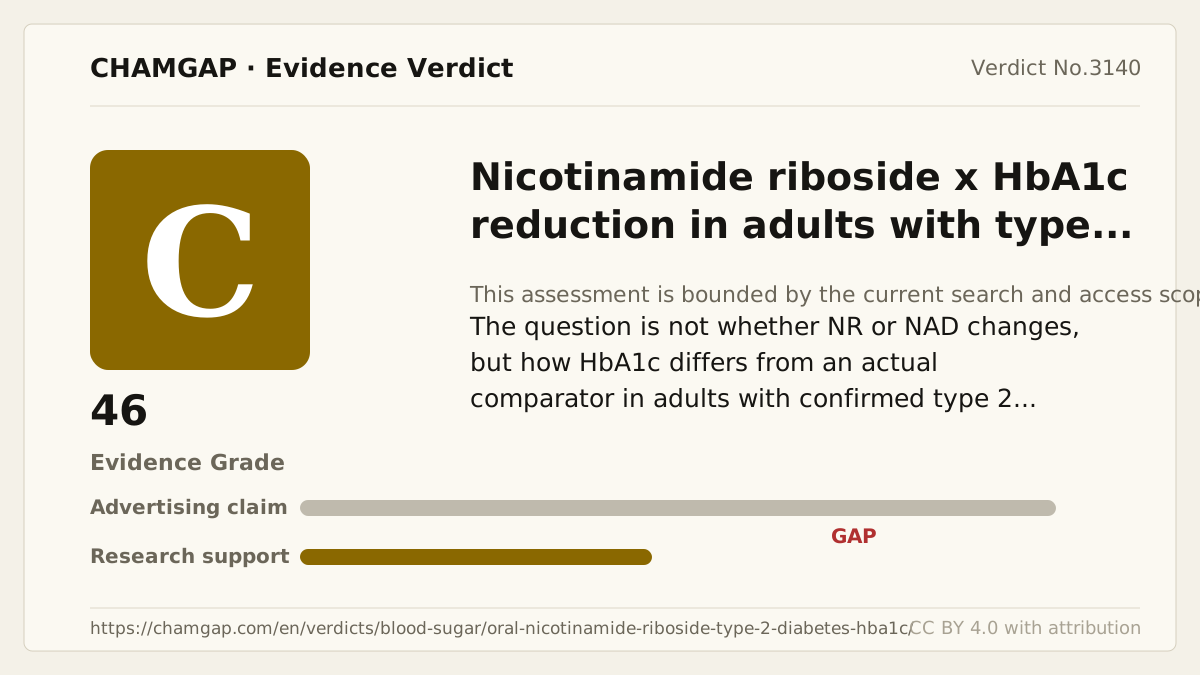
[Chamgap] Oral single-ingredient NR and HbA1c in type 2 diabetes: a reduction is not established — Evidence Grade C·46. 19 cited sources checked. Source: https://chamgap.com/en/verdicts/blood-sugar/oral-nicotinamide-riboside-type-2-diabetes-hba1c/ · CC BY 4.0CC BY 4.0 — free to use with attribution; do not distort grades, numbers, or verdict meaning.
What this document does and does not do
Chamgap is an information source. It reports what research has and has not confirmed; it does not tell readers what to take or buy. That decision belongs to readers and, when needed, medical or legal professionals. This verdict reflects literature available up to the search date and may change as new research appears. Nothing here is medical advice.