
Magnesium chloride,
does it really help with Improved fasting and post-load glucose in adults with both prediabetes and hypomagnesemia?
research showsOral magnesium chloride is rated C because a small randomized trial improved fasting and post-load glucose over four months in adults who had both prediabetes and hypomagnesemia. The peer-reviewed double-blind original included 116 participants in the actual primary analysis, and its primary endpoint of lowering plasma glucose succeeded. Fasting glucose was 86.9 versus 98.3 mg/dL and two-hour post-load glucose was 124.7 versus 136.7 mg/dL. Glucose is nevertheless a surrogate for diabetic complications or clinical events, and the trial did not test prevention of diabetes or complications. Rule ①-ⓐ therefore caps the grade at C.
ads claimMarketing can expand the finding into a claim that magnesium normalizes glucose and prevents diabetes. The direct evidence only shows better laboratory values after 116 adults with confirmed prediabetes and hypomagnesemia used a 5% magnesium chloride solution for four months; prevention of diabetes and complications remains unproven.
Useful facts when choosing a product
- The trial dose was 30 mL of a 5% magnesium chloride solution once daily, providing 382 mg of elemental magnesium.
- Direct evidence applies to adults with laboratory-confirmed hypomagnesemia as well as prediabetes, not to all people with prediabetes.
- Supplemental magnesium can cause diarrhea, abdominal pain, and nausea, while impaired kidney function raises the risk of hypermagnesemia.
- Magnesium can impair absorption of some antibiotics, bisphosphonates, and thyroid hormone, so dose separation should be checked with a clinician or pharmacist.
Chamgap Semantic Classification Code
Candidate index · review held
UNK.magnesium-chloride.oral.fasting-and-post-load-glucose-with-both-prediabetes-and-hypomagnesemia.improve.placeboUnknown > Magnesium chloride > Oral > fasting and post-load glucose with both prediabetes and hypomagnesemia > Improvement claim > Placebo
An automated migration candidate, not an issued permanent code; exact claim scope remains under review. This machine-generated migration candidate helps retrieval but is not a permanent assignment. The original verdict ID and URL remain authoritative.
What the research actually shows
The publication form was a peer-reviewed original double-blind placebo-controlled randomized trial in Diabetes & Metabolism. The actual primary analysis included 116 participants, and the primary endpoint of plasma-glucose reduction succeeded. After four months, fasting glucose was 86.9±7.9 with magnesium chloride versus 98.3±4.6 mg/dL with placebo (P=0.004), while two-hour post-load glucose was 124.7±33.4 versus 136.7±23.9 mg/dL (P=0.03). A 2021 meta-analysis of double-blind trials pooled improved fasting glucose across 11 high-risk trials and two-hour glucose across three trials, but fasting-glucose heterogeneity was I² 81.2% and the evidence did not establish incident diabetes, microvascular outcomes, or cardiovascular outcomes.
Why this is classified as C (44)
A single four-month randomized trial in 116 people with prediabetes and hypomagnesemia succeeded on a plasma-glucose endpoint, but fasting and two-hour glucose are laboratory surrogates and no incident-diabetes, complication, or other clinical outcome was measured. The evidence is limited to concomitant hypomagnesemia, giving a low C with 44 points.
Counterpoint. Weight management, diet, activity, sleep, and validated prevention programs remain foundational in prediabetes. Magnesium should be an adjunct considered after assessing deficiency, kidney function, and medicine interactions.
Rejudgment record. Cross-check applied — C recognizes success of the primary plasma-glucose endpoint in 116 actual participants in the peer-reviewed double-blind original, while applying the rule ①-ⓐ ceiling because fasting and post-load glucose are surrogates and no incident-diabetes or complication hard outcome exists
Sub-claim grades by effect
This ingredient is marketed for several effects. A single overall grade blends strong and weak claims together, so each effect is graded separately here. The overall grade reflects the strongest disconfirming or core claim.
| Effect (sub-claim) | Grade | Basis |
|---|---|---|
| Improved fasting glucose in prediabetes with hypomagnesemia | C | The 116-person trial and high-risk meta-analysis were positive, but the outcome is a laboratory surrogate and heterogeneity is substantial. |
| Improved two-hour post-load glucose in prediabetes with hypomagnesemia | C | The direct randomized trial was significant, but this is a small, short-term surrogate endpoint. |
| Prevention of incident type 2 diabetes with oral magnesium chloride | ? | No human efficacy trial was found that primarily tested incident diabetes with this formulation in this population. |
Cross-check — AI research and Codex final gate
Evidence Table
| Study | Design | Sample | Funding | Endpoint | Result | Weight |
|---|---|---|---|---|---|---|
| Guerrero-Romero F et al. 2015 | Peer-reviewed original randomized double-blind placebo-controlled trial | 116 participants in the actual primary analysis | Academic research; commercial sponsorship was not clearly reported in the original | Primary endpoint of reduced plasma glucose | The primary endpoint succeeded; fasting glucose was 86.9 versus 98.3 mg/dL (P=0.004), and two-hour glucose was 124.7 versus 136.7 mg/dL (P=0.03). | Direct small surrogate-endpoint randomized trial |
| Veronese N et al. 2021 | Systematic review and meta-analysis of double-blind randomized trials | 25 placebo-controlled trials overall; 967 high-risk participants for fasting glucose and 210 for two-hour glucose | Reported no external funding | Fasting glucose, two-hour oral-glucose-tolerance glucose, HOMA-IR, and HbA1c | Fasting and two-hour glucose improved in high-risk groups, but fasting-glucose heterogeneity was I² 81.2%, HbA1c was not significant, and hard outcomes were absent. | Supportive surrogate synthesis with heterogeneity |
Receipt — 2 References
All 2 cited sources were verified for existence at the original page (as of 2026-07-24).
Final verification and publication gate: Codex · Evidence date: 2026-07-24 · Corrections: none
Cite this verdict
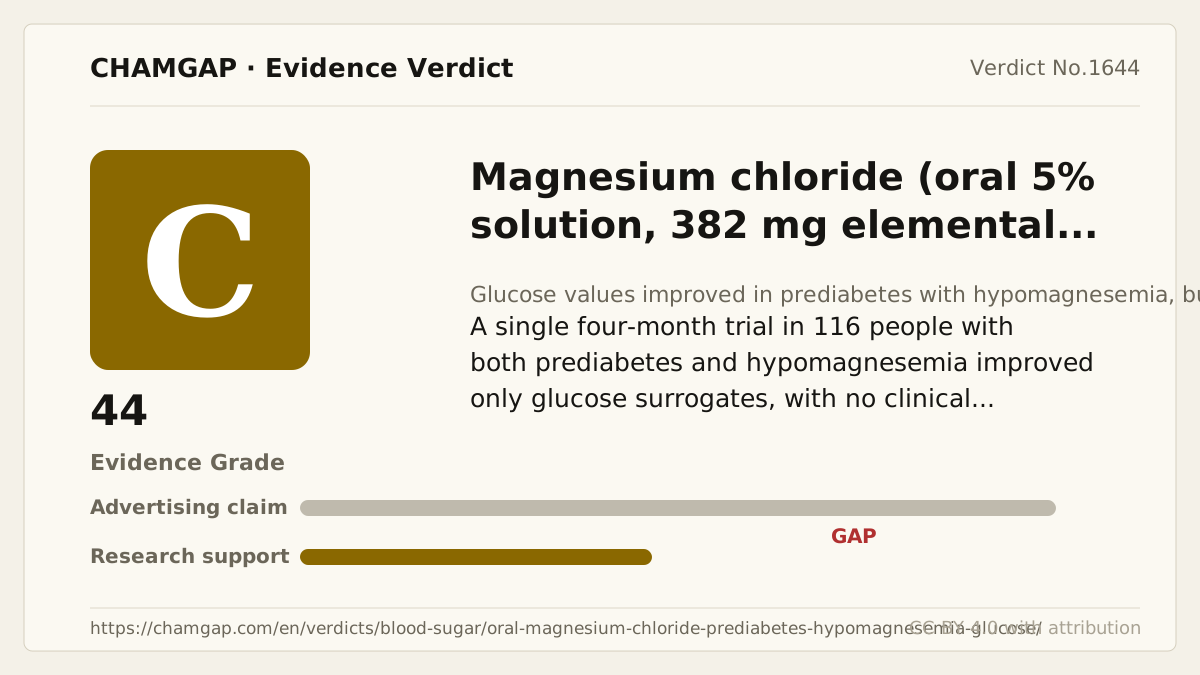
[Chamgap] Magnesium chloride x improved fasting and post-load glucose in prediabetes with hypomagnesemia — Evidence Grade C·44. 2 cited sources checked. Source: https://chamgap.com/en/verdicts/blood-sugar/oral-magnesium-chloride-prediabetes-hypomagnesemia-glucose/ · CC BY 4.0CC BY 4.0 — free to use with attribution; do not distort grades, numbers, or verdict meaning.
What this document does and does not do
Chamgap is an information source. It reports what research has and has not confirmed; it does not tell readers what to take or buy. That decision belongs to readers and, when needed, medical or legal professionals. This verdict reflects literature available up to the search date and may change as new research appears. Nothing here is medical advice.