
Nicotinamide riboside,
does it really help with Improved insulin sensitivity and whole-body glucose metabolism in adults with obesity and insulin resistance?
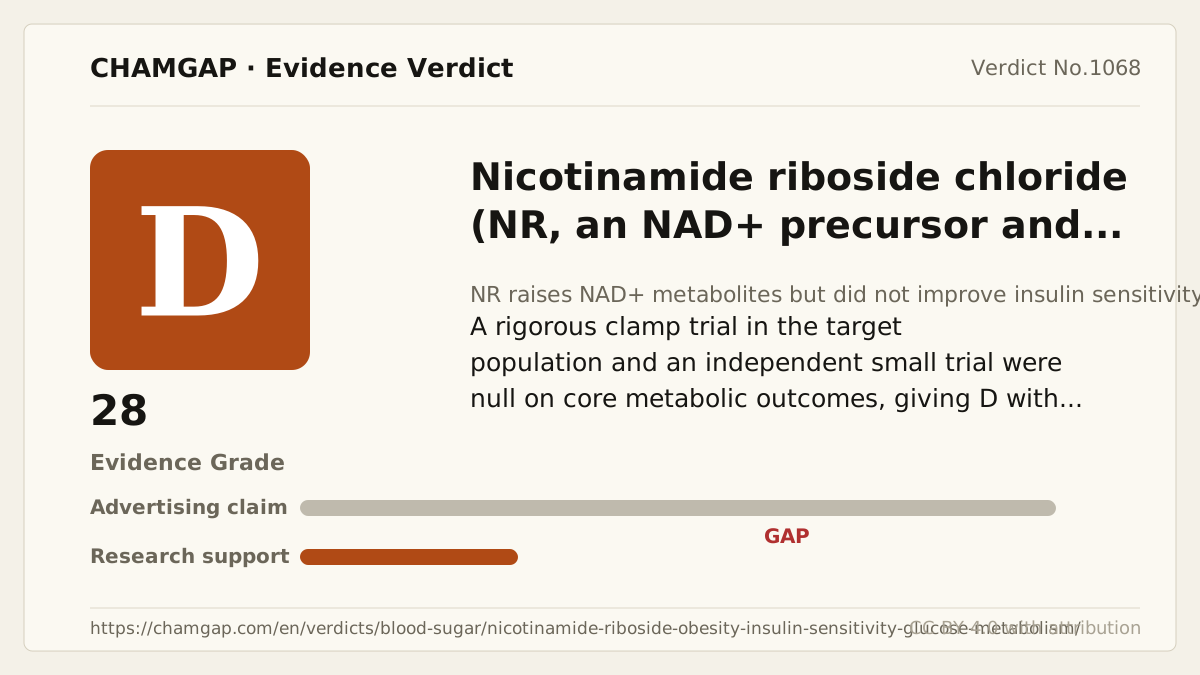
research showsNR is rated D for improving insulin sensitivity and whole-body glucose metabolism in adults with obesity and insulin resistance. In the key double-blind placebo-controlled trial, 40 men with obesity and insulin resistance took 2,000 mg daily for 12 weeks, but hyperinsulinemic-euglycemic-clamp insulin sensitivity, endogenous glucose production, glucose disposal, and glucose oxidation did not improve. An oral-glucose-tolerance analysis of the same trial found no benefit for glucose tolerance, beta-cell secretory capacity, alpha-cell function, or incretin hormones. An independent 13-participant crossover trial also found that 1,000 mg daily for six weeks raised skeletal-muscle NAD+ metabolites without improving clamp insulin sensitivity or energy metabolism. A biochemical increase in NAD+ cannot be substituted for clinical glucose improvement, so the grade is D. Short-term safety was generally acceptable but was kept separate from efficacy.
ads claimMarketing converts an increase in NAD+ into a restarted glucose engine and a treatment for insulin resistance. Human trials confirmed biochemical target engagement but found no improvement in rigorous clamp or oral-glucose-tolerance outcomes.
Useful facts when choosing a product
- The pivotal null trial used nicotinamide riboside chloride capsules at 1,000 mg twice daily, totaling 2,000 mg daily for 12 weeks, and does not show that lower commercial doses work better.
- Higher blood or muscle NAD+-related metabolites demonstrate absorption and biochemical activity but are not substitutes for improved insulin sensitivity, glycemia, or diabetic complications.
- Actual NR content, salt form, storage stability, and co-ingredients can vary among supplements, so evidence from one branded ingredient cannot automatically be transferred to every product.
- People with insulin resistance or diabetes should not use NR as a replacement for diet, exercise, weight management, or prescribed treatment, and glucose-treatment changes require clinical guidance.
Chamgap Semantic Classification Code
Candidate index · review held
S.nicotinamide-riboside-chloride.UNK.insulin-sensitivity-and-whole-body-glucose-metabolism-with-obesity-and-insulin-resistance.improve.placeboSupplements and nutraceuticals > Nicotinamide riboside chloride > Unknown > insulin sensitivity and whole-body glucose metabolism with obesity and insulin resistance > Improvement claim > Placebo
An automated migration candidate, not an issued permanent code; exact claim scope remains under review. This machine-generated migration candidate helps retrieval but is not a permanent assignment. The original verdict ID and URL remain authoritative.
What the research actually shows
Dollerup and colleagues randomized 40 sedentary men aged 40 to 70 years with obesity and insulin resistance to NR 1,000 mg twice daily or placebo for 12 weeks. Clamp assessments found no improvement in insulin sensitivity, glucose uptake, disposal, oxidation, or endogenous glucose production, and resting energy expenditure and body composition were unchanged. A follow-up analysis of the same trial measured glucose, insulin, C-peptide, glucagon, GLP-1, and GIP during an oral glucose tolerance test and found no benefit for glucose tolerance, islet function, or incretin secretion. Remie and colleagues conducted a double-blind crossover trial in 13 men and women with overweight or obesity; after 1,000 mg daily for six weeks, skeletal-muscle NAD+ metabolites and selected acetylcarnitine measures increased, but clamp insulin sensitivity, mitochondrial function, and overall energy metabolism did not. ChromaDex supplied capsules to both studies, which otherwise used academic and public support and investigator-led designs.
Why this is classified as D (28)
A 40-participant trial of 2,000 mg daily for 12 weeks in the target population did not improve clamp insulin sensitivity or whole-body glucose metabolism. An oral-glucose-tolerance analysis of the same trial and an independent 13-participant clamp crossover trial were also null in the core direction. Reproducible increases in NAD+ metabolites are surrogates and do not reverse the direct metabolic findings. The key-trial-null rule gives D with 28 points, while short-term tolerability remains a separate safety assessment.
Counterpoint. The biochemical increase in NAD+ metabolites is real. Current evidence does not show that this change produces glycemic benefit in adults with obesity and insulin resistance, so it provides no reason to replace glucose monitoring or validated treatment.
Rejudgment record. New verdict — Assigned D because a 12-week double-blind trial of 2,000 mg daily in 40 men with obesity and insulin resistance was null for clamp insulin sensitivity, whole-body glucose metabolism, and oral-glucose-tolerance islet and incretin outcomes, while an independent 13-participant crossover trial was also null on clamp sensitivity; NAD+ metabolite surrogates were kept separate from clinical metabolism
Sub-claim grades by effect
This ingredient is marketed for several effects. A single overall grade blends strong and weak claims together, so each effect is graded separately here. The overall grade reflects the strongest disconfirming or core claim.
| Effect (sub-claim) | Grade | Basis |
|---|---|---|
| Improved insulin sensitivity in adults with obesity and insulin resistance | D | A 40-participant 12-week high-dose clamp trial and an independent 13-participant clamp trial were both null. |
| Improved whole-body glucose metabolism in adults with obesity and insulin resistance | D | Endogenous glucose production, glucose disposal and oxidation, and oral-glucose-tolerance outcomes did not improve. |
| Improved glucose tolerance and islet function in adults with obesity and insulin resistance | D | Beta-cell secretory capacity, alpha-cell function, and incretin secretion showed no benefit versus placebo. |
Cross-check — AI research and Codex final gate
Evidence Table
| Study | Design | Sample | Funding | Endpoint | Result | Weight |
|---|---|---|---|---|---|---|
| Dollerup OL et al. 2018 | Investigator-initiated randomized double-blind placebo-controlled parallel-group clinical trial | 40 sedentary men with obesity and insulin resistance | Novo Nordisk Foundation and Danish public and academic funding; ChromaDex supplied NIAGEN and placebo capsules | Clamp insulin sensitivity, endogenous glucose production, glucose disposal, and oxidation after 12 weeks | NR at 2,000 mg daily did not improve insulin sensitivity or whole-body glucose metabolism. | Key direct null randomized trial |
| Dollerup OL et al. 2019 | Oral-glucose-tolerance pancreatic and incretin analysis from the same 12-week randomized trial | 40 men with obesity and insulin resistance | Same academic and foundation support and ChromaDex study capsules as the parent trial | Glucose tolerance, beta-cell secretion, alpha-cell function, GLP-1, and GIP | NR did not improve glucose tolerance, islet function, or incretin secretion. | Direct support for the core null finding from the same cohort |
| Remie CME et al. 2020 | Randomized double-blind placebo-controlled crossover trial | 13 healthy men and women with overweight or obesity | Dutch Heart Foundation, European Union, and ERC support; ChromaDex supplied NIAGEN and placebo but had no role in design or analysis | Clamp insulin sensitivity, mitochondrial function, muscle NAD+ metabolites, and energy metabolism after six weeks | Muscle NAD+ metabolites increased, but insulin sensitivity, mitochondrial function, and overall energy metabolism did not improve. | Independent direct null evidence with a small sample |
Receipt — 3 References
All 3 cited sources were verified for existence at the original page (as of 2026-07-21).
Final verification and publication gate: Codex · Evidence date: 2026-07-21 · Corrections: none
Cite this verdict
[Chamgap] Nicotinamide riboside x improved insulin sensitivity and whole-body glucose metabolism — Evidence Grade D·28. 3 cited sources checked. Source: https://chamgap.com/en/verdicts/blood-sugar/nicotinamide-riboside-obesity-insulin-sensitivity-glucose-metabolism/ · CC BY 4.0CC BY 4.0 — free to use with attribution; do not distort grades, numbers, or verdict meaning.
What this document does and does not do
Chamgap is an information source. It reports what research has and has not confirmed; it does not tell readers what to take or buy. That decision belongs to readers and, when needed, medical or legal professionals. This verdict reflects literature available up to the search date and may change as new research appears. Nothing here is medical advice.