
Nateglinide,
does it really help with Prevention of diabetes onset and major cardiovascular events in people with impaired glucose tolerance?
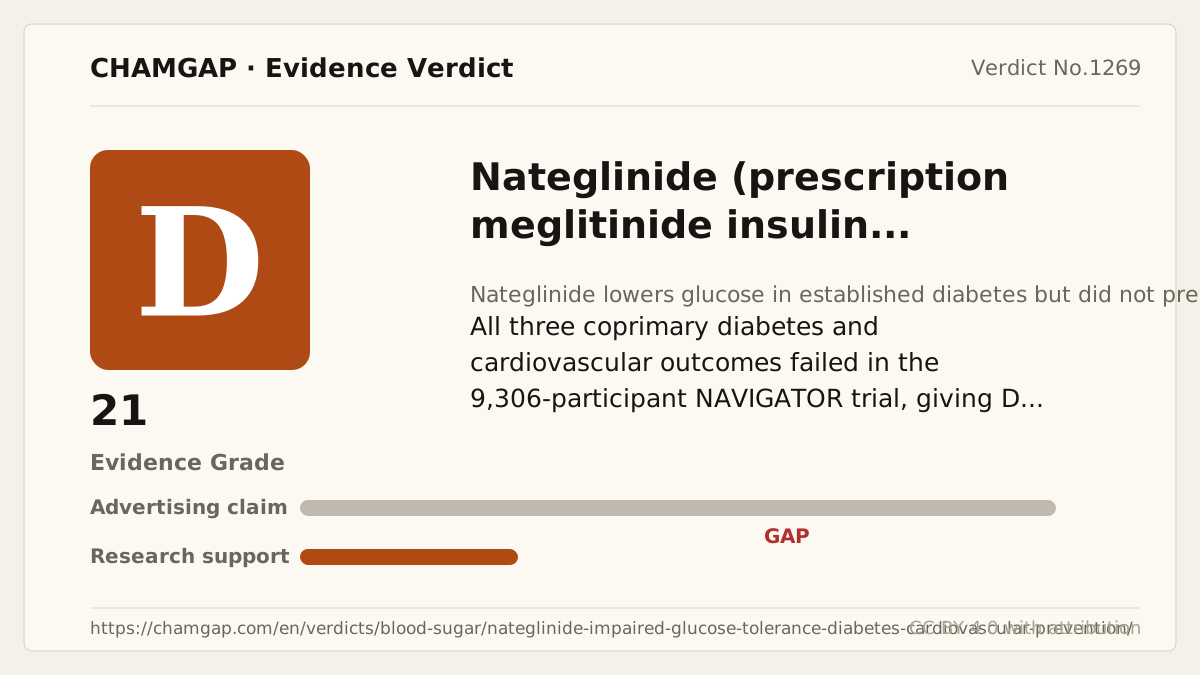
research showsNateglinide for prevention of diabetes and major cardiovascular events is rated D. NAVIGATOR randomized 9,306 people with impaired glucose tolerance plus cardiovascular disease or risk factors to nateglinide or placebo and followed incident diabetes for a median of five years. Diabetes occurred in 36.0% versus 33.9%, with a hazard ratio of 1.07 rather than a reduction. The core cardiovascular composite was also null at 7.9% versus 8.3%, hazard ratio 0.94, and the extended composite was null at 0.93. United States labeling is limited to glycemic control in established type 2 diabetes, and the 2026 ADA prevention guideline does not recommend nateglinide for prevention. Because direct refutation rests primarily on one large trial without repeated independent refutation or an explicit prohibition, the large core-null rule gives D with 21 points rather than F.
ads claimThe argument that lowering postprandial glucose must prevent diabetes and heart disease converts a short-term glycemic surrogate into long-term disease and event prevention. That exact hypothesis failed in the large NAVIGATOR trial.
Useful facts when choosing a product
- Nateglinide is a prescription glinide taken before meals to stimulate rapid insulin secretion. Its approved use is improved glycemic control, together with diet and exercise, in adults with type 2 diabetes.
- Prevention of diabetes or cardiovascular events in impaired glucose tolerance is not an approved indication. United States labeling states that conclusive macrovascular risk reduction has not been established.
- If a meal is skipped, the corresponding dose should also be skipped to reduce hypoglycemia risk. Dosing and meal timing should follow the prescription.
- Hypoglycemia and weight gain are central harms. Liver or kidney impairment, other glucose-lowering drugs, and beta blockers can affect dosing or recognition of hypoglycemia.
Chamgap Semantic Classification Code
Candidate index · review held
M.nateglinide.UNK.diabetes-onset-and-major-cardiovascular-events-with-impaired-glucose-tolerance.prevent.MULTIMedicinal interventions > Nateglinide > Unknown > diabetes onset and major cardiovascular events with impaired glucose tolerance > Occurrence-prevention claim > Multiple: primary unresolved
An automated migration candidate, not an issued permanent code; exact claim scope remains under review. This machine-generated migration candidate helps retrieval but is not a permanent assignment. The original verdict ID and URL remain authoritative.
What the research actually shows
NAVIGATOR used a two-by-two factorial design in 9,306 people with impaired glucose tolerance and cardiovascular disease or risk factors, comparing nateglinide with placebo and valsartan with placebo alongside a lifestyle-modification program. Nateglinide did not lower diabetes incidence and numerically produced more cases. Neither the core composite of cardiovascular death, nonfatal myocardial infarction, nonfatal stroke, or heart-failure hospitalization nor the extended composite adding unstable angina and revascularization was significant. United States prescribing information says conclusive macrovascular risk reduction has not been established, and the 2026 ADA prevention guideline does not list nateglinide as a recommended preventive drug.
Why this is classified as D (21)
All diabetes, core cardiovascular, and extended cardiovascular outcomes failed in the long-term 9,306-participant NAVIGATOR trial. Unapproved status and absence from prevention recommendations confirm scope but do not amount to an explicit prohibition or repeated independent refutation, so the large core-null rule gives D with 21 points rather than F. Hypoglycemia and weight gain remain separate safety concerns.
Counterpoint. Weight management, diet, physical activity, and selective consideration of metformin are the evidence-based core for impaired glucose tolerance. Glucose-lowering treatment after type 2 diabetes is diagnosed is a separate individualized question.
Rejudgment record. Cross-check applied — Applied the large direct-null rule because all three coprimary outcomes failed in the 9,306-participant NAVIGATOR trial, with hazard ratios of 1.07 for diabetes, 0.94 for the core cardiovascular composite, and 0.93 for the extended composite; unapproved prevention use and absence from ADA recommendations support scope but do not constitute repeated refutation or an explicit prohibition, so D was selected over F
Sub-claim grades by effect
This ingredient is marketed for several effects. A single overall grade blends strong and weak claims together, so each effect is graded separately here. The overall grade reflects the strongest disconfirming or core claim.
| Effect (sub-claim) | Grade | Basis |
|---|---|---|
| Prevention of type 2 diabetes onset in impaired glucose tolerance | D | NAVIGATOR found 36.0% versus 33.9%, with a hazard ratio of 1.07 and no reduction. |
| Prevention of the core composite of major cardiovascular events | D | The hazard ratio for cardiovascular death, myocardial infarction, stroke, or heart-failure hospitalization was null at 0.94. |
| Prevention of the extended cardiovascular composite | D | The composite adding unstable angina and revascularization was also nonsignificant at a hazard ratio of 0.93. |
Cross-check — AI research and Codex final gate
Evidence Table
| Study | Design | Sample | Funding | Endpoint | Result | Weight |
|---|---|---|---|---|---|---|
| NAVIGATOR Study Group 2010 | Multinational randomized double-blind placebo-controlled two-by-two factorial trial | 9,306 participants with impaired glucose tolerance and cardiovascular disease or risk factors | Sponsored and codesigned by Novartis Pharma with an independent safety committee | Incident diabetes and core and extended cardiovascular composites | Prevention failed for diabetes at HR 1.07, the core cardiovascular composite at HR 0.94, and the extended composite at HR 0.93, while hypoglycemia increased. | Decisive large direct hard-outcome null evidence |
| ADA Professional Practice Committee 2026 | Evidence-based clinical guideline for prevention or delay of diabetes | Synthesis of lifestyle and preventive-drug trials | American Diabetes Association | Prevention or delay of type 2 diabetes and associated risk management | The guideline centers lifestyle intervention and considers metformin in selected high-risk people; nateglinide is not a recommended preventive drug. | Current guideline scope confirmation |
| United States nateglinide prescribing information 2022 | Regulatory prescribing information | Type 2 diabetes clinical-development and postmarketing safety data | Generic approval dossier published by the FDA | Approved indication, macrovascular outcomes, hypoglycemia, and weight | The approved use is glycemic control in type 2 diabetes; conclusive macrovascular risk reduction is not established, and hypoglycemia and weight gain are identified. | Regulatory scope and safety confirmation |
Receipt — 3 References
All 3 cited sources were verified for existence at the original page (as of 2026-07-24).
Final verification and publication gate: Codex · Evidence date: 2026-07-24 · Corrections: none
Cite this verdict
[Chamgap] Nateglinide x prevention of diabetes and major cardiovascular events in impaired glucose tolerance — Evidence Grade D·21. 3 cited sources checked. Source: https://chamgap.com/en/verdicts/blood-sugar/nateglinide-impaired-glucose-tolerance-diabetes-cardiovascular-prevention/ · CC BY 4.0CC BY 4.0 — free to use with attribution; do not distort grades, numbers, or verdict meaning.
What this document does and does not do
Chamgap is an information source. It reports what research has and has not confirmed; it does not tell readers what to take or buy. That decision belongs to readers and, when needed, medical or legal professionals. This verdict reflects literature available up to the search date and may change as new research appears. Nothing here is medical advice.