
Metformin,
does it really help with Delay or prevention of type 2 diabetes in high-risk adults with prediabetes?
research showsMetformin is rated B because a large independent randomized trial and long-term follow-up show delayed development of type 2 diabetes in high-risk adults with prediabetes. Among 3,234 DPP participants, diabetes incidence over a mean 2.8 years was 31% lower than with placebo, compared with a 58% reduction from intensive lifestyle intervention. At 15 years in DPPOS, incidence in the original metformin group remained 18% lower than in the placebo group, although between-group differences diminished over time. This is direct evidence on diabetes diagnosis rather than a glucose surrogate and is entirely separate from verdict 589 on anti-aging in healthy people without diabetes. Gastrointestinal effects, vitamin B12 depletion, and rare lactic acidosis are recorded separately under safety.
ads claimPromotion can turn the evidence into a promise that metformin erases prediabetes or permanently prevents diabetes without lifestyle change. The evidence best supports a prescribed strategy that delays onset in selected high-risk adults while lifestyle and risk-factor management continue.
Useful facts when choosing a product
- Metformin is a prescription biguanide, and preventive use in prediabetes should be selected by a clinician according to individual risk, local labeling, and guidance.
- The DPP used 850 mg twice daily, but clinical dosing is titrated according to gastrointestinal tolerance, kidney function, and comorbidities.
- Diarrhea, nausea, and abdominal discomfort are common, and long-term use can lower vitamin B12, so symptoms and risk factors may warrant testing.
- Severe renal impairment, hypoxic states, or serious acute illness can require avoidance or temporary interruption because of rare lactic acidosis. Metformin does not replace lifestyle intervention.
Chamgap Semantic Classification Code
Candidate index · review held
M.metformin.UNK.delay-or-prevention-of-type-2-diabetes-with-prediabetes.prevent.placeboMedicinal interventions > Metformin > Unknown > Delay or prevention of type 2 diabetes with prediabetes > Occurrence-prevention claim > Placebo
An automated migration candidate, not an issued permanent code; exact claim scope remains under review. This machine-generated migration candidate helps retrieval but is not a permanent assignment. The original verdict ID and URL remain authoritative.
What the research actually shows
The DPP Research Group reported in 2002 that, among 3,234 high-risk adults without diabetes, metformin reduced diabetes incidence by 31% versus placebo while intensive lifestyle intervention reduced it by 58%. In the 15-year DPPOS, incidence in the original metformin group remained 18% lower than in the placebo group, but the difference declined and the aggregate microvascular outcome did not differ significantly across the full cohort. A one-to-two-week withdrawal study estimated that about 26% of the metformin effect reflected an immediate pharmacologic action that did not persist after withdrawal, although an approximately 25% reduction remained after accounting for withdrawal. The most accurate wording is therefore delay and risk reduction, not guaranteed permanent prevention.
Why this is classified as B (75)
The 3,234-person DPP found a 31% reduction in a direct incident-diabetes endpoint, and DPPOS found an 18% reduction at 15 years, providing strong B evidence. The effect was smaller than the 58% lifestyle reduction, partly diminished after withdrawal, and narrowed over time, giving B with 75 points. Gastrointestinal effects, B12 depletion, and rare lactic acidosis are separate safety issues.
Counterpoint. Prediabetes risk is heterogeneous. Weight, age, history of gestational diabetes, glycemia, and kidney function should be considered; intensive lifestyle intervention remains foundational and metformin is added selectively for higher-risk patients.
Rejudgment record. New verdict — Centered the assessment on the direct incident-diabetes endpoint in the 3,234-person DPP and persistent DPPOS benefit, while accounting for the smaller effect than lifestyle intervention, partial loss after withdrawal, and narrowing long-term difference
Sub-claim grades by effect
This ingredient is marketed for several effects. A single overall grade blends strong and weak claims together, so each effect is graded separately here. The overall grade reflects the strongest disconfirming or core claim.
| Effect (sub-claim) | Grade | Basis |
|---|---|---|
| Short-term reduction of type 2 diabetes onset in high-risk adults with prediabetes | B | DPP found a 31% lower incidence over a mean 2.8 years, smaller than the 58% reduction with lifestyle intervention. |
| Long-term delay of type 2 diabetes onset in high-risk adults with prediabetes | B | At 15 years, the incidence reduction persisted at 18%, although the between-group difference narrowed. |
| Residual reduction in diabetes onset after metformin withdrawal | B | An approximately 25% reduction remained after brief withdrawal, although about 26% of the total effect did not persist. |
Cross-check — AI research and Codex final gate
Evidence Table
| Study | Design | Sample | Funding | Endpoint | Result | Weight |
|---|---|---|---|---|---|---|
| Diabetes Prevention Program Research Group. 2002 | Multicenter randomized controlled trial | 3,234 high-risk adults without diabetes | Public funding including the United States NIH and CDC | Incident type 2 diabetes confirmed by ADA criteria | Over a mean 2.8 years, incidence fell 31% with metformin and 58% with lifestyle intervention versus placebo. | Key large direct clinical-endpoint evidence |
| Diabetes Prevention Program Outcomes Study Research Group. 2015 | Fifteen-year follow-up of original randomized groups | 2,776 surviving DPP cohort members enrolled | Public funding including the United States NIDDK | Cumulative diabetes incidence and an aggregate microvascular outcome | At 15 years, diabetes incidence was 18% lower in the original metformin group, while the aggregate microvascular outcome did not differ significantly across groups. | Key long-term durability evidence |
| Diabetes Prevention Program Research Group. 2003 withdrawal study | Prespecified one-to-two-week withdrawal analysis of randomized drug groups | 1,274 withdrawal-test participants | Public DPP research funding | Diabetes diagnosis on oral glucose tolerance testing before and after withdrawal | About 26% of the metformin effect did not persist after withdrawal, but an approximately 25% incidence reduction remained after incorporating withdrawal. | Durability limitation |
Receipt — 3 References
All 3 cited sources were verified for existence at the original page (as of 2026-07-20).
Final verification and publication gate: Codex · Evidence date: 2026-07-20 · Corrections: none
Cite this verdict
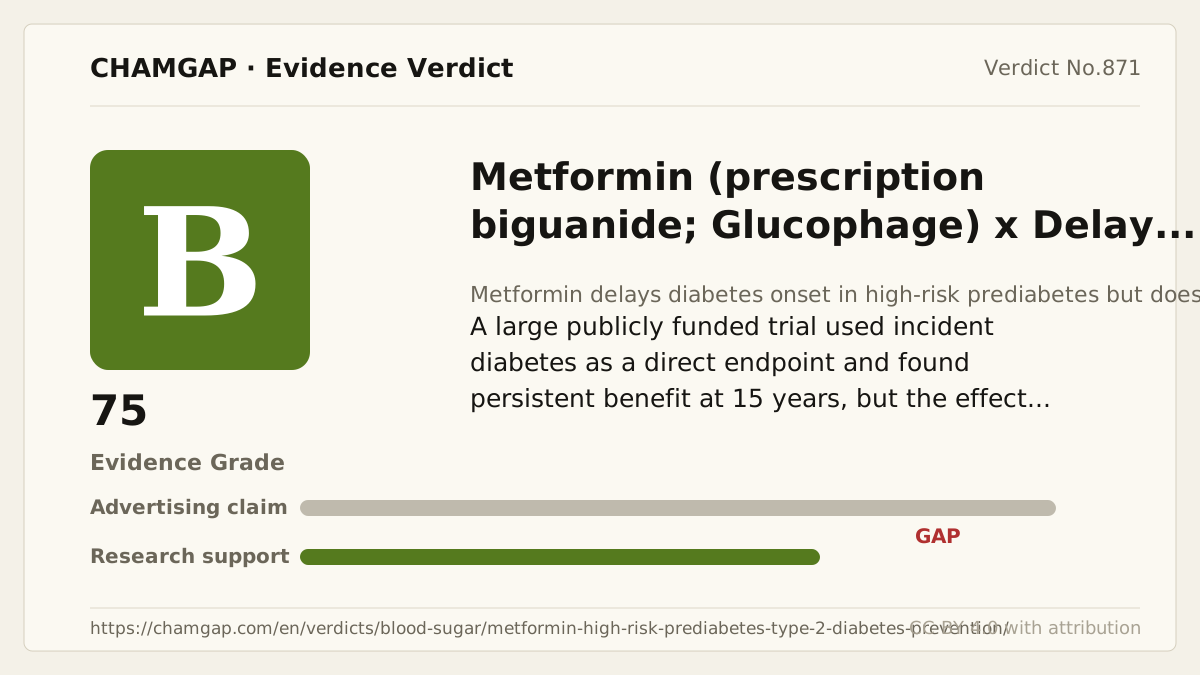
[Chamgap] Metformin x delay or prevention of type 2 diabetes in high-risk adults with prediabetes — Evidence Grade B·75. 3 cited sources checked. Source: https://chamgap.com/en/verdicts/blood-sugar/metformin-high-risk-prediabetes-type-2-diabetes-prevention/ · CC BY 4.0CC BY 4.0 — free to use with attribution; do not distort grades, numbers, or verdict meaning.
What this document does and does not do
Chamgap is an information source. It reports what research has and has not confirmed; it does not tell readers what to take or buy. That decision belongs to readers and, when needed, medical or legal professionals. This verdict reflects literature available up to the search date and may change as new research appears. Nothing here is medical advice.