
Losartan potassium,
does it really help with Reduced risk of end-stage kidney disease and worsening renal function in type 2 diabetic nephropathy with proteinuria?
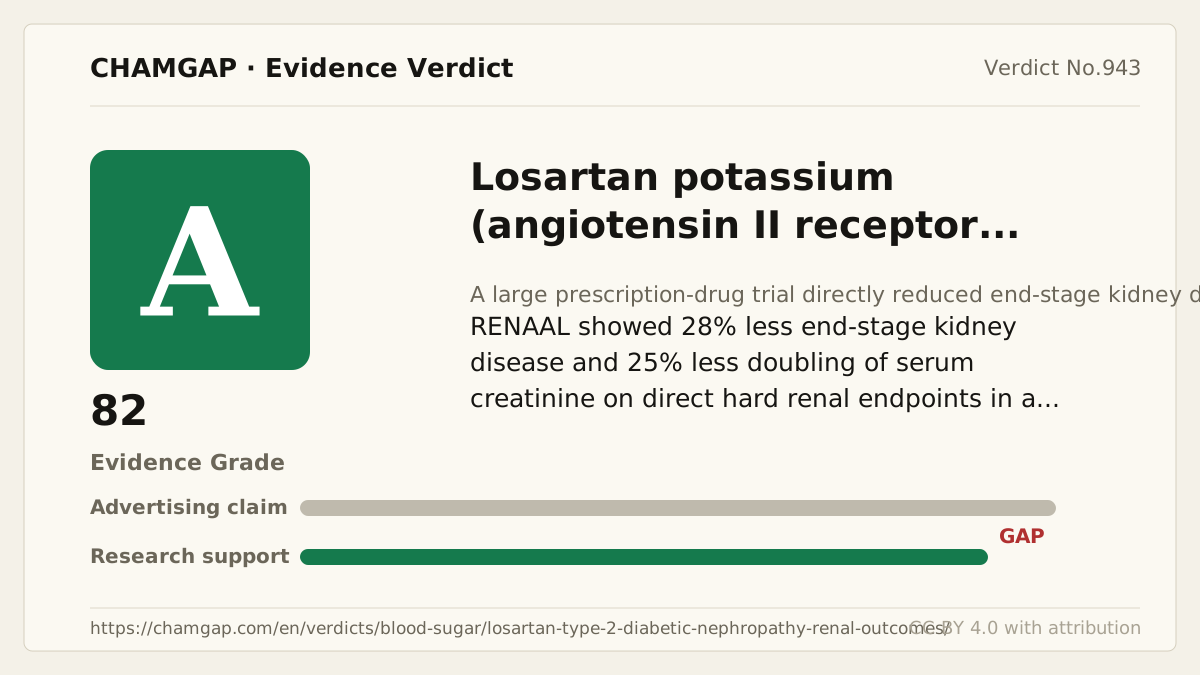
research showsLosartan is rated A. In RENAAL, a large double-blind prescription-drug trial of 1,513 participants followed for a mean of 3.4 years, end-stage kidney disease fell by 28%, doubling of serum creatinine by 25%, and the composite renal outcome by 16%. End-stage kidney disease is a direct hard clinical endpoint rather than a surrogate, so the rule ②-b exception applies. The moderate effect, manufacturer sponsorship, possible partial mediation by blood-pressure change, and null mortality result temper confidence, while independent syntheses support the direction; the final score is 82.
ads claimClaims that lower proteinuria means the kidney has recovered, or that every person with diabetes will avoid kidney failure, exceed the evidence. Direct evidence fits people with type 2 diabetic nephropathy, proteinuria, and substantial renal risk; it does not guarantee the same benefit in every person with diabetes and normal kidney status or in acute kidney injury.
Useful facts when choosing a product
- RENAAL used losartan starting at 50 mg/day and increasing to 100 mg/day when needed, with other antihypertensive medicines used to manage blood pressure.
- Serum creatinine and potassium should be checked before and after treatment changes; dehydration, renal artery stenosis, and advanced renal impairment increase concern for acute deterioration.
- Hyperkalemia can occur, so potassium supplements, potassium-containing salt substitutes, and other renin-angiotensin system medicines require clinical review.
- Renin-angiotensin system blockers are contraindicated during pregnancy because of fetal toxicity; pregnancy requires prompt contact with the prescriber.
Chamgap Semantic Classification Code
Candidate index · review held
M.losartan-potassium.UNK.risk-of-end-stage-kidney-disease-and-worsening-renal-function-in-type-2-diabetic-nephropathy-with-proteinuria.reduce.MULTIMedicinal interventions > Losartan potassium > Unknown > risk of end-stage kidney disease and worsening renal function in type 2 diabetic nephropathy with proteinuria > Reduction claim > Multiple: primary unresolved
An automated migration candidate, not an issued permanent code; exact claim scope remains under review. This machine-generated migration candidate helps retrieval but is not a permanent assignment. The original verdict ID and URL remain authoritative.
What the research actually shows
Brenner 2001 randomized participants in RENAAL to losartan 50 to 100 mg/day or placebo added to conventional antihypertensive therapy and followed them for a mean of 3.4 years. The primary composite occurred in 327 versus 359 participants, a 16% reduction; doubling of creatinine fell by 25%, end-stage kidney disease by 28%, and proteinuria by 35%, while death did not change. Palmer 2015 analyzed 157 trials involving 43,256 adults with diabetes and kidney disease and estimated an odds ratio of 0.77 for end-stage kidney disease with ARB monotherapy. Wang 2018 reviewed 26 randomized trials involving 10,378 people and likewise found that ARBs reduced end-stage kidney disease and doubling of creatinine but not mortality. These syntheses strengthen class consistency without replacing independent large losartan-specific replication.
Why this is classified as A (82)
RENAAL directly reduced end-stage kidney disease by 28%, doubling of serum creatinine by 25%, and the composite renal outcome by 16%. End-stage kidney disease is a hard clinical endpoint, and the 1,513-participant trial with 3.4 years of mean follow-up qualifies for the rule ②-b large prescription-drug exception. Independent ARB syntheses support the direction, yielding A with 82 points after deductions for moderate effect size, manufacturer sponsorship, possible partial blood-pressure mediation, and null mortality. Hyperkalemia, acute kidney injury, and fetal toxicity in pregnancy are separate safety issues.
Counterpoint. The estimates are average relative-risk reductions, while individual absolute benefit depends on baseline proteinuria, renal function, blood pressure, and co-treatment. Because creatinine and potassium can change after initiation, laboratory review and prescription adjustment take priority over self-directed dose changes or discontinuation.
Rejudgment record. Cross-check revision — RENAAL reduced hard renal endpoints, including end-stage kidney disease by 28% and doubling of serum creatinine by 25%; its large prescription-drug randomized trial qualifies for the rule ②-b exception, with moderate effects and null mortality reflected in the A rating
Sub-claim grades by effect
This ingredient is marketed for several effects. A single overall grade blends strong and weak claims together, so each effect is graded separately here. The overall grade reflects the strongest disconfirming or core claim.
| Effect (sub-claim) | Grade | Basis |
|---|---|---|
| Reduced risk of end-stage kidney disease in proteinuric type 2 diabetic nephropathy | A | RENAAL reduced the direct hard clinical endpoint of end-stage kidney disease by 28%, and independent ARB syntheses support the direction. Death was not reduced. |
| Reduced risk of doubling serum creatinine in proteinuric type 2 diabetic nephropathy | A | Doubling of serum creatinine, a direct renal-deterioration endpoint, fell by 25% in RENAAL, so this is not a surrogate-only proteinuria verdict. Death was not reduced. |
| Reduced risk of the major renal composite in proteinuric type 2 diabetic nephropathy | A | The composite of doubling serum creatinine, end-stage kidney disease, or death fell by 16%, but death alone did not fall and blood-pressure and proteinuria changes may have mediated part of the effect. |
Cross-check — AI research and Codex final gate
Evidence Table
| Study | Design | Sample | Funding | Endpoint | Result | Weight |
|---|---|---|---|---|---|---|
| Brenner BM et al.; RENAAL Study Investigators. 2001 | Multinational randomized double-blind placebo-controlled hard-endpoint trial | 1,513 participants with type 2 diabetic nephropathy and proteinuria followed for a mean of 3.4 years | Sponsored with investigator participation by Merck | Composite and individual renal outcomes of doubling creatinine, end-stage kidney disease, and death | The composite fell by 16%, doubling of creatinine by 25%, and end-stage kidney disease by 28%; death was unchanged. | Key large direct hard-endpoint evidence |
| Palmer SC et al. 2015 | Systematic review and network meta-analysis of randomized blood-pressure-lowering trials | 157 trials and 43,256 participants | Public and academic synthesis with author conflicts disclosed | Mortality, cardiovascular events, end-stage kidney disease, renal function, and adverse events | ARB monotherapy had an odds ratio of 0.77 for end-stage kidney disease versus placebo, with no mortality benefit. | Supportive class-consistency evidence |
| Wang K et al. 2018 | Systematic review and meta-analysis of randomized trials in diabetes with albuminuria | 26 randomized trials and 10,378 participants; six ARB trials | Academic meta-analysis with mixed sponsorship across individual trials | End-stage kidney disease, doubling of creatinine, death, and cardiovascular events | ARBs reduced end-stage kidney disease with an odds ratio of 0.77 and doubling of creatinine with an odds ratio of 0.75, without reducing death. | Independent synthesis confirming direction |
Receipt — 3 References
All 3 cited sources were verified for existence at the original page (as of 2026-07-21).
Final verification and publication gate: Codex · Evidence date: 2026-07-21 · Corrections: none
Cite this verdict
[Chamgap] Losartan potassium x reduced end-stage kidney disease and worsening renal function in proteinuric type 2 diabetic nephropathy — Evidence Grade A·82. 3 cited sources checked. Source: https://chamgap.com/en/verdicts/blood-sugar/losartan-type-2-diabetic-nephropathy-renal-outcomes/ · CC BY 4.0CC BY 4.0 — free to use with attribution; do not distort grades, numbers, or verdict meaning.
What this document does and does not do
Chamgap is an information source. It reports what research has and has not confirmed; it does not tell readers what to take or buy. That decision belongs to readers and, when needed, medical or legal professionals. This verdict reflects literature available up to the search date and may change as new research appears. Nothing here is medical advice.