
LGG plus BB-12 probiotics,
does it really help with Prevention of gestational diabetes when taken during pregnancy?
research showsThe claim that taking LGG plus BB-12 during pregnancy prevents gestational diabetes is rated D. The double-blind SPRING trial randomized 436 pregnant participants with overweight or obesity, and 411 completed it. Gestational diabetes occurred in 38 of 207 probiotic recipients (18.4%) versus 25 of 204 placebo recipients (12.3%), adjusted OR 1.62 (95% CI 0.91 to 2.89; P=0.10). It was numerically more frequent with probiotics, not less, although the difference was not statistically significant. Fasting glucose was also 1.53 mg/dL higher with probiotics, at 79.3 versus 77.5 mg/dL. A 2021 Cochrane review found uncertain effects across six trials and 1,440 participants, RR 0.80 (95% CI 0.54 to 1.20), and a 2023 meta-analysis was also negative, OR 0.68 (95% CI 0.39 to 1.20). The absence of prevention in the large direct trial of this strain combination supports D with 24 points. The F verdict with 12 points in 1298 concerns LGG for pediatric acute gastroenteritis, a different population, combination, and claim despite sharing LGG.
ads claimMarketing links microbiome balance, metabolic reset, and protection for mother and baby directly to gestational-diabetes prevention by a specific strain combination. Probiotic effects can depend on strain, dose, starting time, concurrent dietary intervention, and baseline weight, so findings from another product or an early trial in mostly normal-weight participants cannot establish efficacy for an LGG plus BB-12 capsule in pregnancy with overweight or obesity.
Useful facts when choosing a product
- SPRING tested a specific combination of LGG and B. animalis subsp. lactis BB-12, taken once daily from approximately 16 weeks of gestation until birth. Products containing other Lactobacillus or Bifidobacterium strains are not the same intervention.
- A probiotic capsule does not replace standard gestational-diabetes screening with a 75-g oral glucose-tolerance test at 24 to 28 weeks. High-risk patients should complete screening within their prenatal-care plan.
- Gas and bloating are generally mild and common in otherwise healthy users, but rare bloodstream infection can occur in people who are severely ill, immunocompromised, or have a central venous catheter.
- A Cochrane review of pregnancy-prevention trials reported an increased preeclampsia signal. This does not establish product-specific causality, but pregnancy use should not be assumed harmless and should be discussed with an obstetric clinician.
Chamgap Semantic Classification Code
Candidate index · review held
S.lgg-plus-bb-12-probiotics.oral.gestational-diabetes-when-taken-during-pregnancy.prevent.placeboSupplements and nutraceuticals > LGG plus BB-12 probiotics > Oral > gestational diabetes when taken during pregnancy > Occurrence-prevention claim > Placebo
An automated migration candidate, not an issued permanent code; exact claim scope remains under review. This machine-generated migration candidate helps retrieval but is not a permanent assignment. The original verdict ID and URL remain authoritative.
What the research actually shows
SPRING enrolled participants with singleton pregnancies and BMI of at least 25 kg/m² before 20 weeks, assigning LGG plus BB-12 or an identical placebo at a mean 15.9 weeks of gestation. Of 436 randomized participants, 411 completed the trial. Gestational diabetes at 28 weeks occurred in 38 of 207 probiotic recipients (18.4%) versus 25 of 204 placebo recipients (12.3%), adjusted OR 1.62 (95% CI 0.91 to 2.89; P=0.10). Thus, there was no preventive effect; the probiotic group was numerically higher, but not significantly so. Fasting glucose was 1.53 mg/dL higher with probiotics, and one- and two-hour values were similar. The Australian NHMRC and a hospital foundation funded the trial; Chr. Hansen donated active and placebo capsules under an agreement protecting investigator independence. The Davidson 2021 Cochrane review estimated RR 0.80 for gestational diabetes with low certainty and found increased preeclampsia across four trials and 955 participants, RR 1.85 (95% CI 1.04 to 3.29). Zhang 2023 concluded that six randomized trials showed no significant benefit for gestational diabetes, fasting glucose, or two-hour oral-glucose-tolerance results.
Why this is classified as D (24)
In the direct SPRING trial of LGG plus BB-12, gestational diabetes occurred in 38 of 207 probiotic recipients (18.4%) versus 25 of 204 placebo recipients (12.3%), OR 1.62. It was numerically more frequent with probiotics but not statistically significant, and fasting glucose was 1.53 mg/dL higher rather than lower. Cochrane and a 2023 meta-analysis also failed to establish prevention, supporting D with 24 points.
Counterpoint. This verdict does not mean every probiotic is always harmful during pregnancy or that every strain is ineffective. Different strains, preconception initiation, or concurrent dietary intervention require separate testing, but current evidence does not support using LGG plus BB-12 to prevent gestational diabetes.
Rejudgment record. Cross-check applied — Rule ② assigns D after a large independent randomized trial is negative. In the direct double-blind SPRING trial of LGG plus BB-12, gestational diabetes was numerically more frequent with probiotics at 18.4% versus 12.3% with placebo, OR 1.62, but not statistically significant; fasting glucose also moved unfavorably, and subsequent syntheses did not establish prevention, so D applies.
Sub-claim grades by effect
This ingredient is marketed for several effects. A single overall grade blends strong and weak claims together, so each effect is graded separately here. The overall grade reflects the strongest disconfirming or core claim.
| Effect (sub-claim) | Grade | Basis |
|---|---|---|
| Prevention of gestational diabetes by LGG plus BB-12 during pregnancy | D | In SPRING, gestational diabetes was numerically higher with probiotics at 18.4% versus 12.3% with placebo, adjusted OR 1.62, but not statistically significant. |
| Improved fasting and post-load glucose with LGG plus BB-12 during pregnancy | D | Fasting glucose was 1.53 mg/dL higher with probiotics, and one- and two-hour oral-glucose-tolerance values did not differ. |
| Probiotic prevention of gestational diabetes across strains and timing in pregnancy with overweight or obesity | D | Pooled evidence with heterogeneous strains and starting times did not establish consistent prevention. |
Cross-check — AI research and Codex final gate
Evidence Table
| Study | Design | Sample | Funding | Endpoint | Result | Weight |
|---|---|---|---|---|---|---|
| Callaway LK et al. 2019 (SPRING) | Multicenter randomized double-blind placebo-controlled trial | 436 pregnant participants with overweight or obesity randomized; 411 completed | Australian NHMRC and Royal Brisbane and Women's Hospital Foundation; active and placebo capsules donated by Chr. Hansen under an investigator-independence agreement | Gestational-diabetes incidence diagnosed by 75-g oral glucose-tolerance testing at 28 weeks | Gestational diabetes occurred in 38 of 207 probiotic recipients (18.4%) versus 25 of 204 placebo recipients (12.3%), adjusted OR 1.62 (95% CI 0.91 to 2.89; P=0.10), numerically higher but not statistically significant; fasting glucose was also 1.53 mg/dL higher with probiotics. | Key large direct negative trial of the specific strain combination |
| Davidson SJ et al. 2021 Cochrane review | Cochrane systematic review of randomized trials | Seven trials and 1,647 participants; six trials and 1,440 participants in the gestational-diabetes analysis | Cochrane Pregnancy and Childbirth; authors involved in SPRING did not assess or extract that trial | Gestational diabetes, preeclampsia, and maternal and neonatal outcomes | Gestational diabetes had RR 0.80 (95% CI 0.54 to 1.20) with low certainty; preeclampsia had RR 1.85 (95% CI 1.04 to 3.29) with high certainty. | Uncertain overall prevention with a safety signal |
| Zhang Z et al. 2023 | Systematic review and meta-analysis of randomized trials | Six randomized trials of gestational-diabetes prevention | Chinese academic institutions; authors reported no conflict of interest | Gestational-diabetes incidence, fasting glucose, and two-hour oral glucose-tolerance results | Gestational diabetes had OR 0.68 (95% CI 0.39 to 1.20), with no significant benefit for fasting glucose or two-hour oral glucose tolerance. | Subsequent negative synthesis |
Receipt — 3 References
All 3 cited sources were verified for existence at the original page (as of 2026-07-24).
Final verification and publication gate: Codex · Evidence date: 2026-07-24 · Corrections: none
Cite this verdict
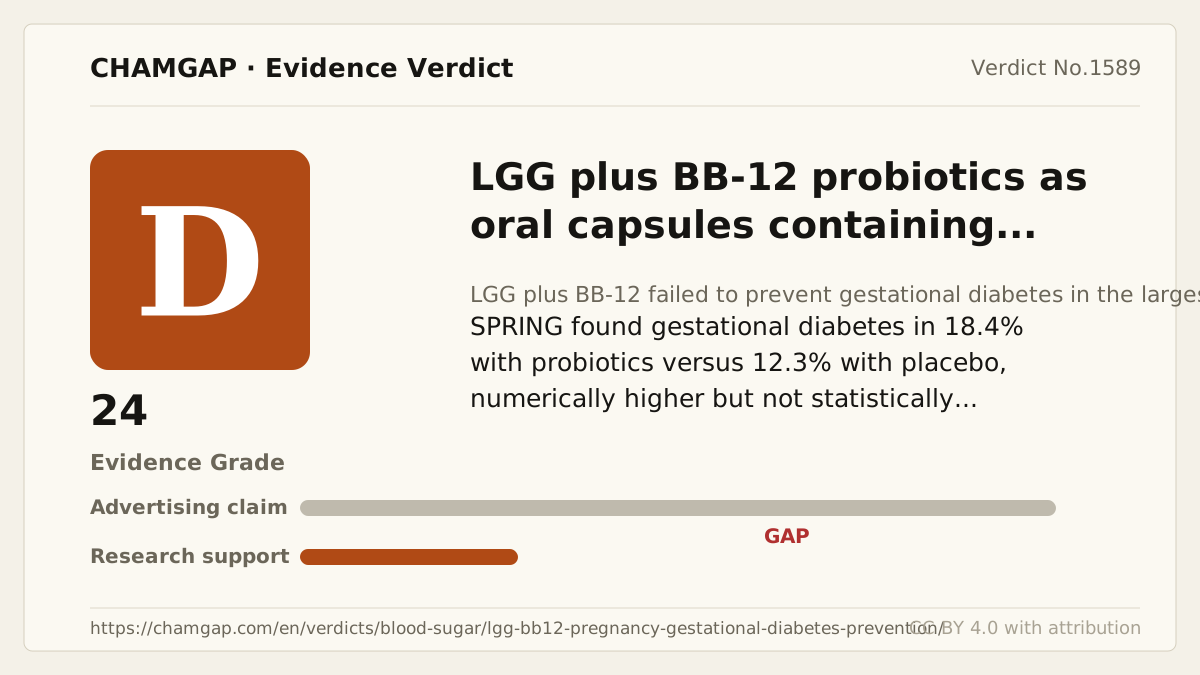
[Chamgap] LGG plus BB-12 probiotics x prevention of gestational diabetes — Evidence Grade D·24. 3 cited sources checked. Source: https://chamgap.com/en/verdicts/blood-sugar/lgg-bb12-pregnancy-gestational-diabetes-prevention/ · CC BY 4.0CC BY 4.0 — free to use with attribution; do not distort grades, numbers, or verdict meaning.
What this document does and does not do
Chamgap is an information source. It reports what research has and has not confirmed; it does not tell readers what to take or buy. That decision belongs to readers and, when needed, medical or legal professionals. This verdict reflects literature available up to the search date and may change as new research appears. Nothing here is medical advice.